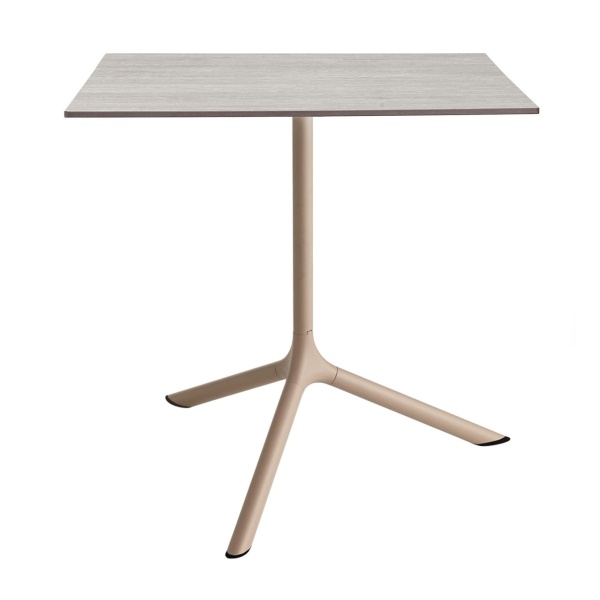
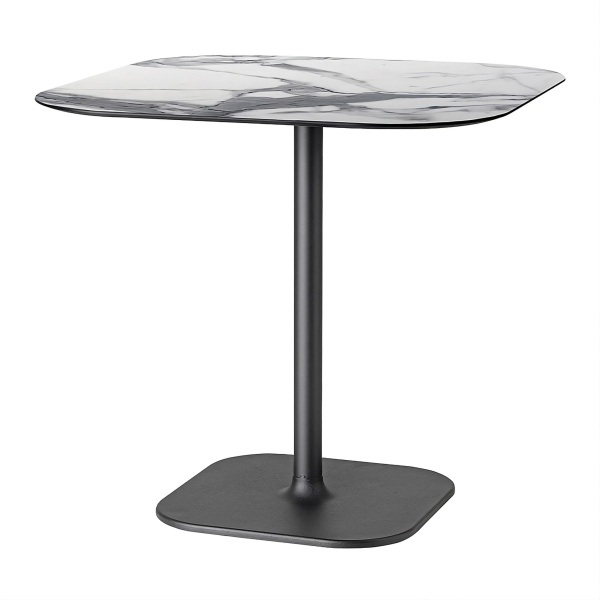
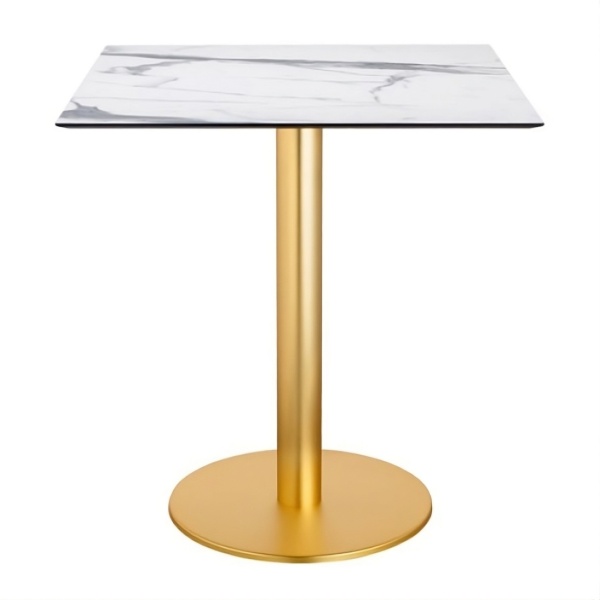
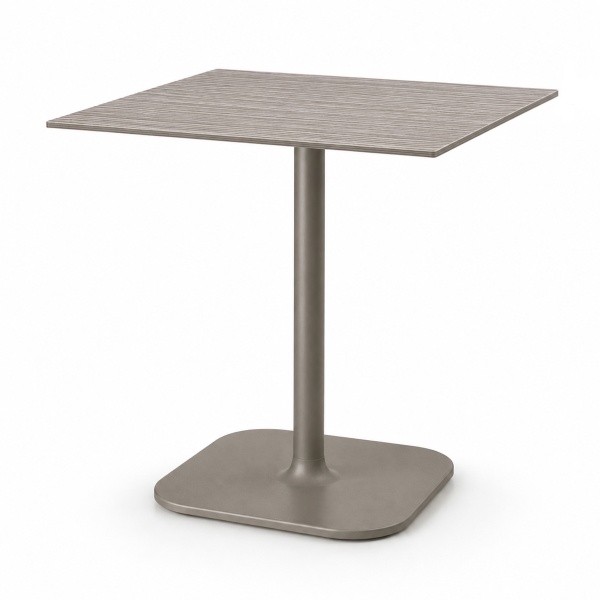
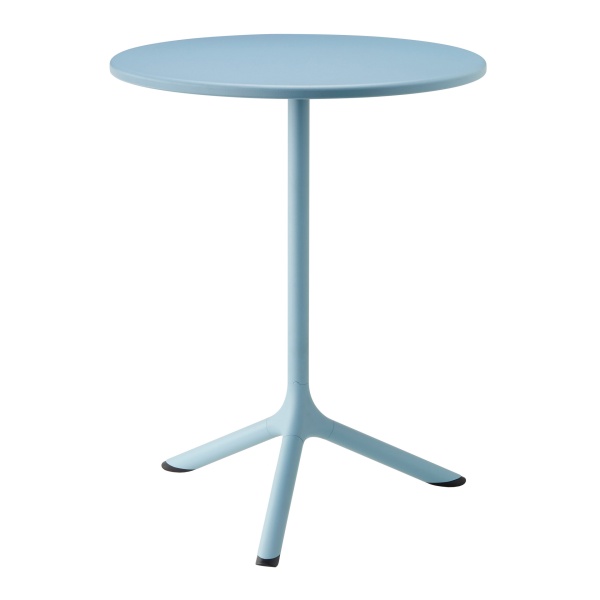
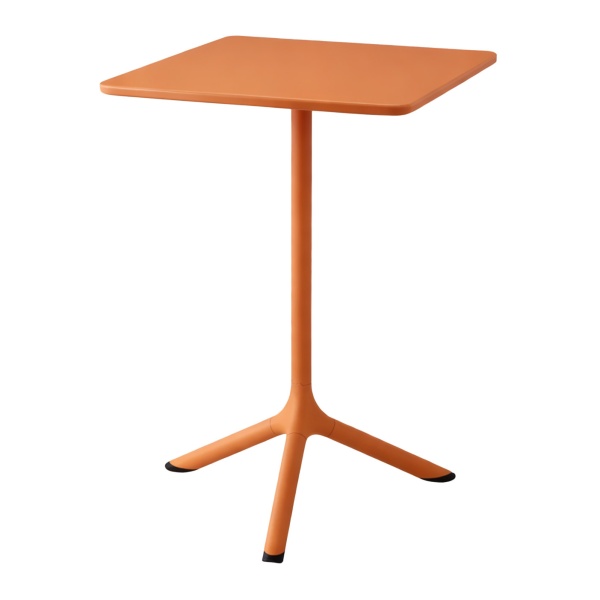
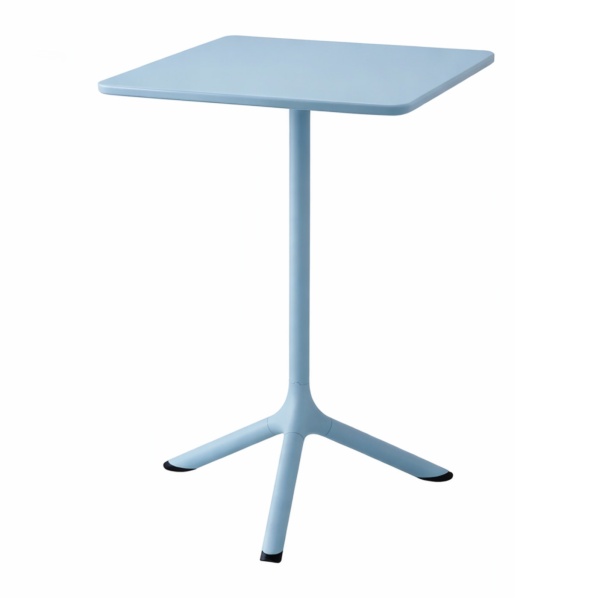
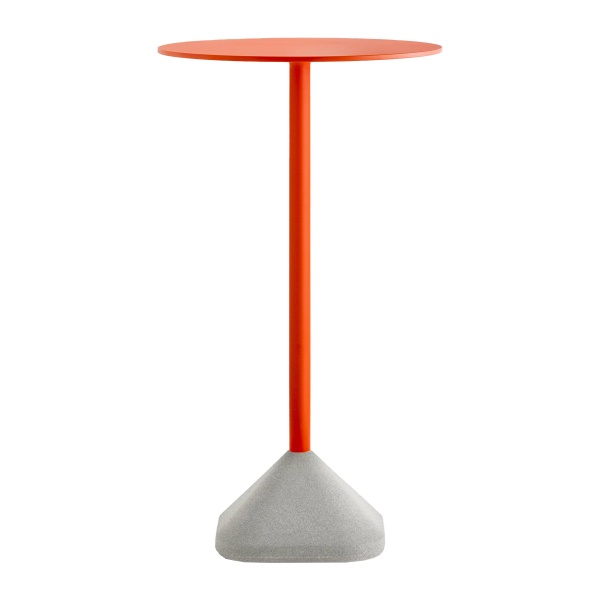
Tables for cafes and restaurants — contract solutions for the HoReCa sector, built for intensive daily use, frequent repositioning and structural stability under constant footfall. Within the range of tables and components, dining tables are the key element that determines seating density, cover turnover and the overall economics of the floor.
Unlike domestic furniture, contract restaurant tables feature reinforced joints, wear-resistant finishes and a confirmed service life of 5+ years under intensive use. Every model in the catalogue has been selected against criteria of durability, repairability and compatibility with commercial sanitation procedures. For the floor layout to work as a coherent system, tables should be specified alongside restaurant chairs — this reduces the risk of ergonomic errors and inadequate circulation widths.
Table Shapes: Impact on Density and Cover Turnover
Table geometry directly affects guest density, dwell time and the perception of space. The choice of shape is a strategic decision tied to the venue's operating model.
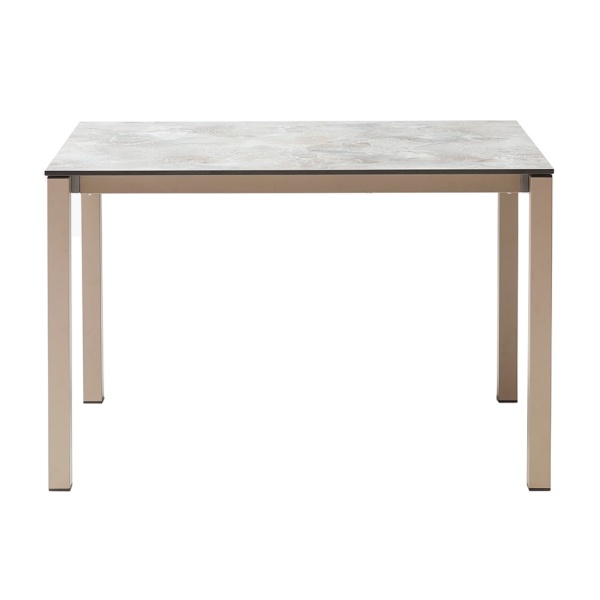
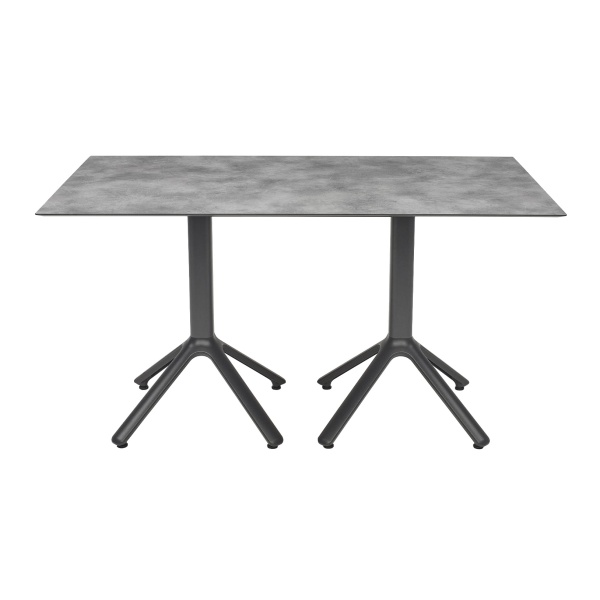
Rectangular tables are optimal for linear layouts and maximum floor utilisation. The standard 120×70 cm format seats 4 covers and allows rows to be set with 60–70 cm gangways between tables. This is the most common choice for dining rooms with controlled turnover in fast casual and bistro formats.
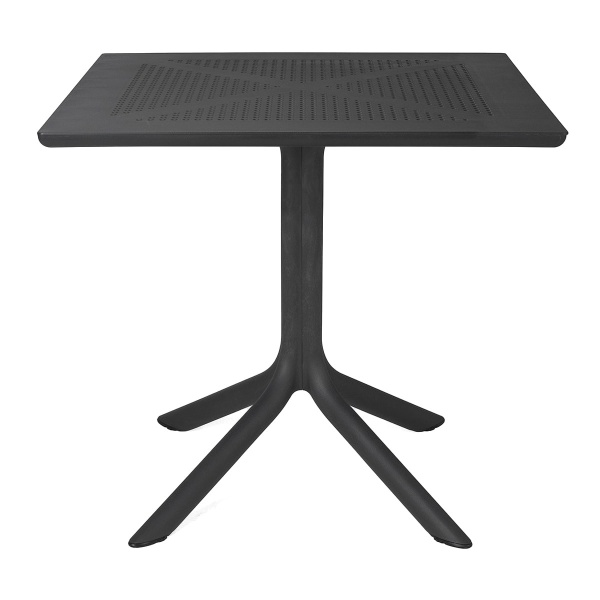
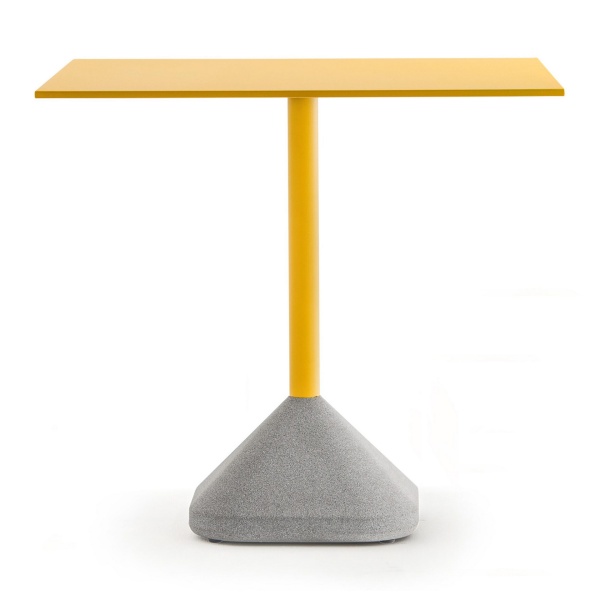
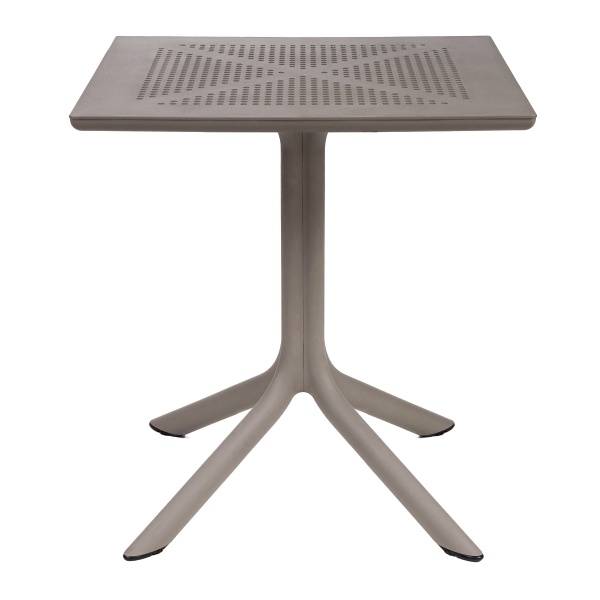
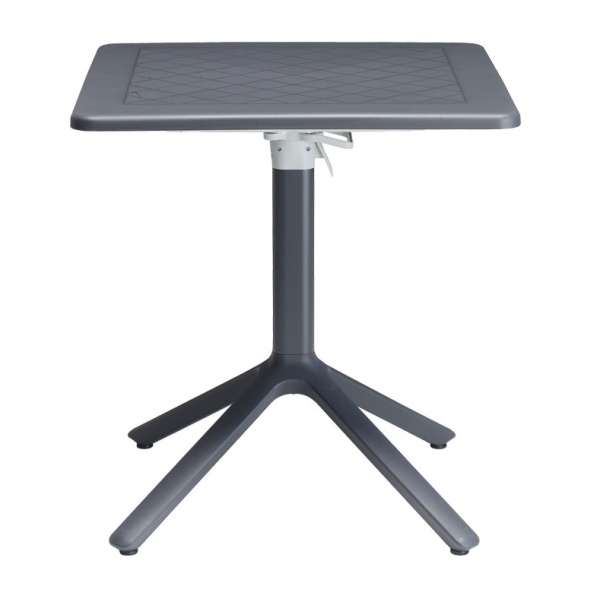
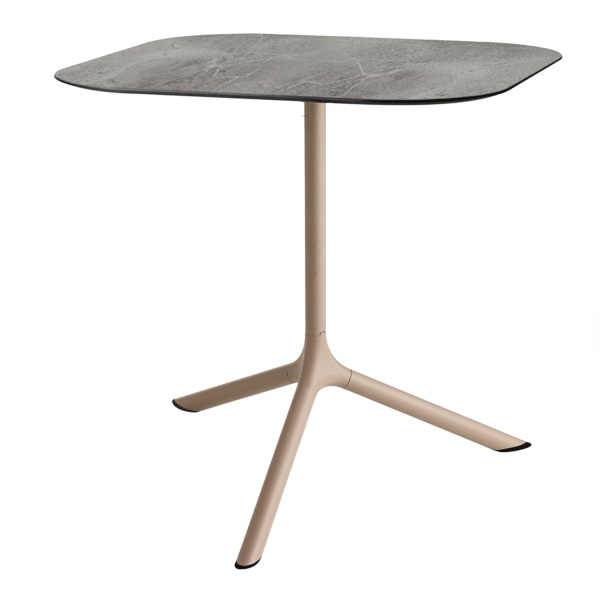
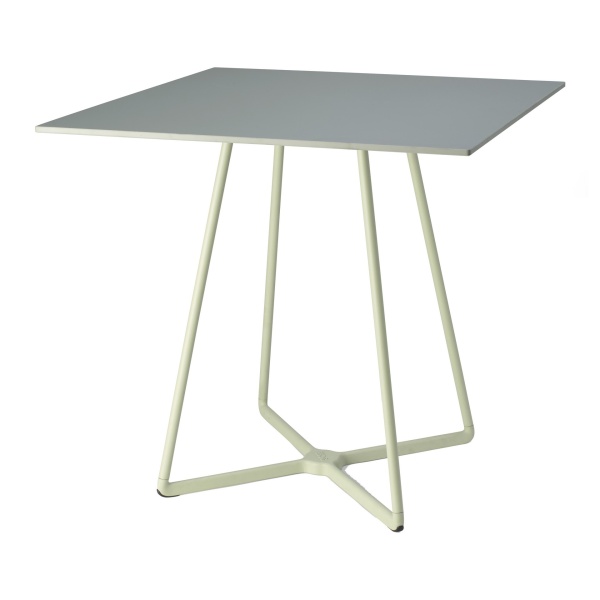
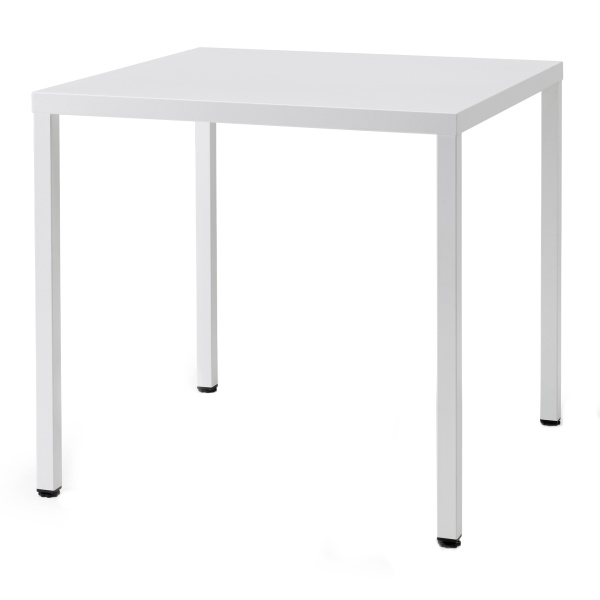
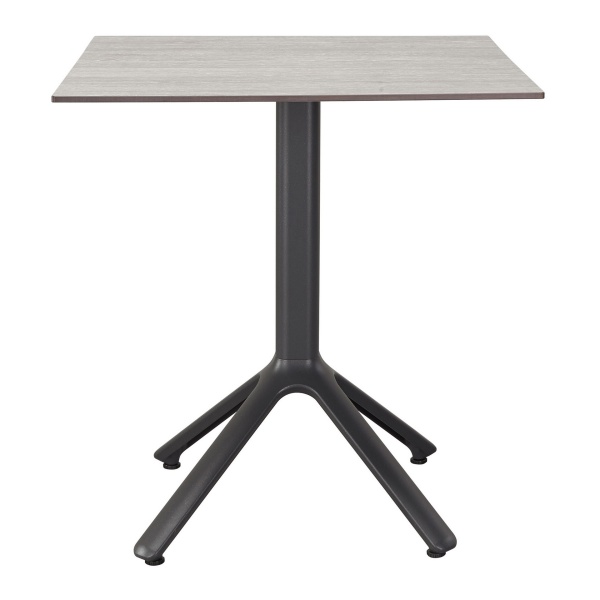
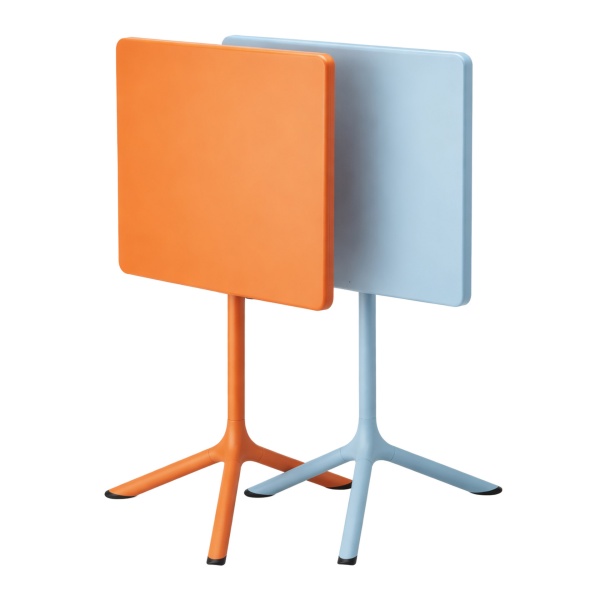
Square tables are a versatile solution for 2–4 covers. The 60×60 and 70×70 cm sizes are ideal for compact coffee shops and espresso bars — they occupy minimum floor space while providing a full dining position. The 80×80 cm size suits family restaurants and bistros. Square tables can be pushed together to form rectangular configurations for larger parties without purchasing additional pieces.
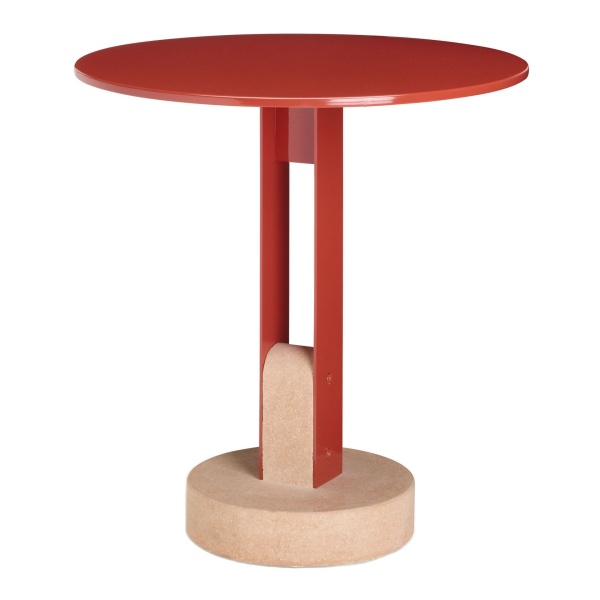
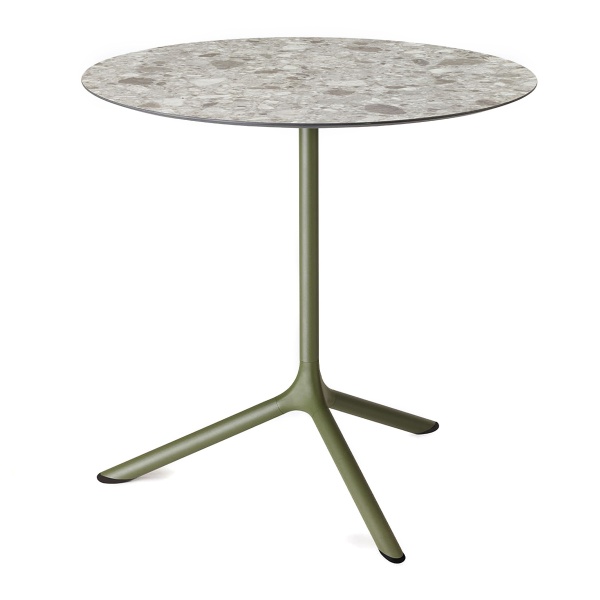
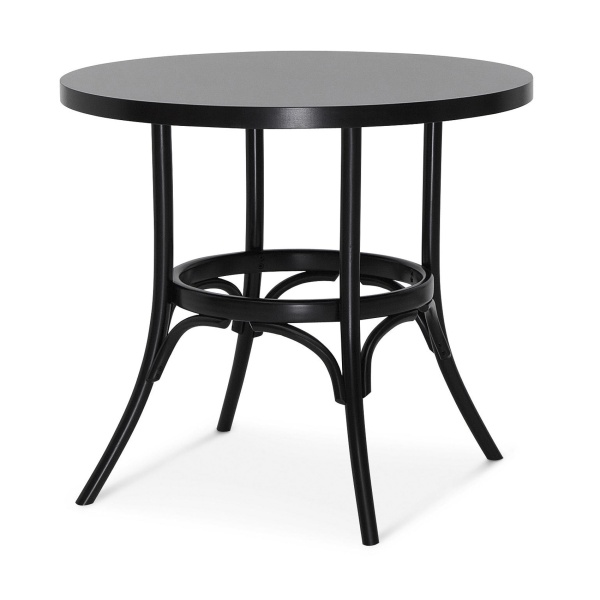
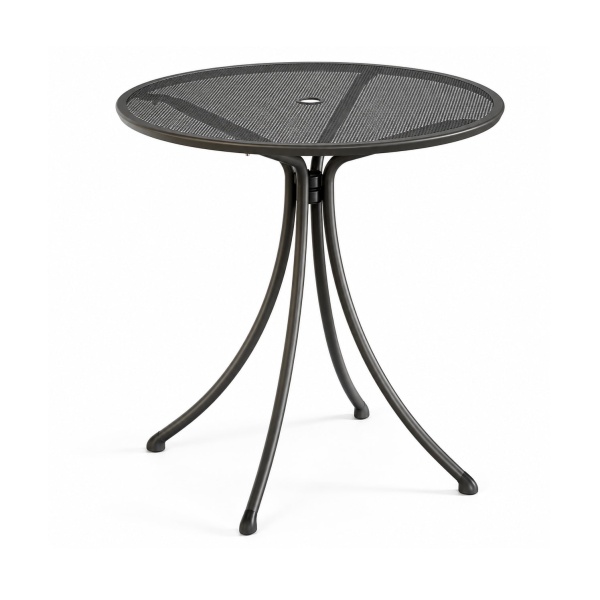
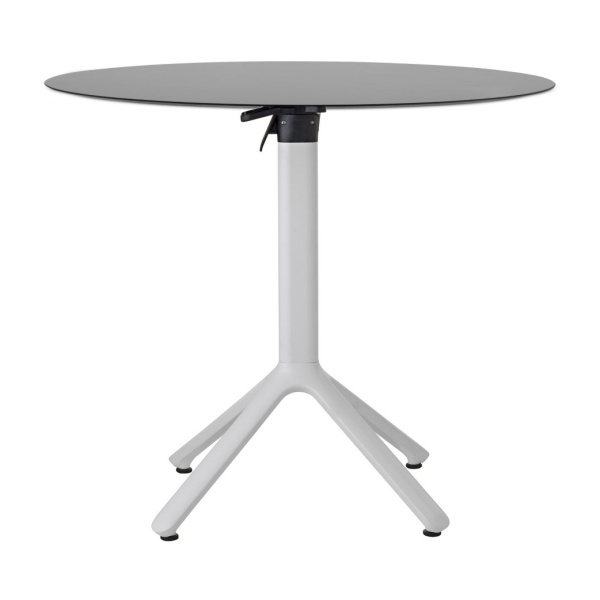
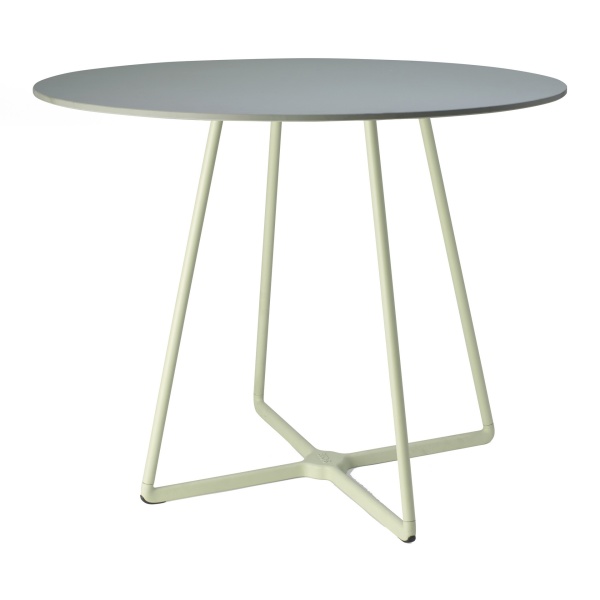
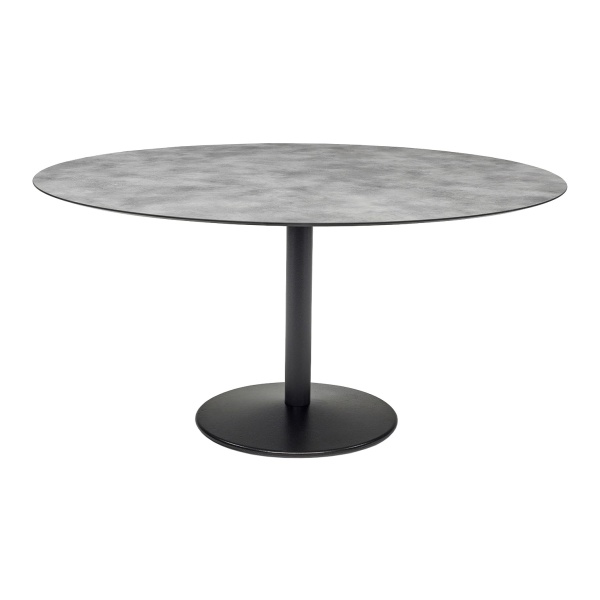
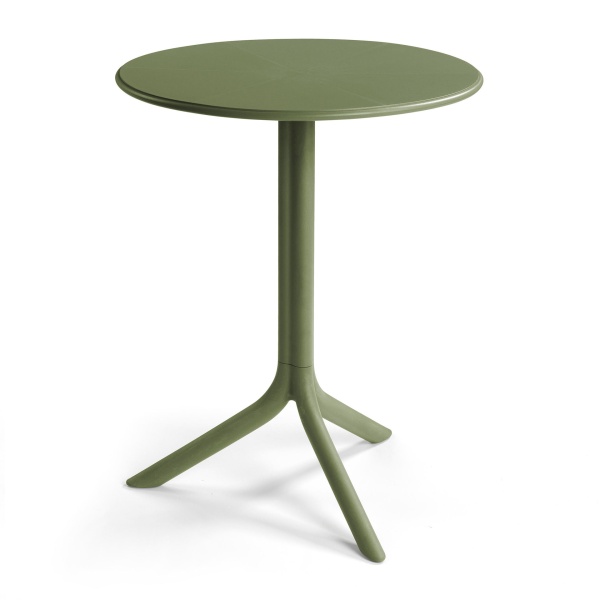
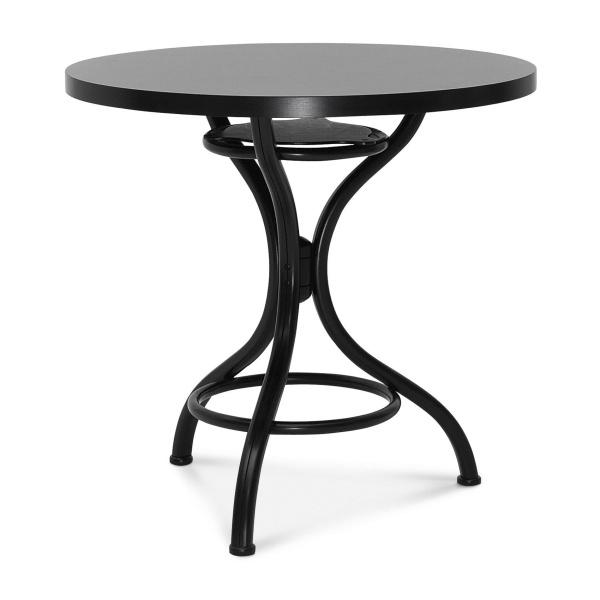
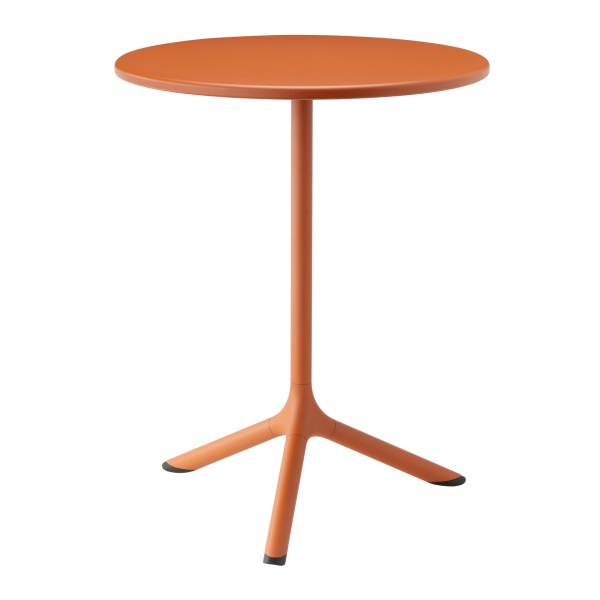
Round tables encourage social interaction and extend average guest dwell time by 12–18% compared to rectangular equivalents. This matters for fine dining and concept venues where RevPASH is driven by average spend rather than turnover. A 90 cm diameter round table seats 4 covers optimally; 120 cm seats 6.
Tabletop Materials: Service Life and Maintenance Cost
The tabletop material determines not only appearance but also longevity, maintenance cost and compatibility with cleaning and sanitation procedures. For HoReCa, resistance to moisture, chemical cleaning agents and mechanical damage is critical.
HPL (High Pressure Laminate) — the most widely specified material for restaurant tables. Wear resistance class EN 438 — from 150,000 Taber revolutions, scratch resistance HB–2H, compatible with chlorine-based cleaning agents. Decorative layer thickness 0.6–1.2 mm on an MDF or particleboard substrate. Extensive décor range — wood, stone and solid colour finishes. Best price-to-service-life ratio for the majority of formats.
Metal — powder-coated steel or AISI 304 stainless steel for industrial and loft concepts with extreme footfall. Withstands mechanical impact, unaffected by moisture and aggressive cleaning chemicals. Sheet thickness from 1.5 mm; welds ground flush and treated with anti-corrosion primer. Metal tables are frequently combined with timber or HPL elements to balance industrial aesthetics with comfort.
Solid wood and veneer — premium aesthetics with the option of full restoration by sanding. Wooden cafe tables in solid beech, oak or ash require lacquer or hard-wax oil reapplication every 1–2 years under commercial use. Veneer offers a balance between natural grain and accessible price point, though it is less resistant to moisture at the edges without quality edge banding.
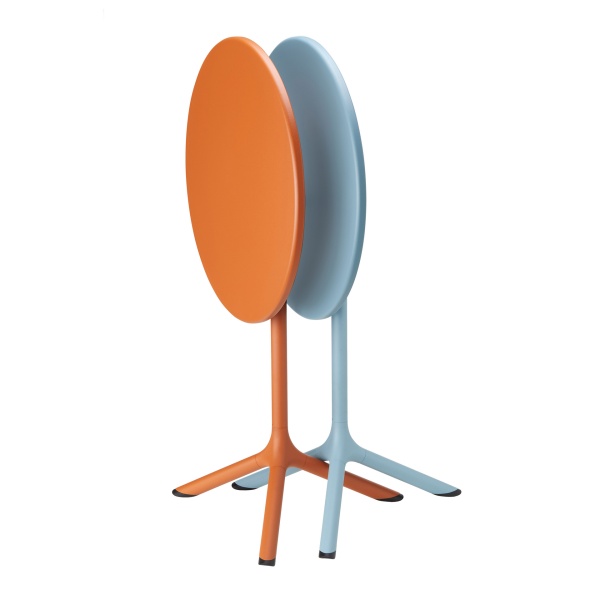
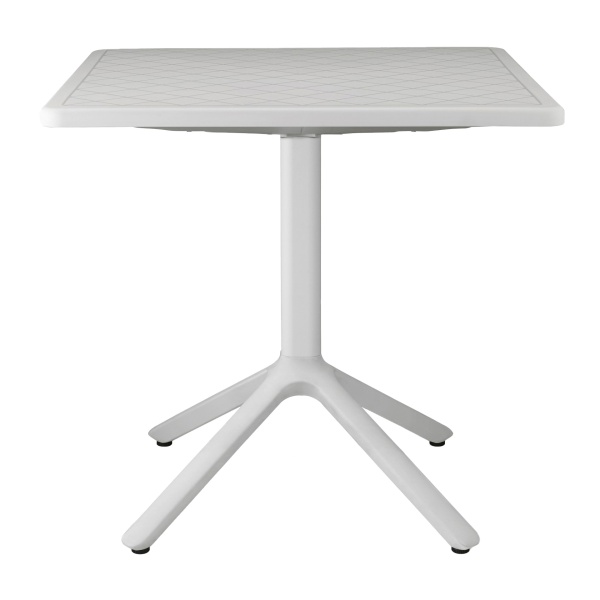
Plastic — a practical choice for outdoor terraces, seasonal formats and high-humidity areas. Plastic cafe tables are unaffected by rain, wipe clean easily and require no seasonal maintenance — making them optimal for outdoor use and high-traffic environments.
Structural Solutions: Bases and Stability
Structural stability under load is a critical factor for high-turnover venues. Wobbling or deformation during service damages the guest experience and creates a risk of incidents. The base type determines not only stability but also seating comfort and layout flexibility.
Central pedestal base
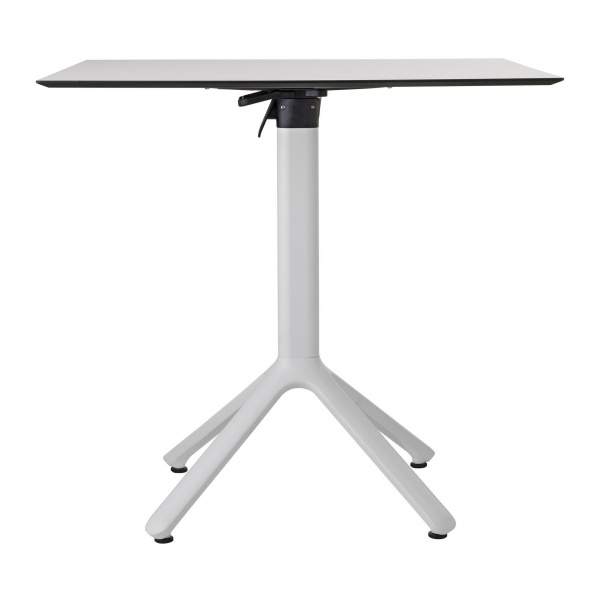
Pedestal tables provide maximum legroom and straightforward configuration with banquette seating and close-set rows. This is the most common solution for round and square tables in cafes and bistros. A cross or disc base ensures stability under loads up to 80–100 kg on the tabletop. With no corner legs, these tables are easy to reposition and do not obstruct gangways.
Four legs
Classic stability for most formats. Square or round metal legs with adjustable floor glides compensate for uneven surfaces — essential in venues with tiled or timber flooring with level variations. Table bases are available separately — convenient for replacement or self-assembly with tabletops.
Double T-frames and sled bases
For rectangular tables from 160 cm — even load distribution along the full length of the tabletop. A sled base also allows a footrest rail to be fitted, improving comfort for extended sittings. Optimal for banqueting halls and staff restaurants.
Table Sizes and Floor Configurations
Selecting the right dimensions is one of the simplest ways to increase covers without expanding the floor area. A 10 cm error can cost 1–2 seats or critically narrow a gangway. Minimum comfortable gangway between tables — 60 cm; between a table and the wall — 45 cm.
| Table size | Number of covers | Recommended format |
|---|
| 60×60 / Ø70 cm | 2 covers | Coffee shop, espresso bar, fast casual |
| 70×70 / 80×80 cm | 2–4 covers | Bistro, compact dining room |
| 120×70 / Ø90 cm | 4 covers | Family restaurant, bistro |
| 140×80 / Ø120 cm | 4–6 covers | Fine dining, corporate restaurant |
| 160–200 cm | 6–8 covers | Banqueting hall, staff restaurant |
| Modular systems | 8 or more | Banquets, flexible event spaces |
How Tables Affect Floor Economics
Tables are a tool for managing restaurant economics. The right configuration has a direct impact on financial performance: it reduces average guest dwell time by 8–15% in high-footfall formats, increases RevPASH in lunch trading by 6–12% through denser and more comfortable seating, and lowers operating costs through material durability and minimal maintenance requirements.
This is why, when fitting out a new floor or undertaking a refurbishment, it makes sense to start with the tables: they set the geometry, gangways, density and service flow. It is also worth reviewing the bar tables section if the venue includes a bar or high-top area. If the venue has a terrace or outdoor space, it is logical to consider outdoor terrace tables at the same time — so the exterior matches the style and layout of the main floor. For a complete fit-out, it is convenient to coordinate the full selection within the cafe furniture category.