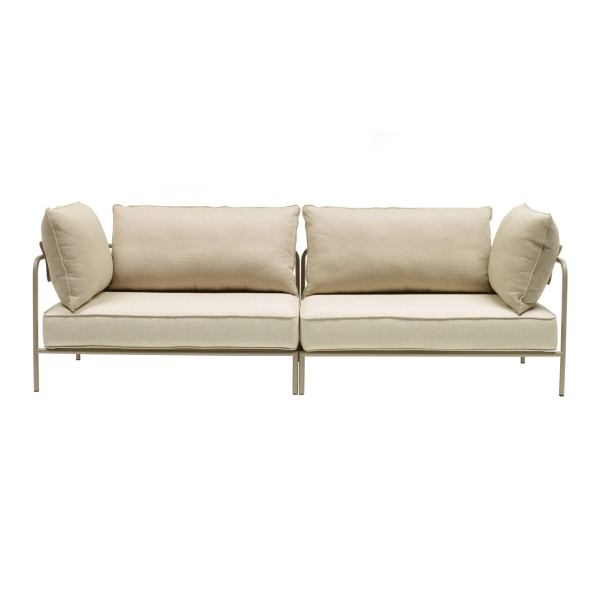
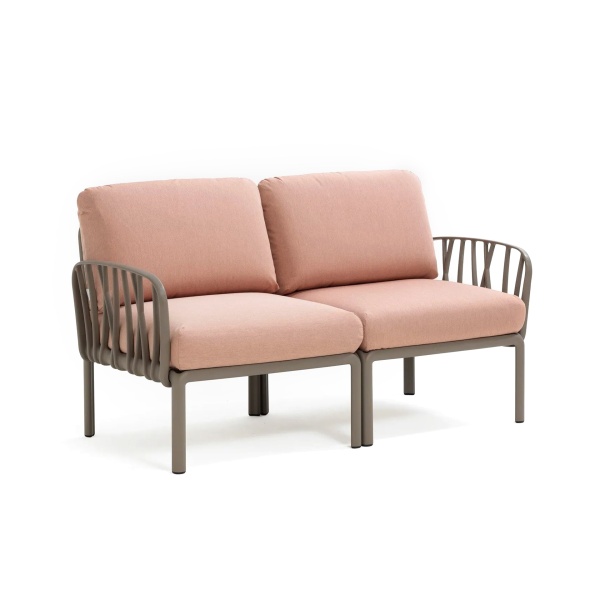
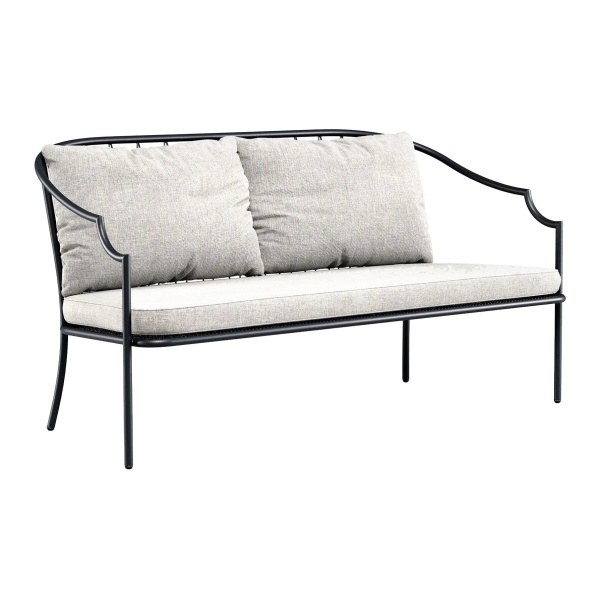
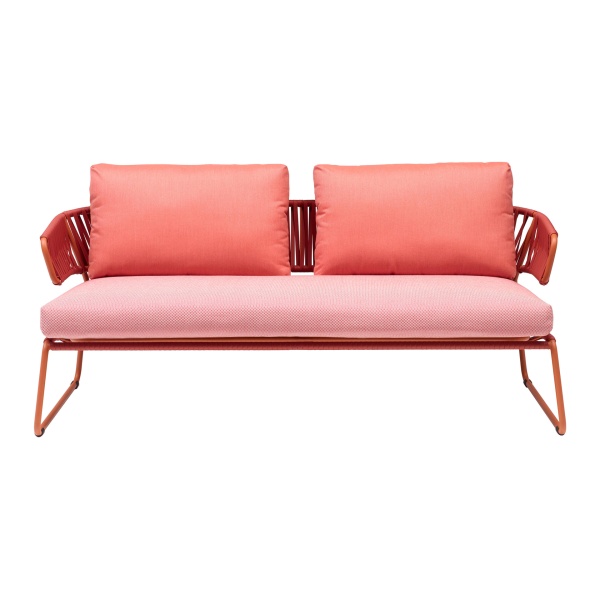
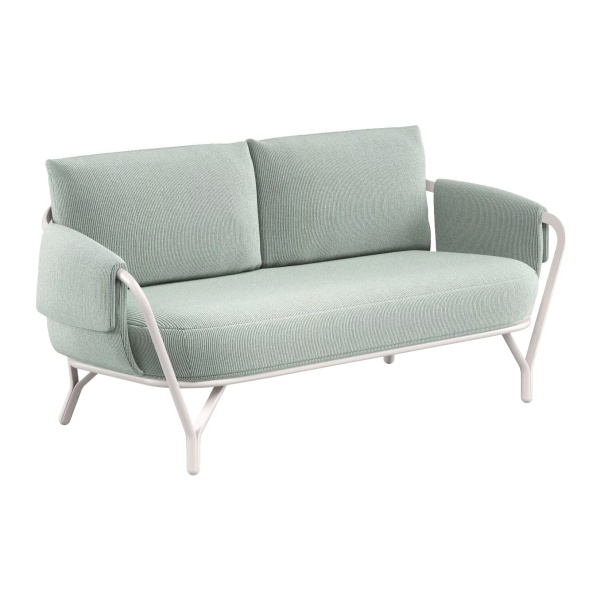
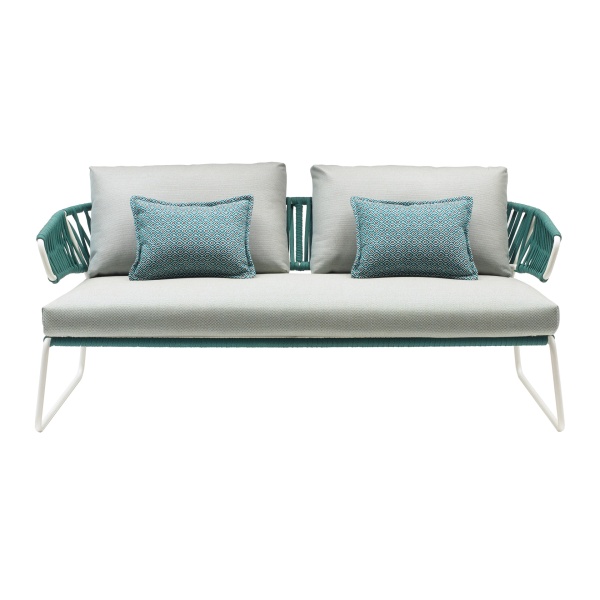
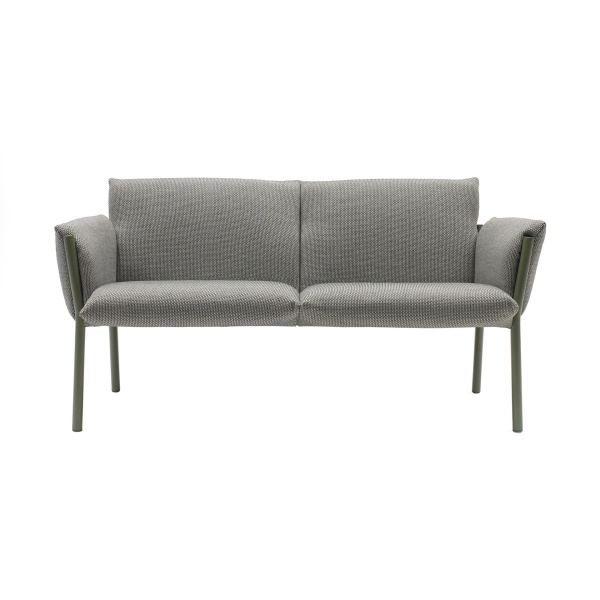
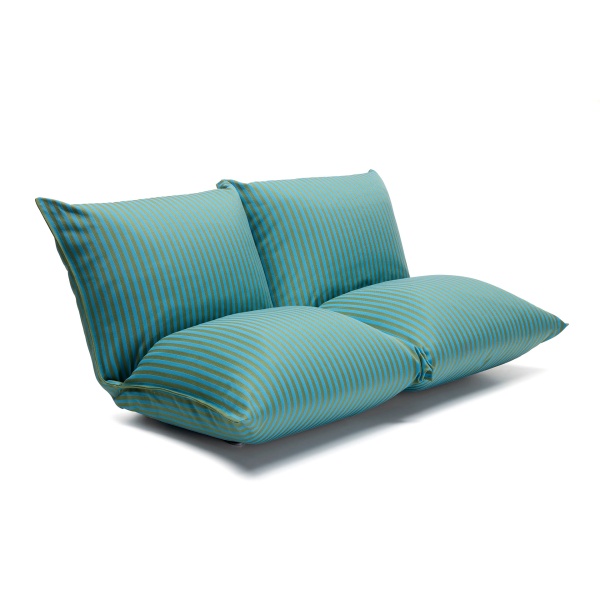
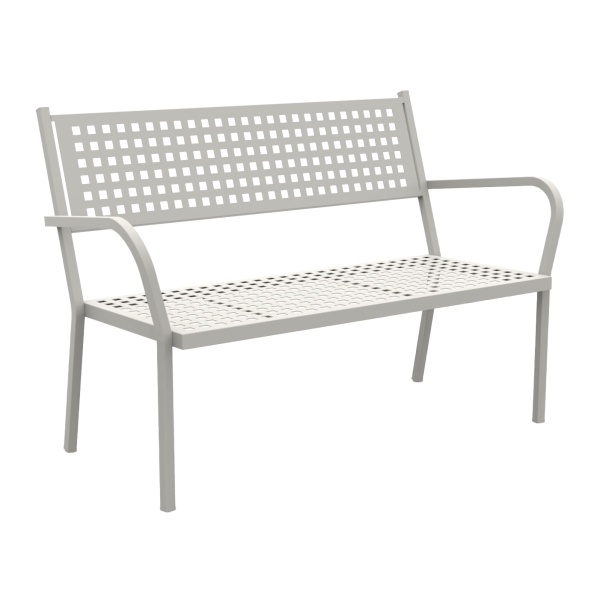
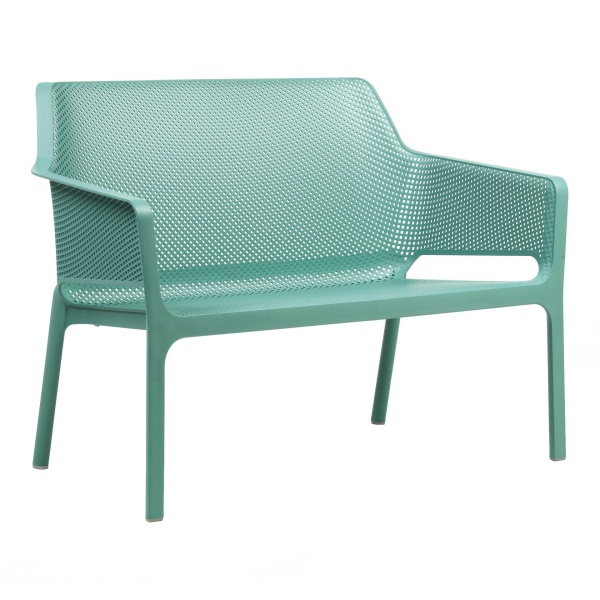
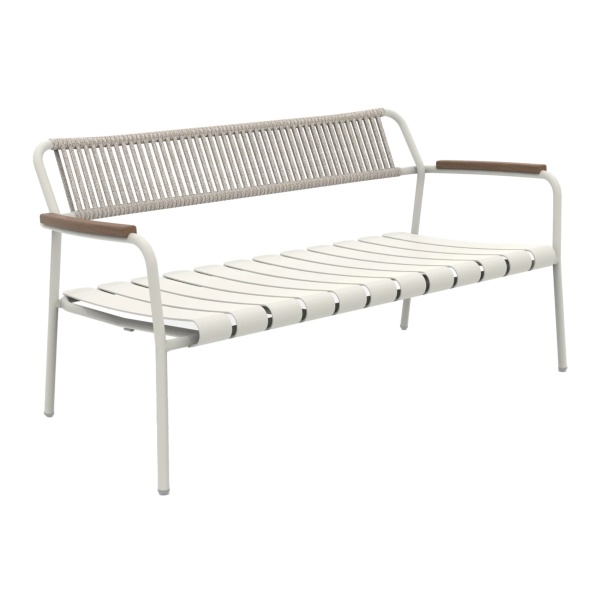
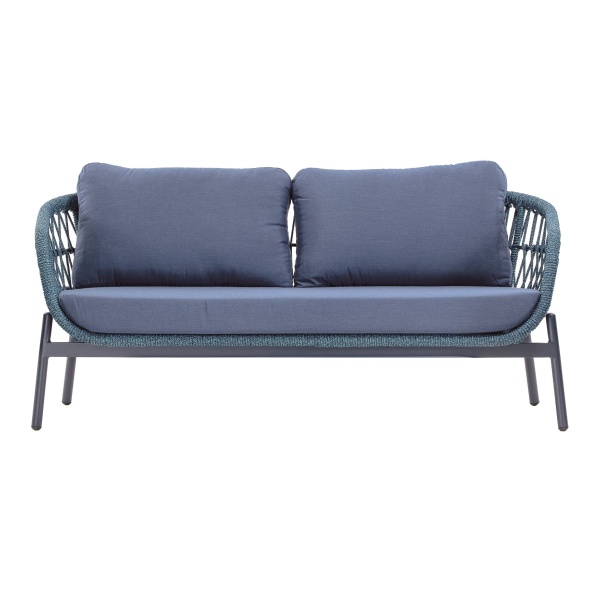
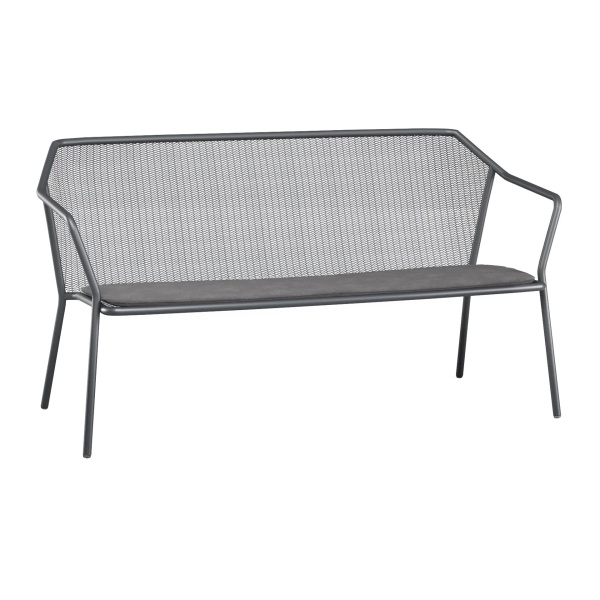
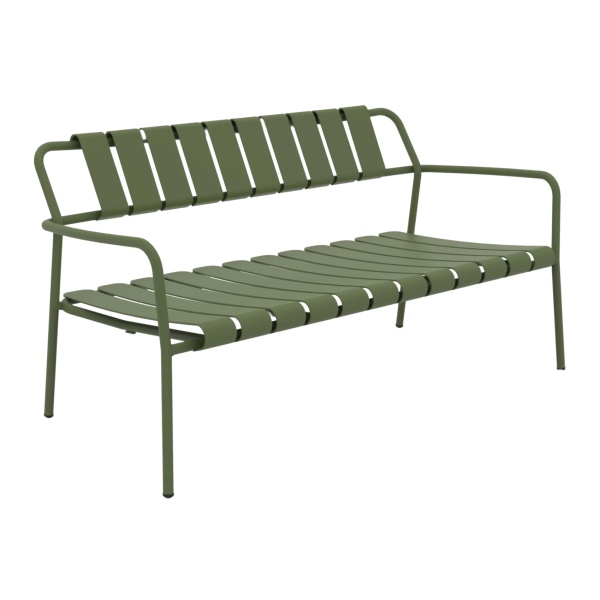
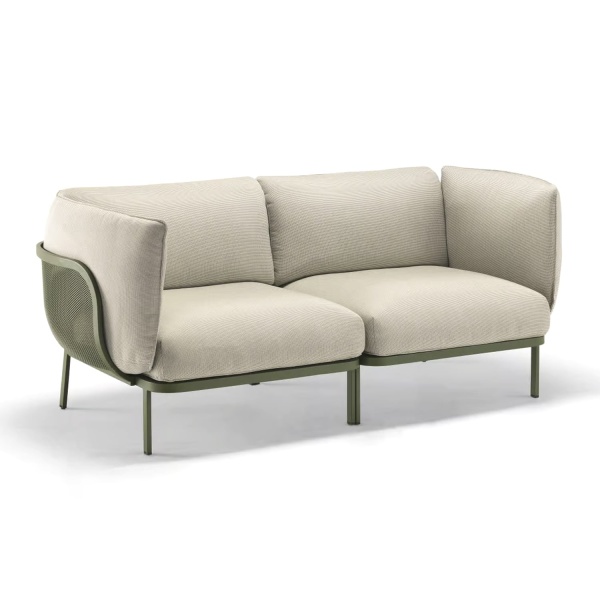
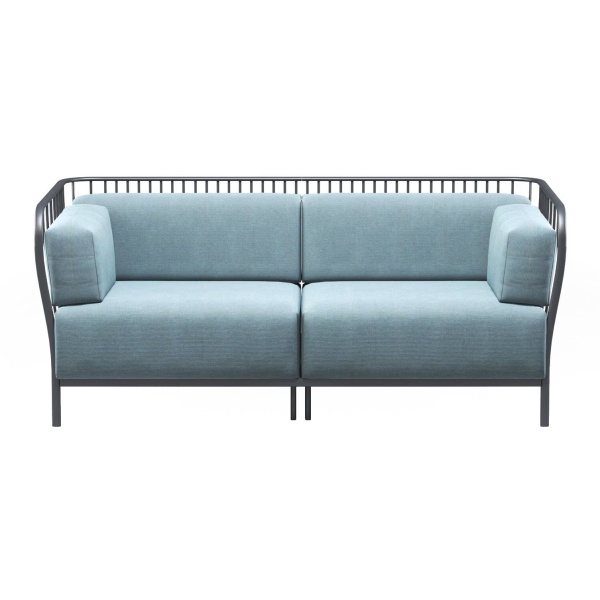
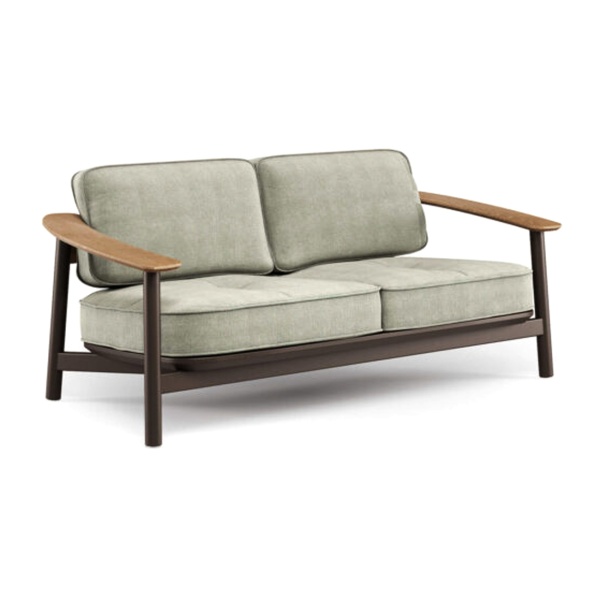
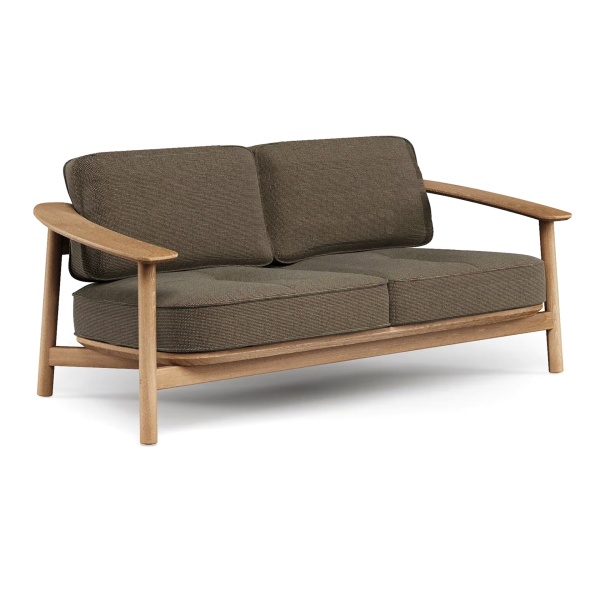
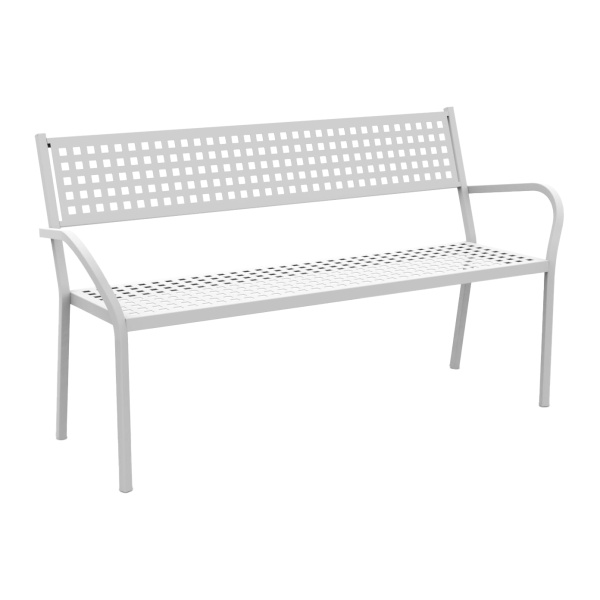
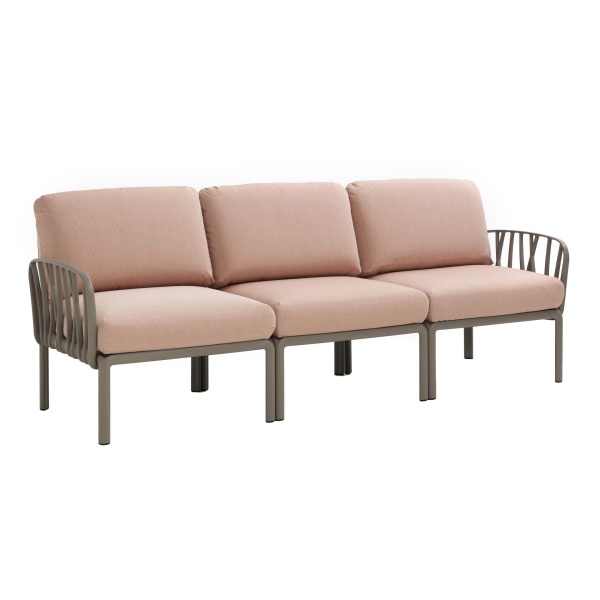
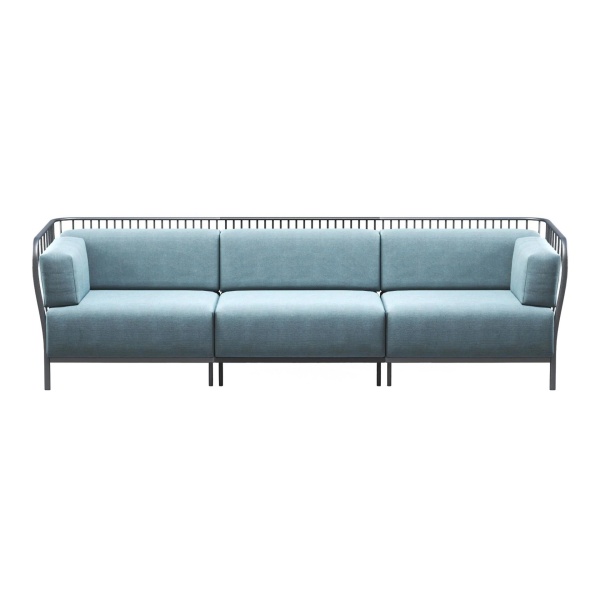
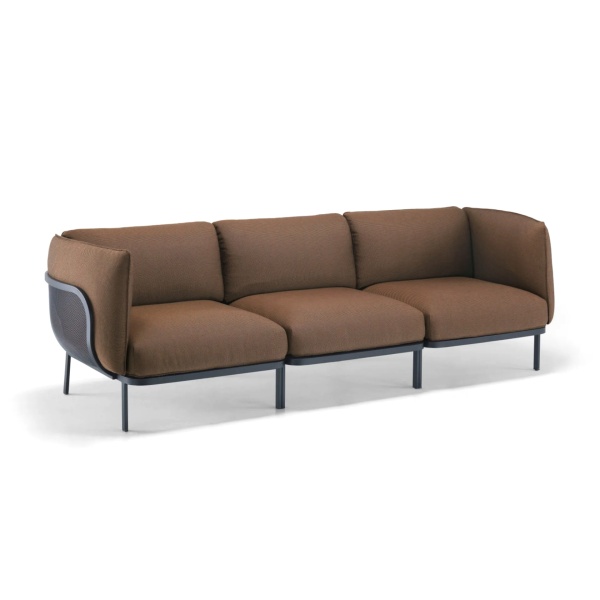
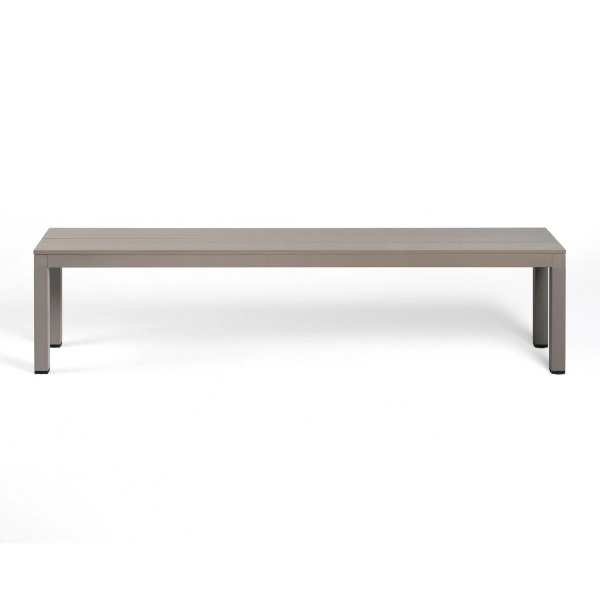
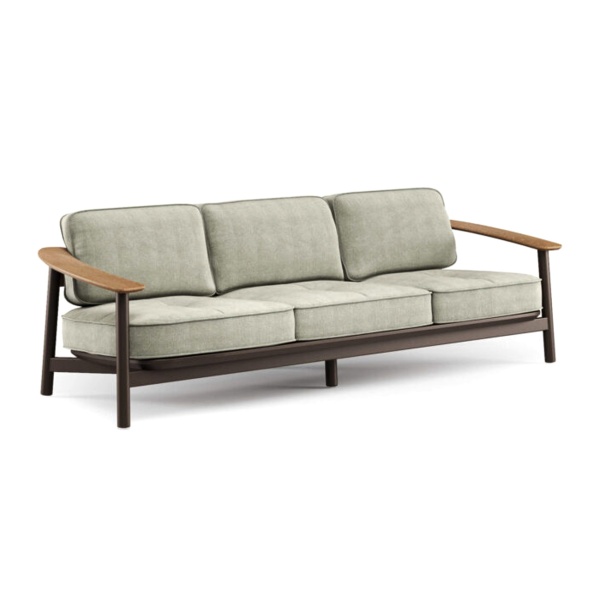
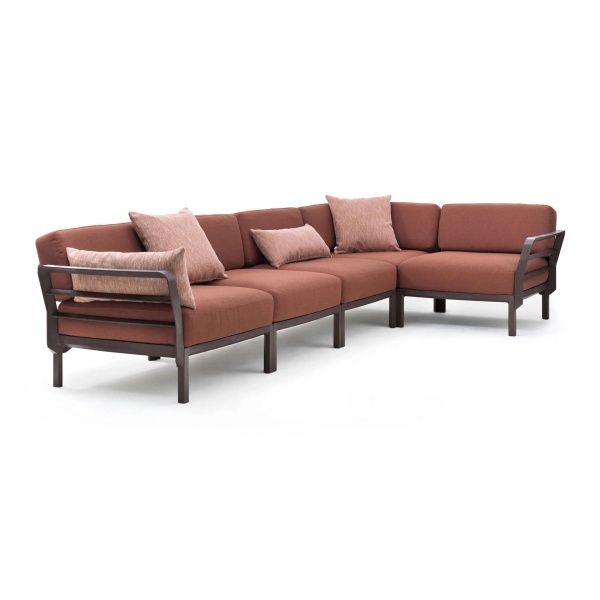
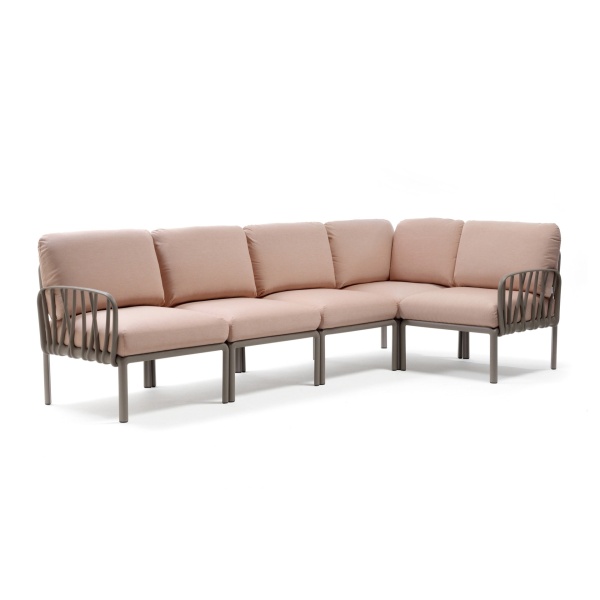
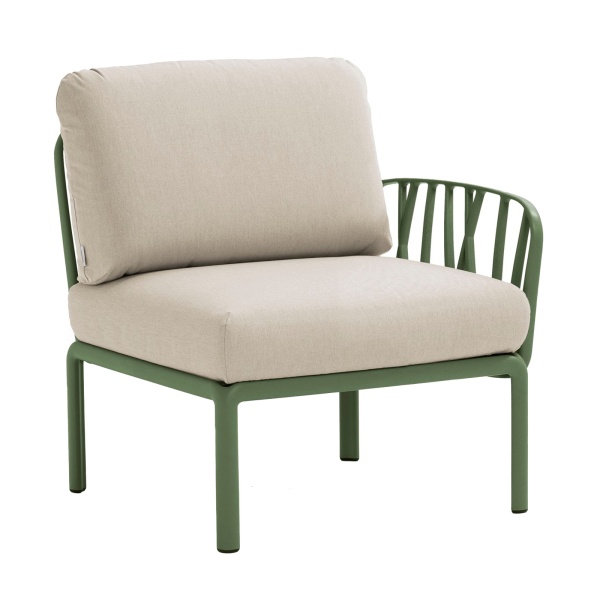
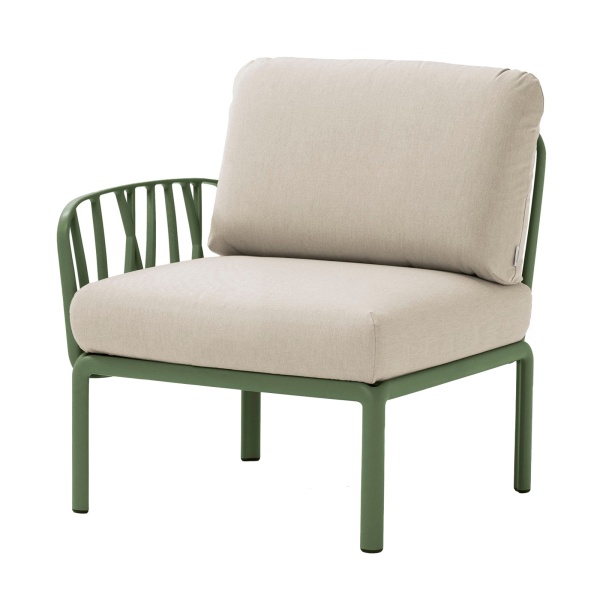
Outdoor sofas for terraces are contract-grade outdoor furniture designed for lounge areas in restaurants, hotels and open hospitality spaces, engineered for intensive seasonal use under direct sunlight, moisture exposure and high guest traffic. Unlike indoor models, they are designed as part of a broader terrace furniture, taking into account climate conditions, daily cleaning routines and operational logistics.
Within a restaurant environment, a sofa performs differently from a chair. It reshapes guest behaviour: increasing dwell time, reducing the sense of urgency and encouraging additional orders. A lounge zone with sofas always operates under a different economic model: lower seating density is offset by a higher average bill. If a chair drives turnover, a sofa drives revenue per guest — and this distinction is critical in hospitality.
Materials: what actually withstands outdoor load
Material and construction determine how many seasons the furniture will last without losing appearance or functionality. For high-traffic terraces, this is an operational cost issue rather than an aesthetic one.
Aluminium frame is the baseline standard for contract outdoor sofas. Profiles from 1.8–2 mm thickness do not corrode, withstand loads up to 200 kg per module and retain structural geometry over 5–7 seasons. Powder coating class C3 is suitable for urban terraces, while C4/C5 is required for coastal environments and high-humidity zones. A standard module weighs 12–18 kg, ensuring stability in wind conditions without additional fixing.
Powder-coated steel is used in premium solutions and areas with increased mechanical load. Heavier than aluminium (20–30 kg per module), it provides additional stability but makes repositioning more demanding for staff. Requires coating thickness of at least 60–80 microns — otherwise corrosion points appear on welded joints within 1–2 seasons.
Technopolymer and composite materials are resistant to chlorinated water, ultraviolet exposure and aggressive cleaning agents. UV resistance exceeds 2000 hours under ISO 4892-2 without colour fading. Used in modular sofas for contemporary concepts and beach-club formats. Easy to clean and require no seasonal refinishing.
Outdoor fabrics (Sunbrella, Agora, Acrisol) are mandatory for commercial use. Water-repellent, UV-resistant (class 7–8 under Xenotest), and resistant to mould and mildew. Contract-grade density starts from 300 g/m², with abrasion resistance from 30,000 Martindale cycles. Standard residential textiles degrade within a single season — a common and costly mistake.
Modular systems: flexibility as an operational advantage
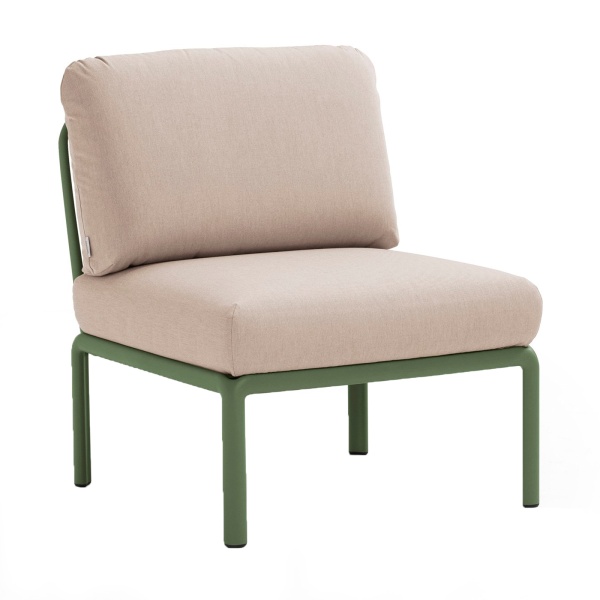
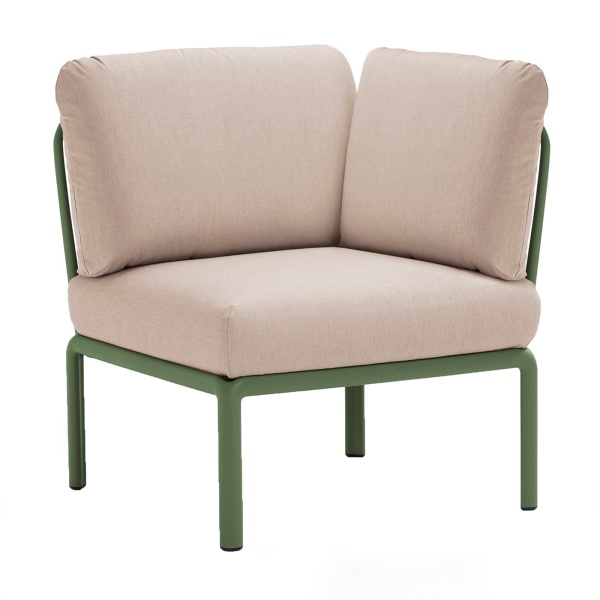
Modern contract sofas for terraces are not static objects, but modular systems. Corner sections, central modules, poufs, side tables and individual seating elements are configured for a specific space and can be easily reconfigured for seasonal changes, events or varying occupancy levels.
Particularly important are corner sofas for terraces: they allow efficient use of perimeter space, create private lounge zones and prevent loss of usable area in corners. For restaurants, hotels and beach-club formats, this is one of the most practical ways to create comfortable seating without chaotic placement of individual chairs.
For venues with fluctuating occupancy, this is critical: in summer, the terrace operates at maximum capacity, while in spring and autumn it shifts to a more compact format. A modular sofa allows seating to be adapted without purchasing additional furniture. In combination with lounge chairs and outdoor tables, sofas create fully functional commercial lounge zones with predictable economics.
Ergonomics and comfort: parameters that influence average spend
The key distinction of a sofa is seat depth and backrest angle. For a restaurant lounge, the optimum is a backrest angle of 100–110°, seat depth from 55 cm, and seat height of 38–44 cm. With smaller parameters, guests sit more tensely — and leave sooner.
The filling of cushions is equally important. Foam with a density of 35 kg/m³ or higher retains its shape after 3–5 seasons of intensive use. Lower-density solutions (18–22 kg/m³) begin to collapse within 3–4 months — and this is noticeable to guests. For outdoor use, quick-drying fillings such as Dacron or siliconised fibre are recommended, as they do not retain moisture after rain.
Operational efficiency: real staff workload
An outdoor sofa requires daily cleaning, repositioning and condition monitoring. The more complex the construction, the more time staff will spend maintaining it. In high-traffic restaurants, this translates into hours of labour every week.
Features that reduce operational load include removable zip covers (machine washing instead of dry cleaning), quick-drying fillings (ready for use within 2–3 hours after rain), and rubberised feet or bases (preventing floor damage during movement). For large terraces with daily maintenance routines, module weight is critical — the optimum is up to 20 kg for handling by a single staff member.
How to integrate sofas into a terrace layout
Outdoor sofas do not function in isolation — they operate as part of a broader terrace furniture that defines spatial logic: where guests sit, how they move, and how long they stay.
On open-air sites, sun protection plays a key role — parasols for terraces allow lounge zones to be used throughout the day rather than only in the evening. In hotels and beach-club formats, sofas are combined with beach furniture and sun loungers, creating long-stay relaxation areas with minimal guest turnover and maximum F&B revenue.
The full range for complete outdoor space furnishing is available in the outdoor furniture category.
Common mistakes when selecting an outdoor sofa
Choosing residential models. Indoor sofas do not withstand either climate conditions or hospitality-level usage: fabrics degrade within a season, fillings absorb moisture and fail to dry, and frames corrode. Even premium residential sofas become more expensive over time compared to contract outdoor solutions.
Underestimating structural weight. Modules weighing 8–10 kg shift under guest use and wind exposure. The minimum stable weight for a fixed lounge zone is 15 kg per module. For exposed areas without wind protection — from 20 kg or fixed anchoring.
Saving on fabrics. Fabric is the first element shaping guest perception. Residential textiles fade, stain and lose form within 3–4 months of intensive use. Contract outdoor fabrics with 30,000 Martindale cycles and UV class 7–8 are the minimum requirement for hospitality.
A contract terrace sofa is not an expense, but an investment in guest experience and operational stability. The payback period for a high-quality outdoor solution is typically one operating season.