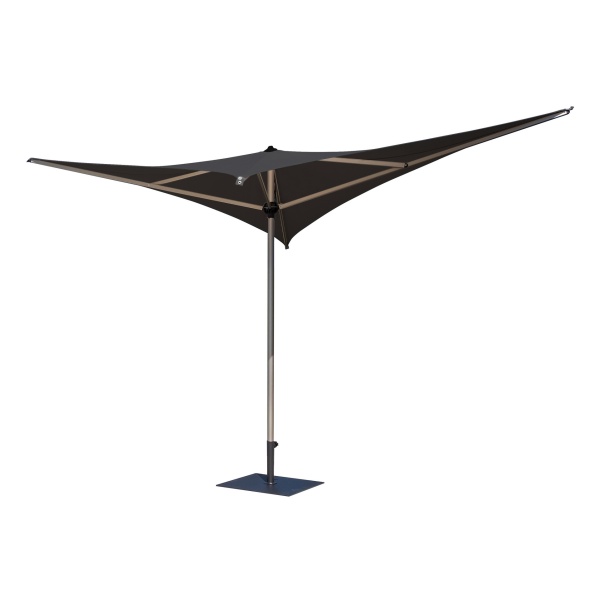
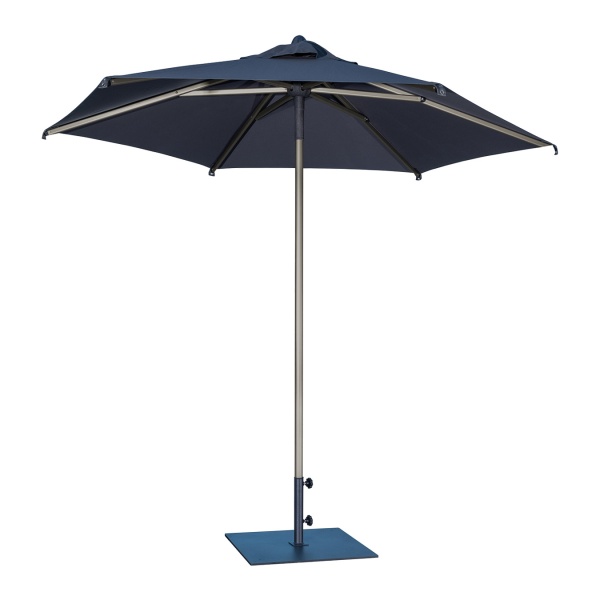
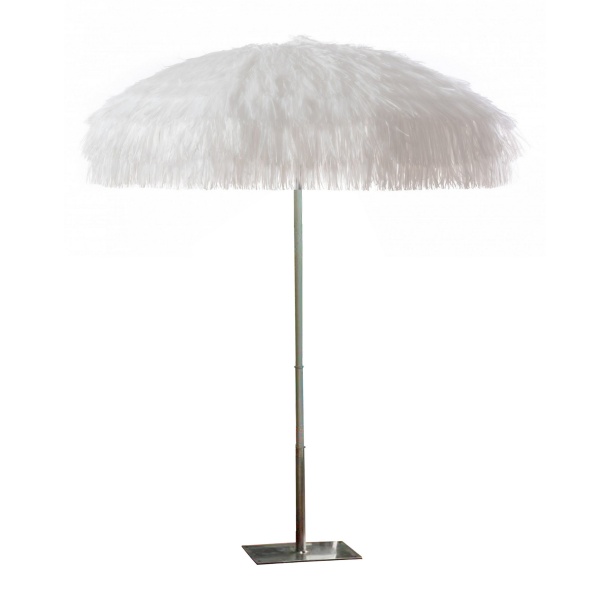
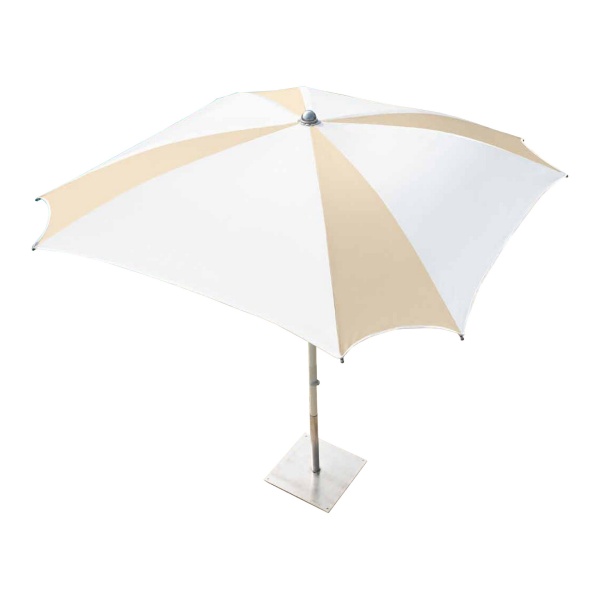
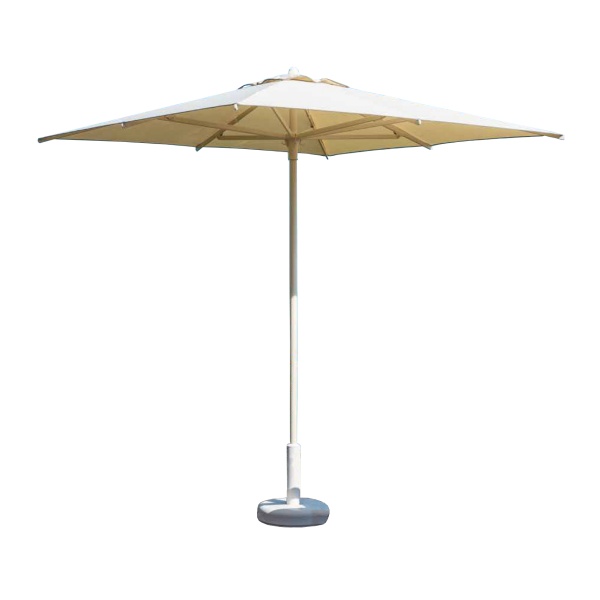
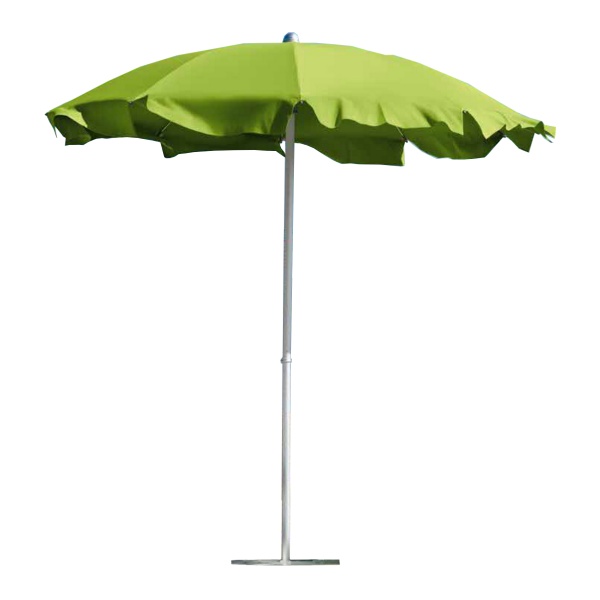
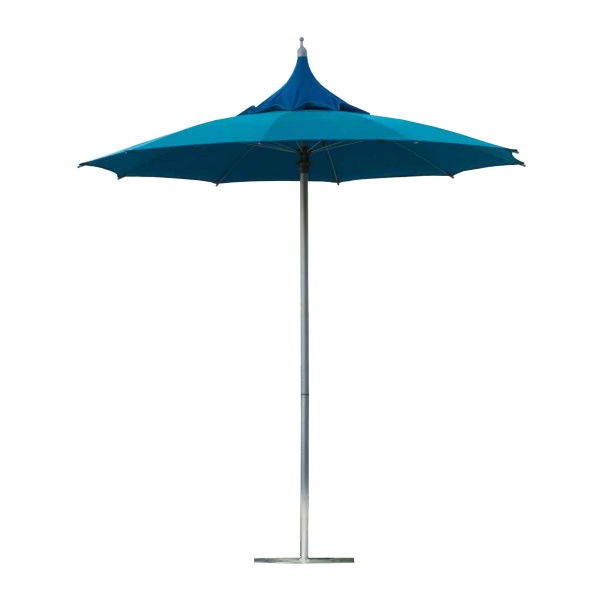
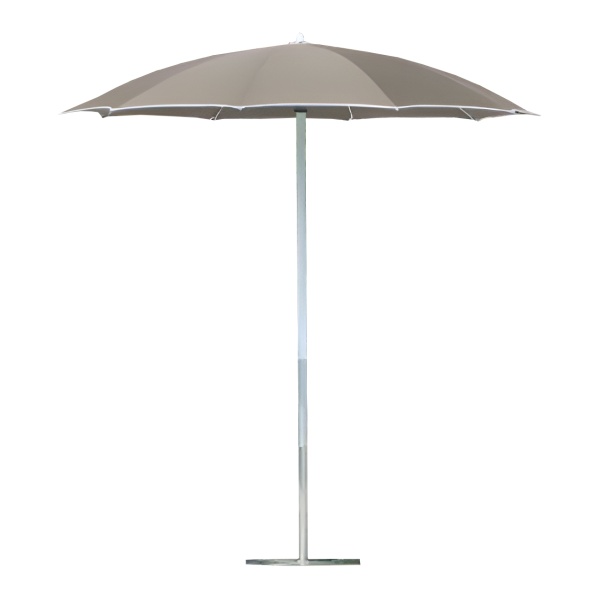
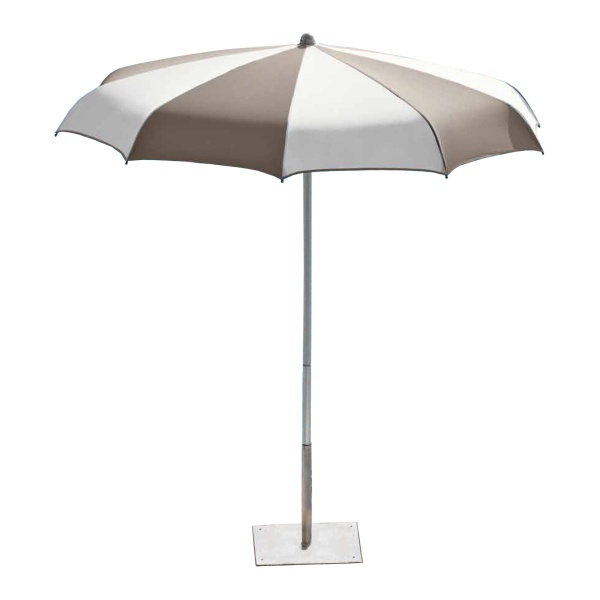
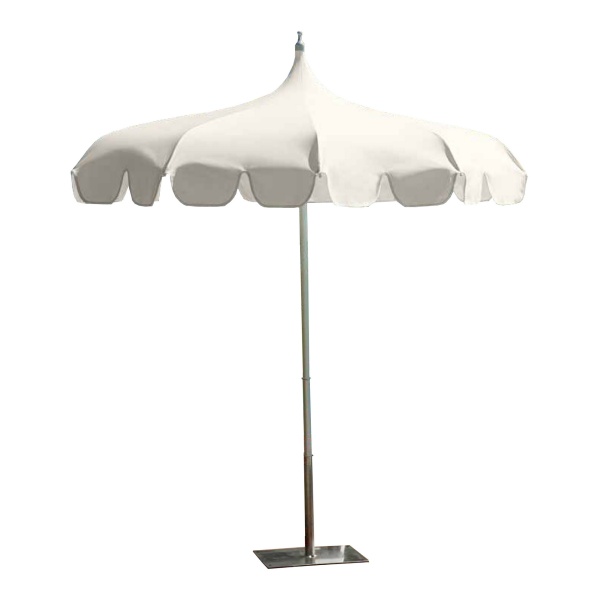
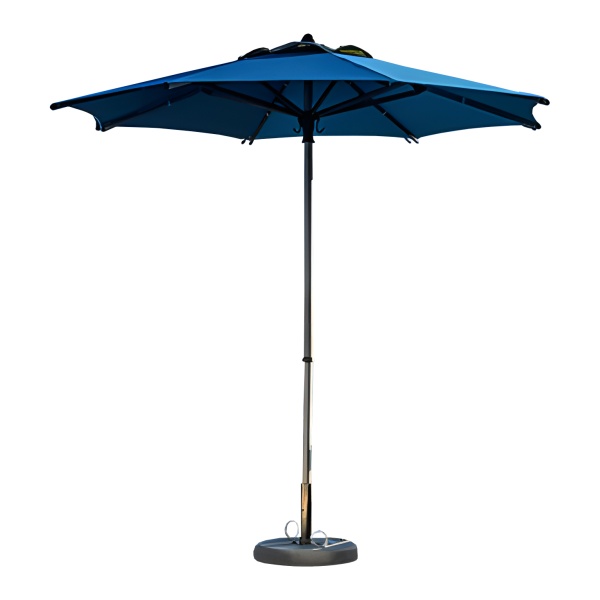
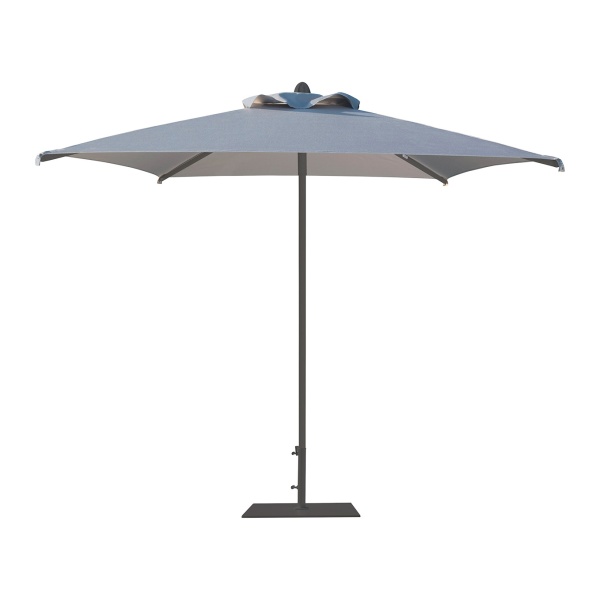
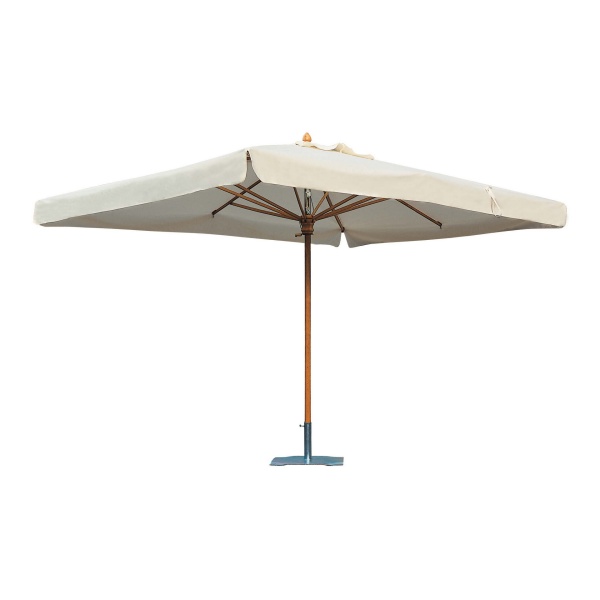
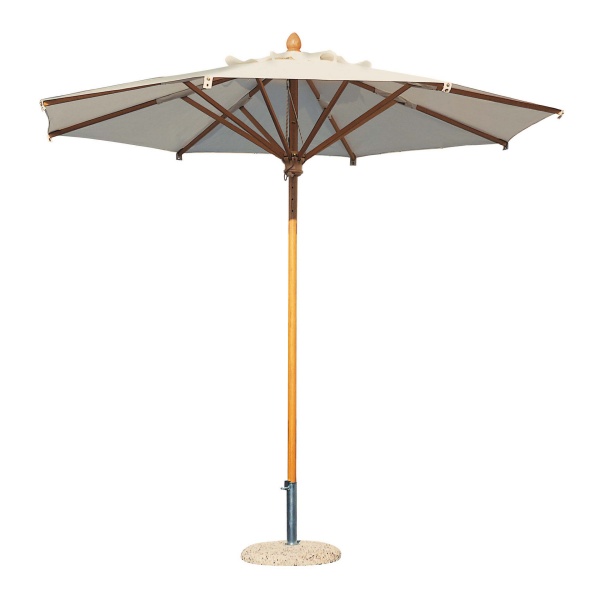
Beach parasols for hotels and resorts are not decorative accessories but essential tools for managing comfort in HoReCa beach and pool areas. They determine how long guests actually stay on a sun lounger, how long the zone remains active during peak sun hours, and whether the space looks organised, professional and commercially efficient.
Within the structure of shading solutions and the wider outdoor furniture catalogue, beach parasols work together with beach furniture to create a complete relaxation environment rather than just a point of shade. That is why they are evaluated not only by canopy size, but by wind stability, material durability and the ability to withstand daily commercial use in sand, moisture, salt and direct sunlight.
A hotel beach umbrella is not a garden parasol from a retail store
A hotel with 60 seats in its beach area uses each umbrella 8–10 hours a day, 7 days a week throughout the season. A standard residential parasols made from polyester fabric fades after a month under this level of use, the canopy starts sagging and the opening mechanism becomes loose. Commercial environments require an entirely different class of product.
Contract-grade beach parasols for Hospitality are engineered for intensive daily operation. Anodised aluminium frames do not rust from sea salt exposure. Fabrics with UV stabilisers and UPF ratings do not fade after hundreds of hours of direct sunlight. Opening and locking mechanisms are designed to withstand thousands of cycles without jamming. Sand anchors or ground spikes provide secure installation without constant staff supervision.
The key difference is lifespan: a residential beach parasol is designed for approximately 30–50 hours of seasonal use, while a commercial umbrella is built for 500–800 hours. The durability difference is 10–15 times greater, directly affecting the operating costs of a hotel beach zone.
How a beach parasol differs from a terrace parasol
Beach parasol and umbrellas and restaurant terrace parasols are different products designed for different operational scenarios. A terrace umbrella is usually fixed permanently above a dining table and outdoor chairs, often mounted on a heavy base or anchored to concrete, with sizes ranging from 2.5 m to 6×6 m.
A beach parasol is installed in sand or in a lightweight base next to a sun lounger. It has a smaller diameter — typically Ø 1.8–2.5 m — and is intended for 1–2 loungers rather than a dining table. A tilt mechanism allows the canopy to follow the sun throughout the day without moving the structure. Light weight and mobility are essential because staff set up and remove umbrellas daily throughout the season.
How to choose beach umbrellas for Hospitality
Diameter and shading area. The standard size for one sun lounger is Ø 1.8–2 m. For two loungers placed side by side, Ø 2.5 m or a rectangular 2×3 m umbrella is recommended. If there is a service aisle between loungers for staff carrying drinks, two separate umbrellas are often more flexible and operationally practical than one oversized canopy.
Canopy fabric. Acrylic fabric such as Sunbrella is the industry standard for commercial beach environments. UPF 50+ means the canopy filters more than 98% of UVB and 95% of UVA rays. Colours remain stable after 5–7 seasons of intensive sun exposure. Polyester with reflective silver coating is a more budget-friendly option with an expected lifespan of 2–3 seasons in lower-intensity locations.
Frame and pole. Aluminium is the best option for marine environments. It does not corrode from salt exposure and remains lightweight — umbrellas typically weigh only 2–4 kg — allowing staff to move them easily. Pole diameter for commercial models should start from 32 mm. Thinner poles (25–28 mm) belong to residential-grade products and tend to bend in windy conditions.
Tilt mechanism. A mandatory feature for beach areas.
The canopy angle can be adjusted manually so guests or staff can follow the sun without relocating the umbrella. Without tilt adjustment, loungers remain shaded only during certain hours, leaving guests exposed to direct sunlight for the rest of the day.
Ventilation vent. A top vent allows wind to pass through the canopy, reducing uplift during gusts. On open coastal beaches, umbrellas without vents become dangerous sails in strong wind conditions — they can be pulled out of the sand and injure guests.
Parasol quantity and layout planning
The standard configuration for hotel beach areas is one Ø 2–2.5 m parasol for every two loungers. When loungers are arranged in pairs, the umbrella is positioned between them with slight offset towards the sunny side. The recommended spacing between parasol poles is 3–4 m to prevent canopies from overlapping or interfering with each other in windy conditions.
For hotel pool areas, where loungers are placed along the pool edge, operators typically use either beach umbrellas with spike systems installed into dedicated holders or compact umbrellas mounted on heavy wheeled bases that can be moved across tiled surfaces without damage. Ground spikes are suitable only for sandy beaches.
How beach umbrellas affect hotel revenue
A guest lying in direct sunlight without shade for more than 20–30 minutes will usually return indoors or go back to the room. A guest under an umbrella stays in the beach area for 2–3 hours, orders drinks and snacks from the beach bar, uses towels and additional paid services. A shaded beach environment is therefore a direct investment into higher average spend and longer guest dwell time within recreational areas.
For beach clubs this becomes even more critical: every seat under an umbrella is a revenue-generating seat. Unshaded zones lead to empty loungers during peak daytime hours when the sun is strongest.
Buy commercial beach umbrellas for hotels, resorts, beach clubs and pool areas with delivery across the world — available from stock or made to order. We select suitable models based on seating capacity, surface type and hospitality concept.