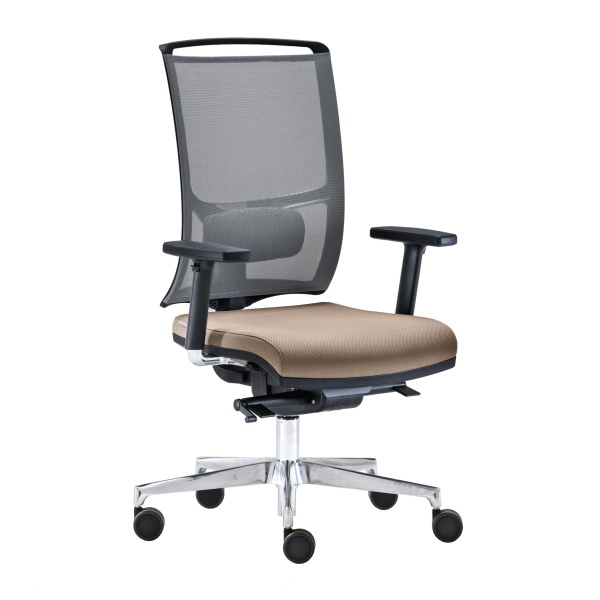
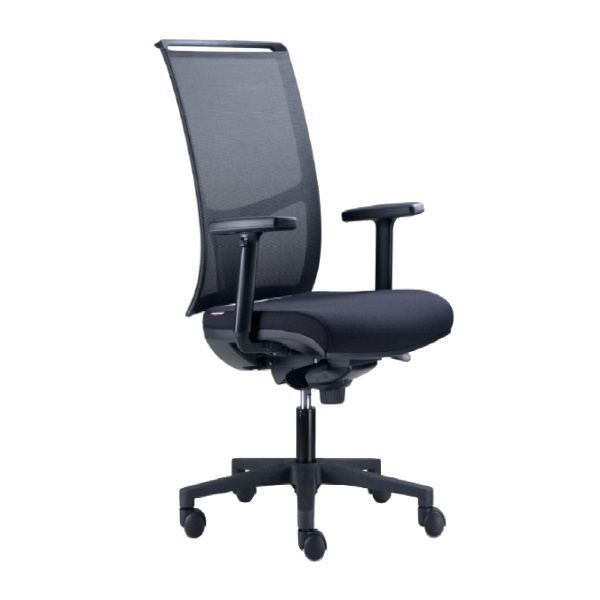
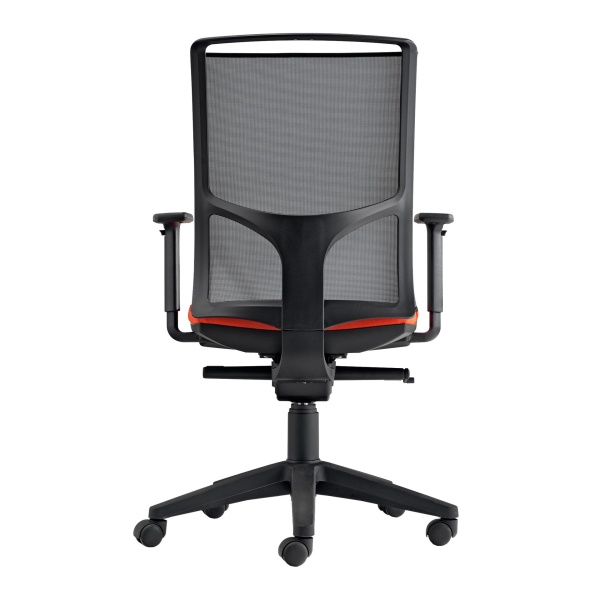
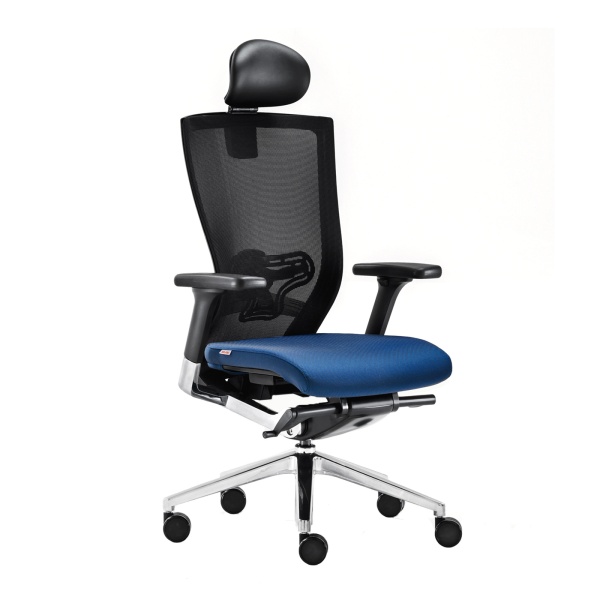
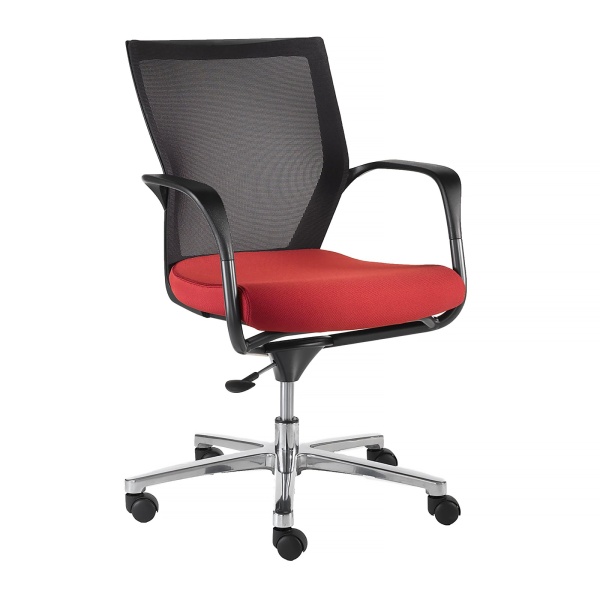
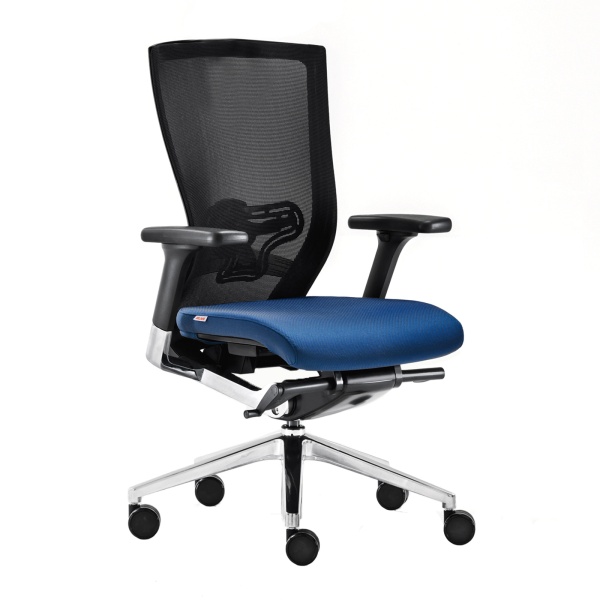
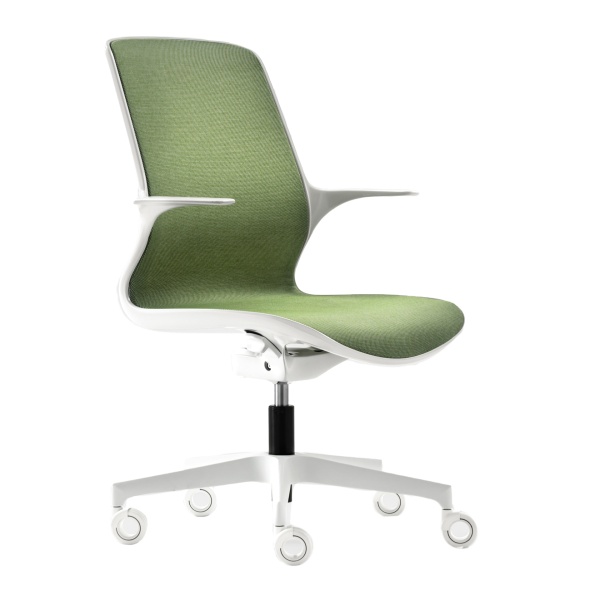
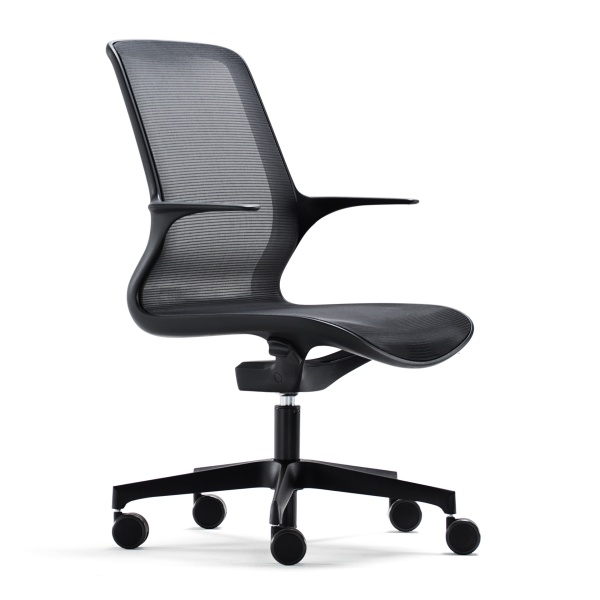
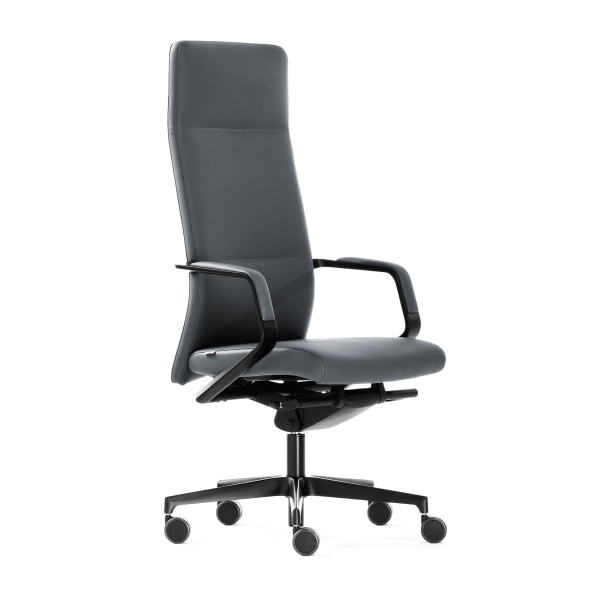
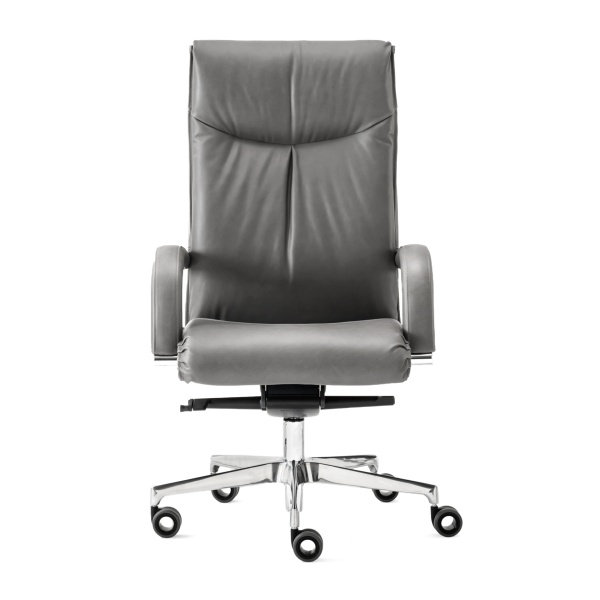
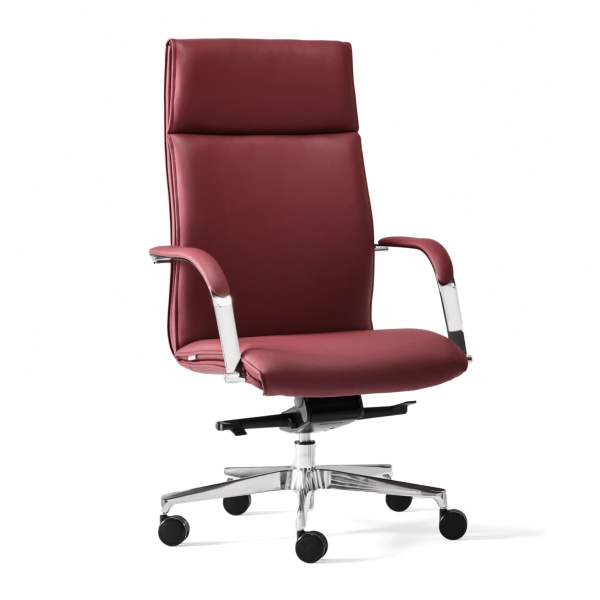
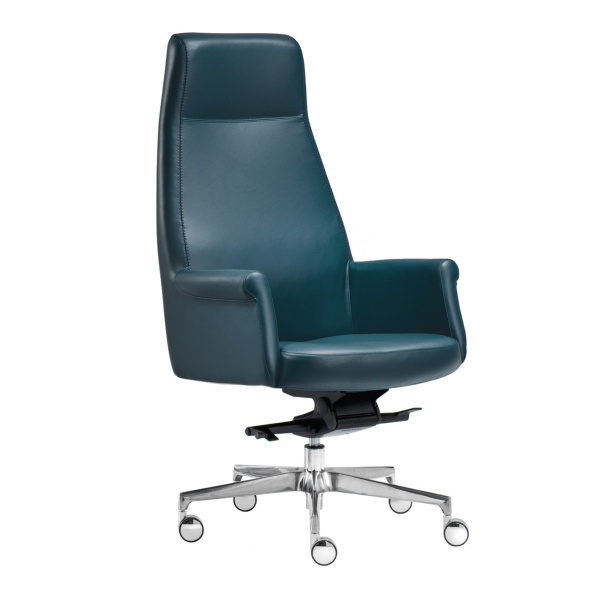
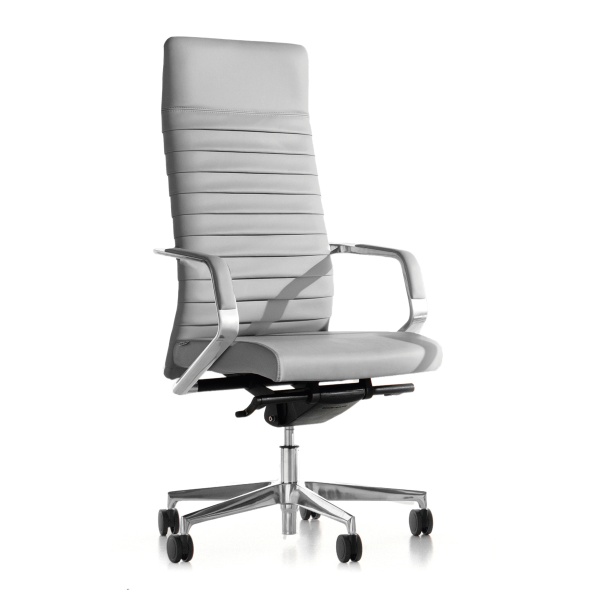
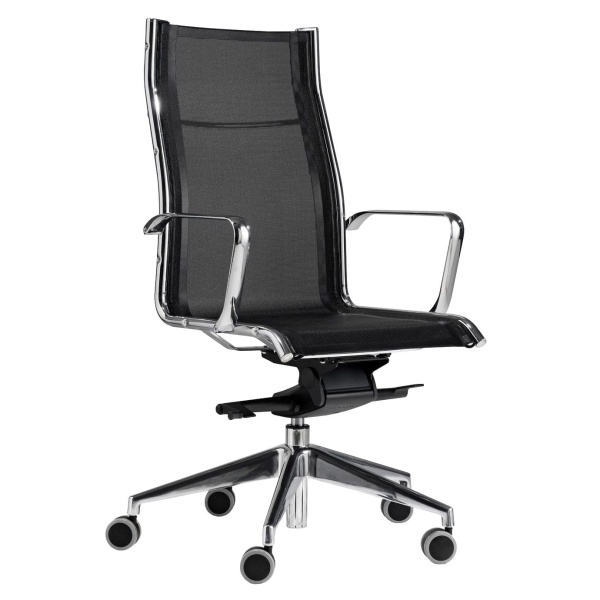
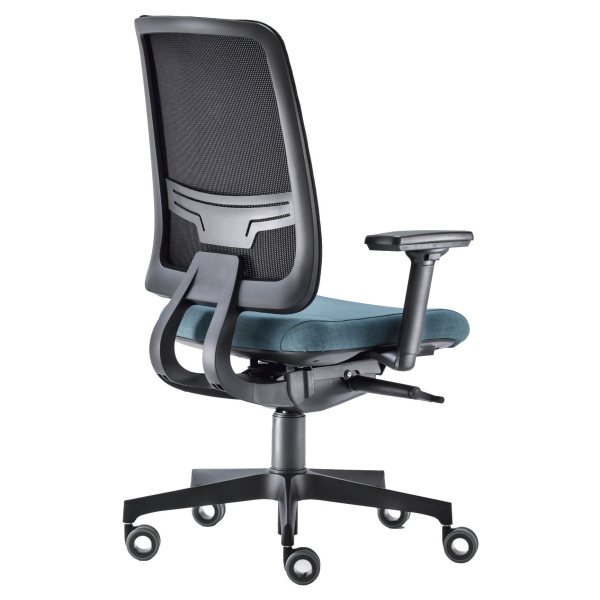
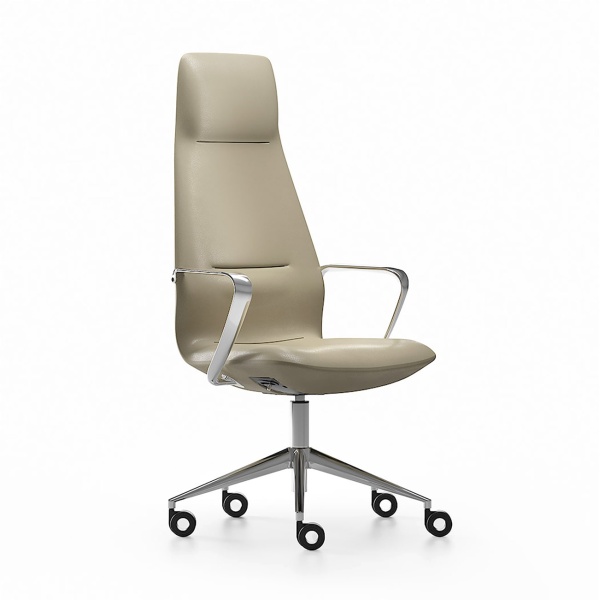
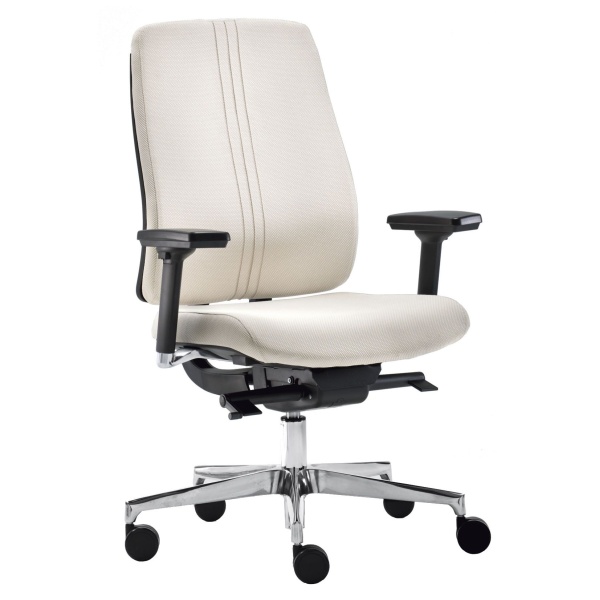
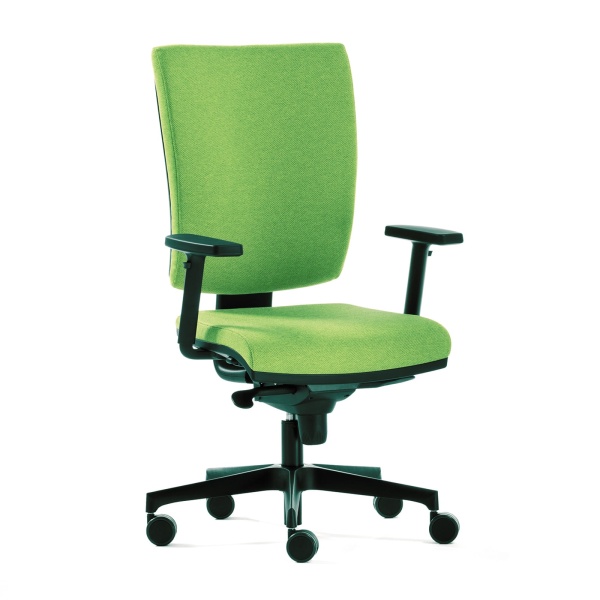
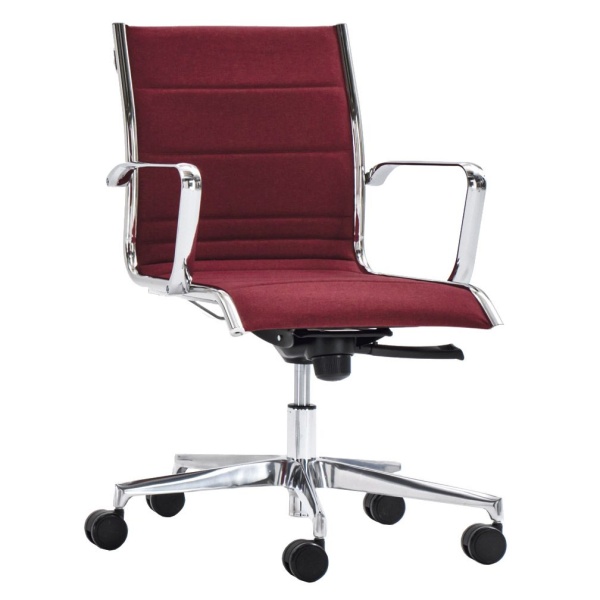
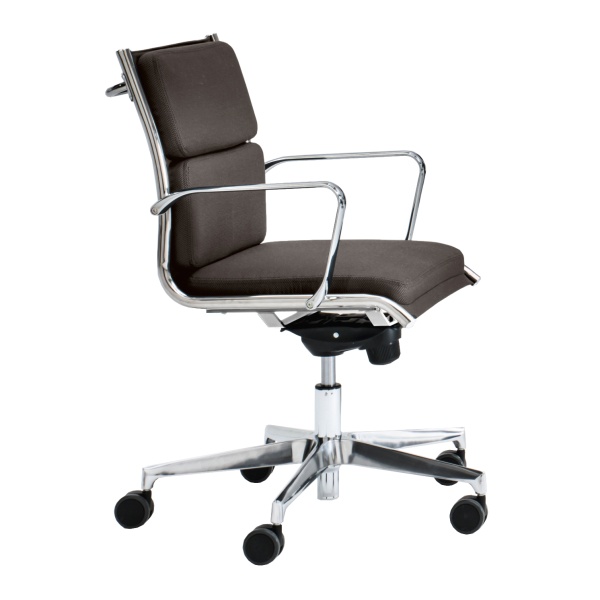
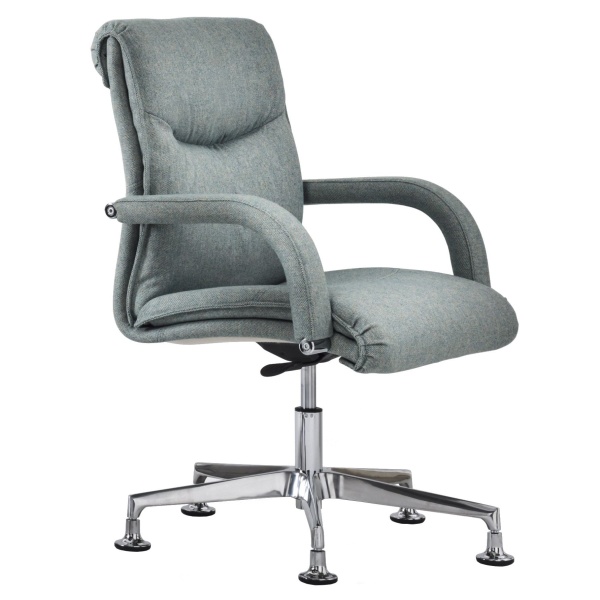
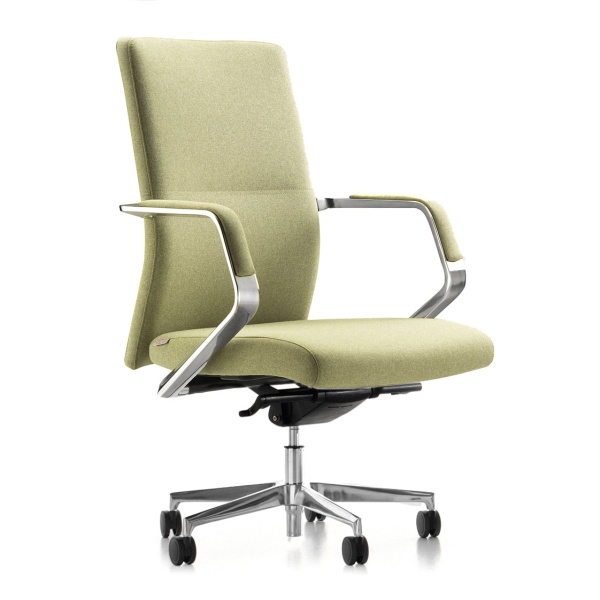
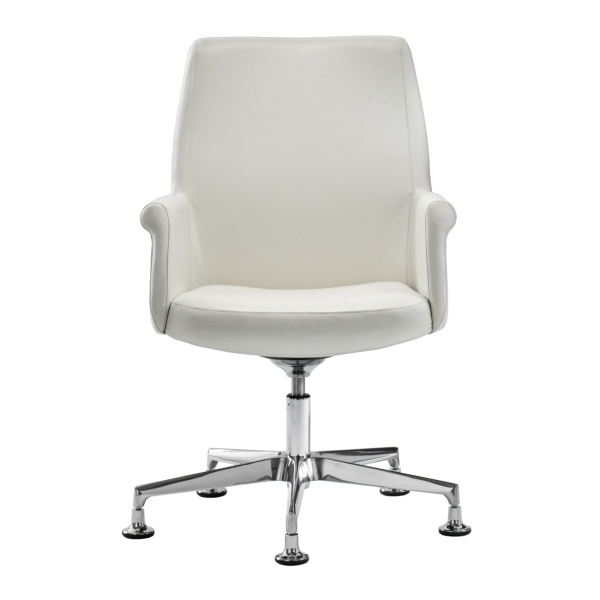
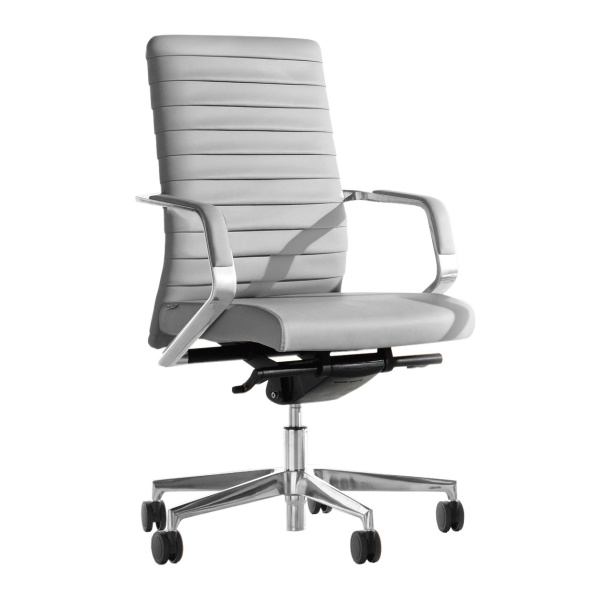
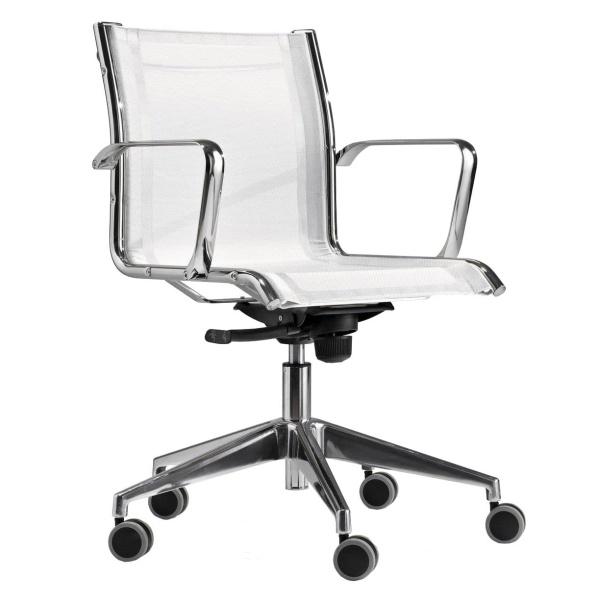
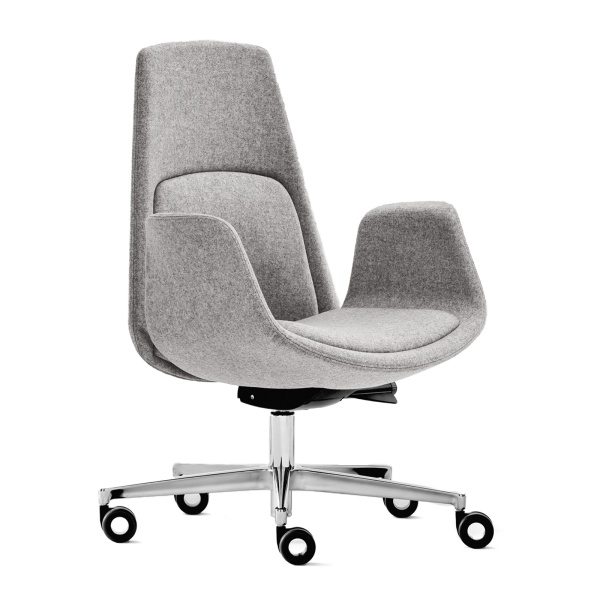
Office chairs are professional seating solutions designed for employees, executives and visitors in workplaces, open-plan offices, private offices and corporate environments. Choosing the right chair involves much more than appearance: daily sitting time, back support, seat geometry, mechanism, adjustment range, armrests, base type and the ability to adapt the chair to an individual user all play an important role.
An office chair is one of the few pieces of furniture an employee remains in direct contact with for much of the working day. A poor choice therefore becomes noticeable quickly: incorrect seat height, insufficient back support, uncomfortable armrests or an unsuitable mechanism can affect comfort throughout the working day.
HoReCa.Furniture offers professional office chairs from European manufacturers for employees, executives and visitors. This category forms part of our staff office furniture range and includes chairs on castors and fixed bases, mesh and upholstered backrests, headrests, lumbar support, different armrest configurations and a variety of adjustment mechanisms.
Choose an office chair according to how long it will be used
Not every office chair serves the same purpose. A visitor chair used for twenty minutes and a task chair occupied throughout the working day require very different levels of support, adjustability and functionality.
For a permanent workstation, the user should be able to vary their sitting position during the day. Seat-height adjustment, reclining or synchronised mechanisms, backrest geometry, lumbar support and armrest positioning therefore become particularly important in professional task chairs.
For short-term seating, a simpler construction may be entirely appropriate. The intended use should determine the required features rather than the assumption that more adjustments automatically make a chair better.
A practical rule: the longer a person spends sitting during the working day, the more important adjustability becomes. For a permanent workstation, ergonomics and functional adjustment should generally take priority over purely decorative features.
Task chairs for everyday office work
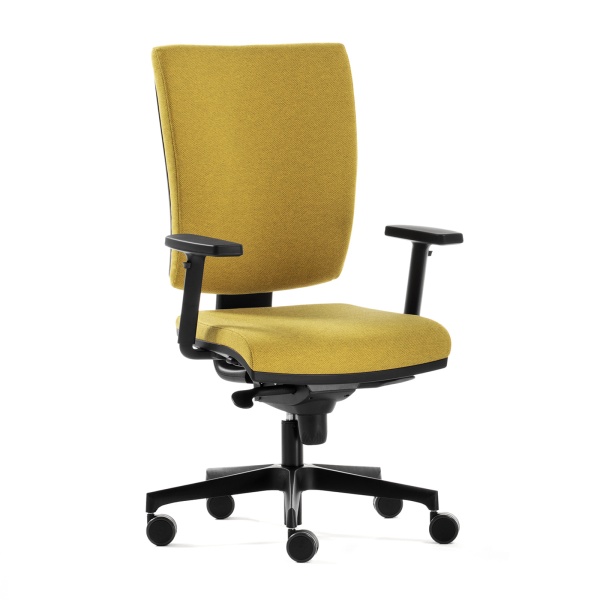
Task chairs normally account for the largest proportion of seating in a contemporary office. An open-plan workspace may contain dozens or hundreds of identical chairs, so the decision is not only about the comfort of one person but also about consistency across the entire workplace.
A good task chair should accommodate employees of different heights and builds, remain straightforward to operate and withstand regular professional use. For larger offices, standardisation, availability of replacement components and the possibility of ordering additional matching chairs later can also be important project considerations.
Mesh backrests are common in task seating because they provide ventilation and create a visually lighter profile. Fully upholstered chairs offer a different seating experience and a wider choice of fabrics, textures and colours for interiors where workplace seating forms a visible part of the design concept.
Executive office chairs: more than a high backrest
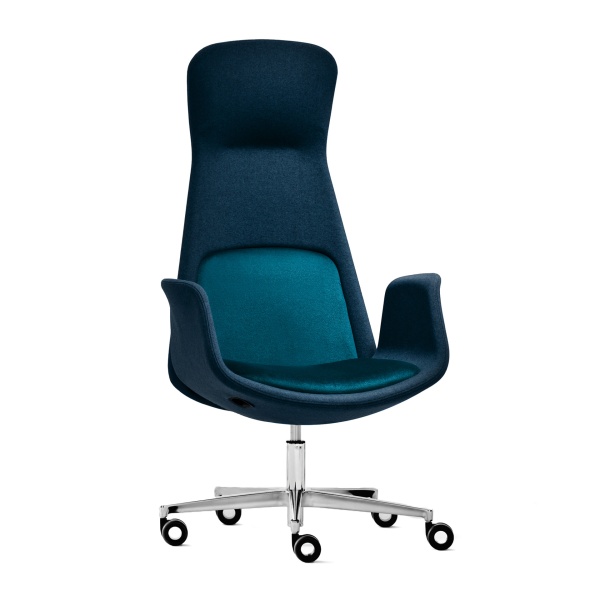
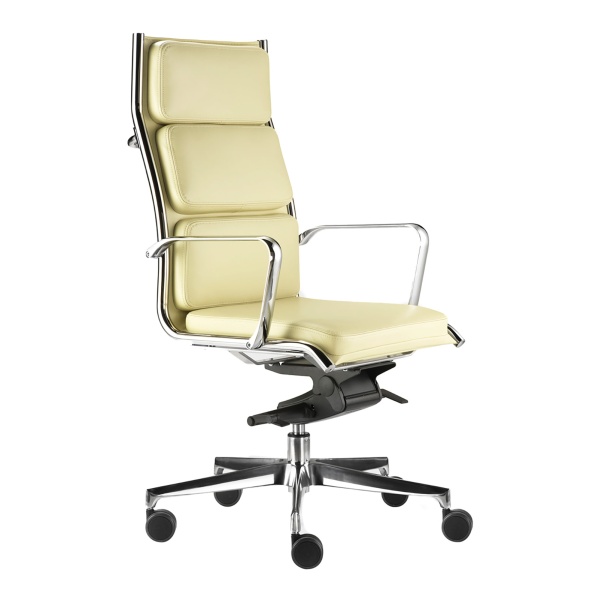
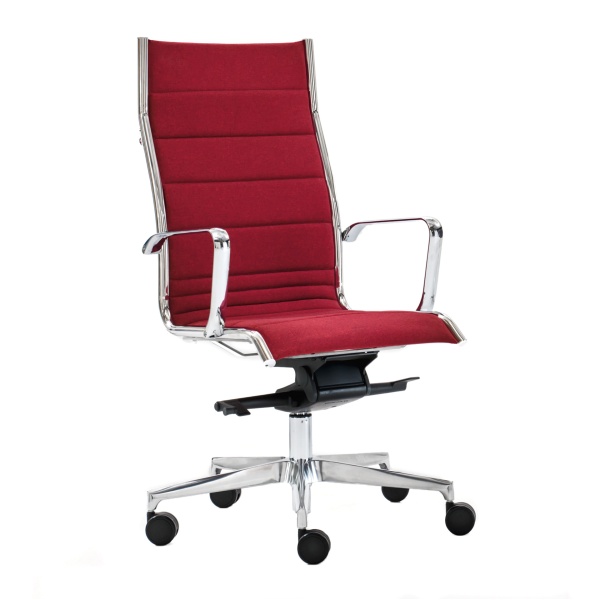
An executive chair is sometimes defined simply by a tall backrest and substantial proportions. In a contemporary workplace, that is not enough. An executive chair remains a working chair and should therefore be suitable for extended periods of use.
A high backrest, headrest, more pronounced back support, broader adjustment options and premium upholstery can improve comfort, but neither size nor price alone guarantees that a chair will suit its user.
In an executive office, ergonomics must also work with the architecture and visual language of the interior. Professional collections therefore include everything from restrained mesh chairs to fully upholstered models with different armrests, bases, finishes and mechanisms.
Visitor chairs require a different approach
A visitor chair does not need to reproduce the construction of a task chair. Because it is normally used for shorter periods, ease of use, stability and compact dimensions may take priority over extensive adjustment.
Private offices and short meeting areas frequently use fixed chairs on four legs or cantilever office chairs. They provide a stable seating position and do not require adjustment whenever the user changes.
Where a room is primarily used for conferences, presentations or larger meetings, dedicated conference chairs may be more appropriate, particularly when seating density, mobility and rapid reconfiguration are important.
Which office chair adjustments really matter?
The available functions vary between models, but for a chair used throughout the working day, priority should be given to adjustments that genuinely change and improve the user's sitting position.
| Feature | What it does | When it matters most |
|---|
| Seat-height adjustment | Helps align the user's sitting position with the height of the work surface | Virtually every permanent workstation |
| Recline mechanism | Allows the user to change posture rather than remaining in one static position | Extended periods of desk work |
| Lumbar support | Supports the lower back according to the design of the individual chair | Workstations used for prolonged sitting |
| Adjustable armrests | Allow the position of the arms to be coordinated with the user's body and desk height | Extended keyboard and mouse use |
| Seat-depth adjustment | Helps adapt the usable seat depth to users of different heights | Shared specifications for employees of different builds |
| Headrest | Can provide head and neck support in certain sitting positions | High-back task and executive chairs where appropriate to the user |
A feature appearing on a specification sheet does not mean that it works equally well on every chair. Adjustment range, mechanism design and ease of operation are just as important as the number of functions listed.
Mesh or upholstered backrest?
Mesh office chairs are widely used in open-plan offices and permanent workstations. Mesh promotes airflow and allows manufacturers to create visually lighter seating. What matters, however, is not simply the presence of mesh but the geometry of the backrest, the tension of the material and the way the chair supports the user.
An upholstered backrest provides a different tactile experience and offers greater freedom in the choice of fabrics, textures and colours. Upholstered models are frequently specified for executive offices, client-facing environments and interiors where office seating contributes to the overall design scheme.
Neither solution is universally better. The right choice depends on the working environment, duration of use, user preferences and the interior concept.
Base, castors and mobility
For task seating, a five-star base with castors allows the user to move within the workstation without repeatedly standing up. Depending on the model, bases may be manufactured from nylon, aluminium or other materials specified by the manufacturer.
Castors should also be selected according to the flooring. Different options may be available for hard floors and carpeted surfaces, so the appropriate specification should be checked for each model.
Visitor seating, meeting rooms and private offices may instead benefit from fixed four-leg or cantilever bases. These provide a predictable seating position where constant movement is unnecessary.
Why chair dimensions matter to the entire office layout
The dimensions of a single chair may appear insignificant, but across dozens of workstations even small differences become important. Wide armrests, a large base diameter or an oversized backrest can affect the actual density and circulation of an office layout.
In a compact open-plan office, the chair should not be assessed only while positioned under the desk. Space is also required to move backwards, rotate the chair and allow circulation behind the workstation.
For this reason, task seating should ideally be specified as part of the overall office furniture system rather than after the workstation layout has already been finalised.
One office chair throughout the workplace or different models?
For larger corporate projects, standardising the main task chair can be more practical than introducing numerous unrelated models. A consistent specification simplifies procurement, maintenance, replacement and future expansion.
This does not mean that every area must use the same chair. Employee workstations can share one task-chair family, executive offices another, while visitor seating may use fixed chairs from the same collection or from a visually compatible range.
The result is a workplace in which every type of seating performs the right function while remaining part of a coherent interior scheme.
When a lounge chair is more appropriate
A task chair and a lounge chair solve fundamentally different problems. If the user needs to work at a desk for several hours, task-oriented geometry and appropriate adjustment are required.
Reception areas, informal meetings and breakout spaces call for a different type of seating. These solutions are available separately in our range of office lounge chairs.
Keeping these categories separate helps prevent a visually comfortable chair from being specified for a task for which its construction was never intended.
Upholstery and materials for demanding office environments
For upholstered task chairs, the characteristics of the selected fabric should be evaluated carefully, including abrasion resistance, cleaning requirements, composition, colour fastness and other performance data provided by the material manufacturer.
In a busy workplace, upholstery may be subjected to many hours of contact every week. A lower initial material cost does not necessarily mean a lower cost of ownership if the upholstery loses its appearance long before the chair itself reaches the end of its service life.
For mesh chairs, material quality and tension are important; for polymer components, surface quality and stability matter; and for metal components, attention should be paid to the construction and finish. A professional office chair should be assessed as a complete system rather than only by what is visible in a photograph.
What to check before placing a large office chair order
- intended use — employee, executive, visitor or short-term seating;
- adjustment range — whether the chair can accommodate users of different heights and builds;
- dimensions — including chair width, base diameter and the space required for movement;
- mechanism — its functions and how intuitive it is to adjust;
- armrests — fixed or adjustable and compatible with the workstation;
- upholstery or mesh — selected according to usage intensity and maintenance requirements;
- castor type — appropriate for the flooring;
- repeat availability — particularly important for large offices and organisations planning future expansion.
For corporate projects, define the functional specification first and compare design and price second. This approach reduces the shortlist and makes it easier to compare chairs intended for the same working scenario.
Buy professional office chairs from European manufacturers
At HoReCa.Furniture, you can select professional office chairs for employees, executives and visitors from European manufacturers. The range includes mesh and upholstered task chairs, high-back executive seating, models with headrests and lumbar support, and chairs with different armrests, mechanisms and bases.
For project furnishing, we can help match seating to the number of workstations, office layout, expected duration of use and project budget. Task chairs can also be coordinated with other staff furniture, meeting-room seating and lounge areas to create a functionally coherent workplace.