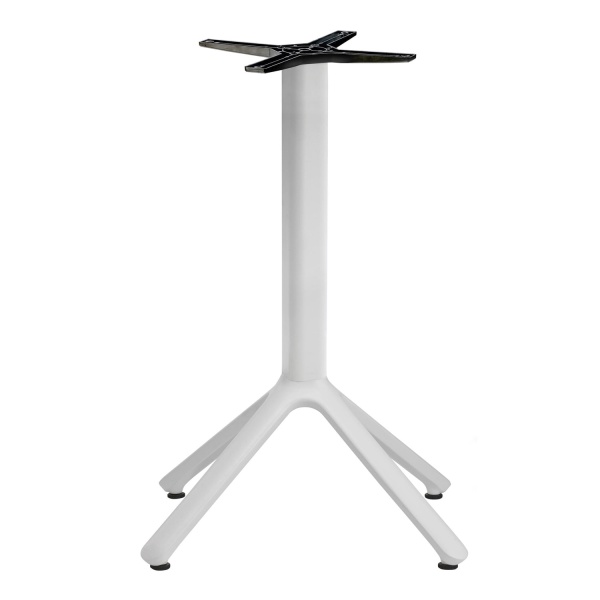
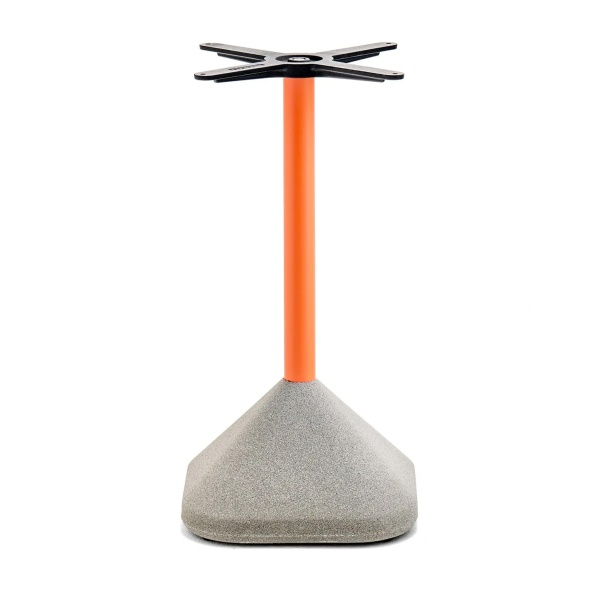
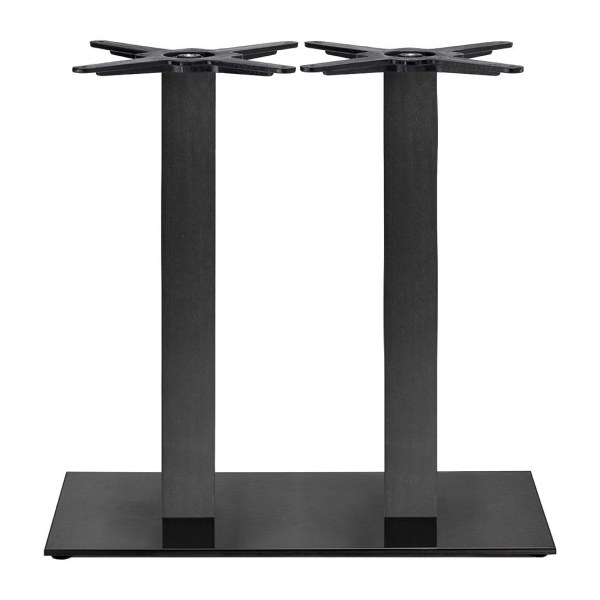
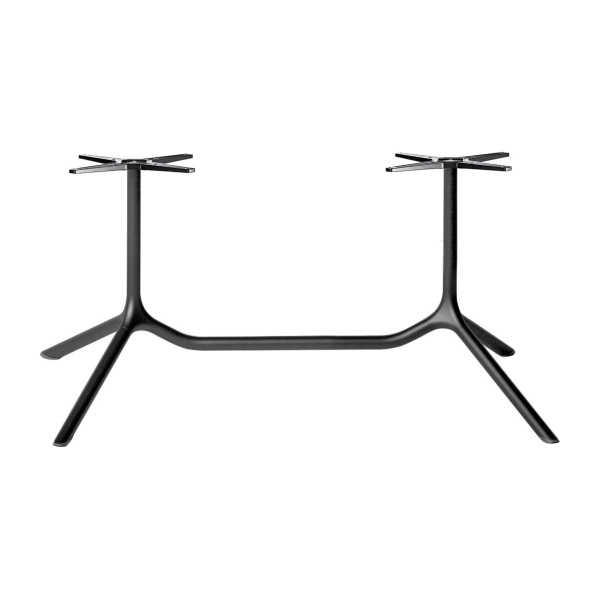
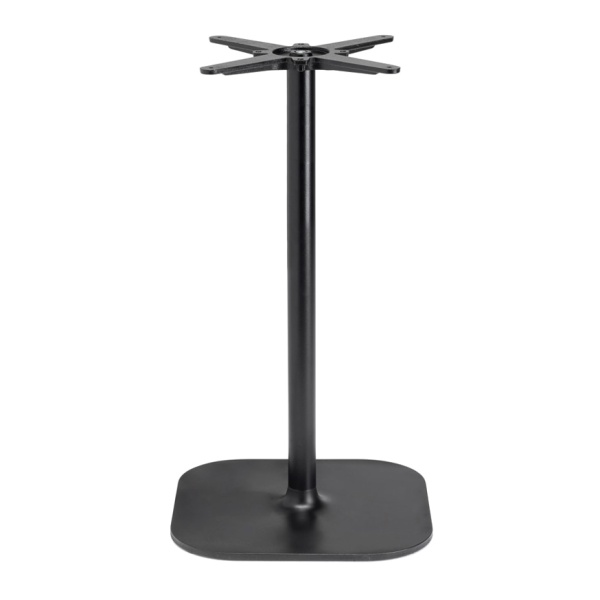
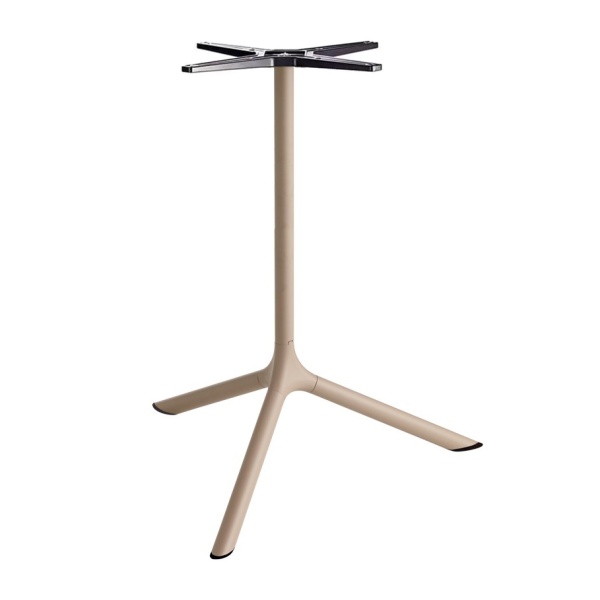
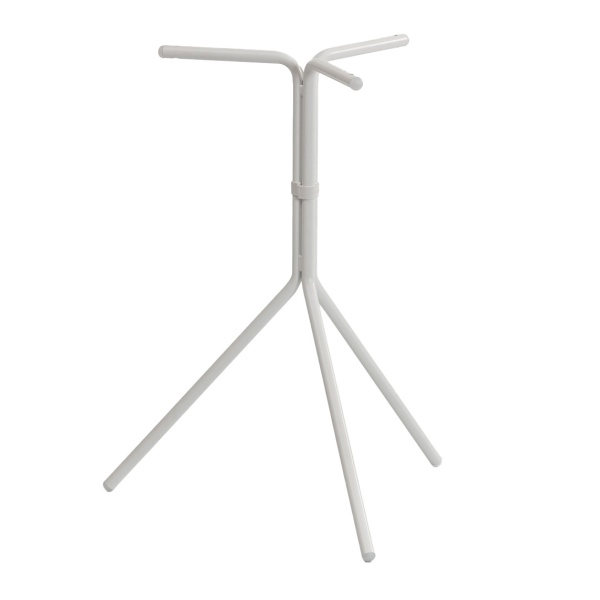
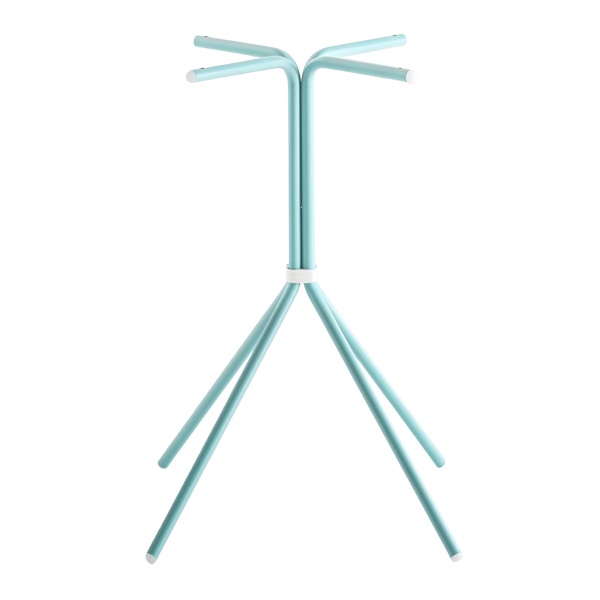
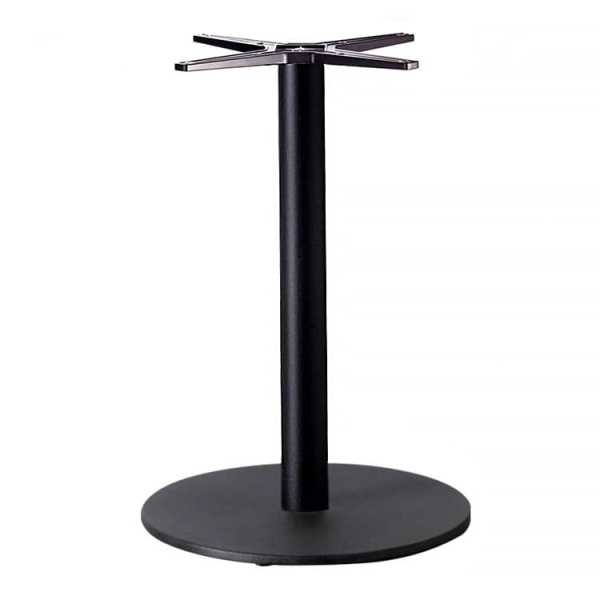
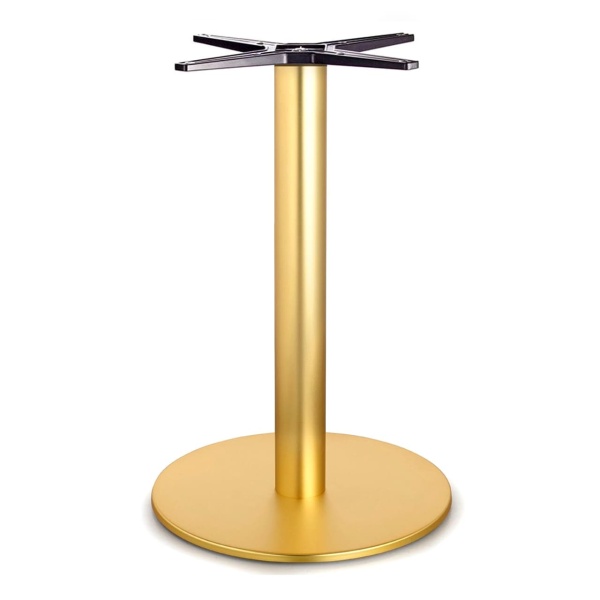
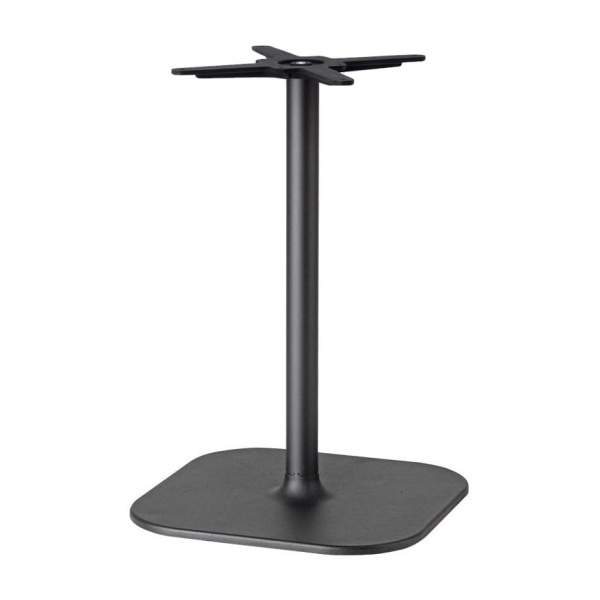
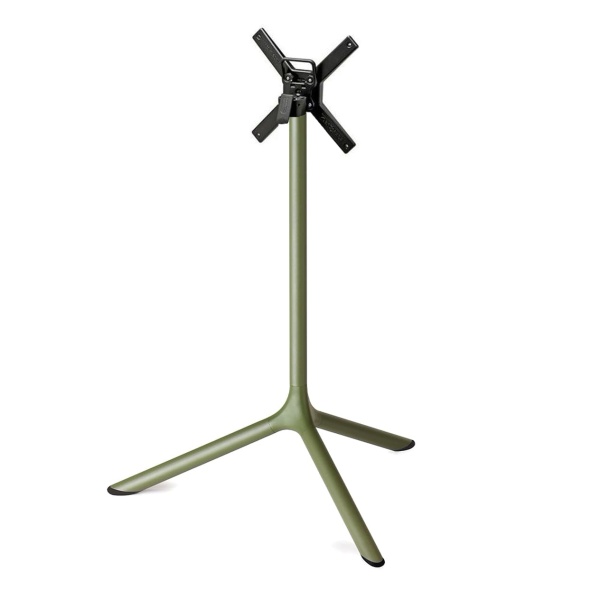
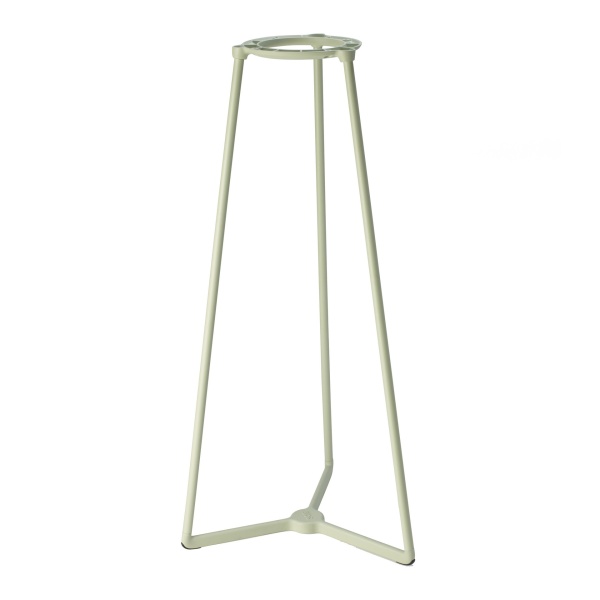
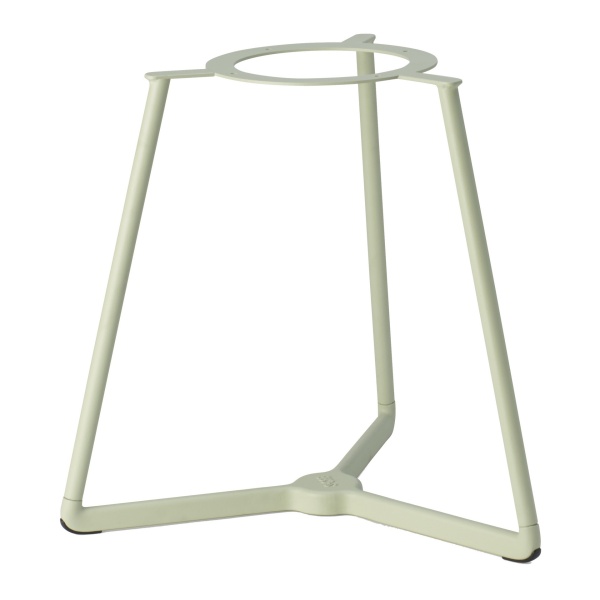
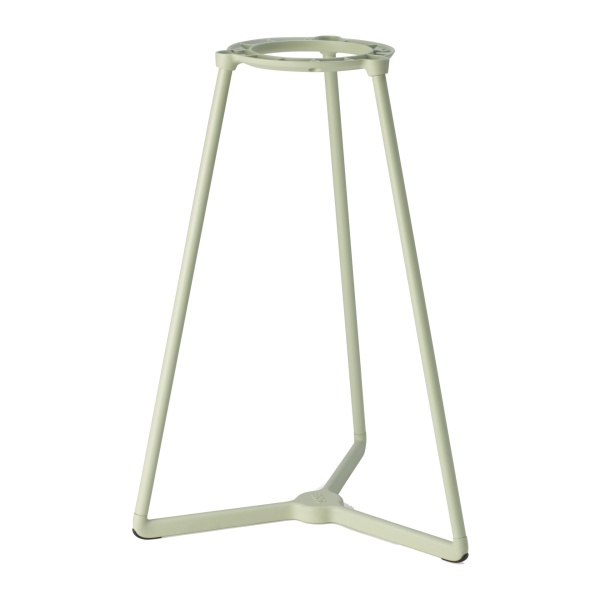
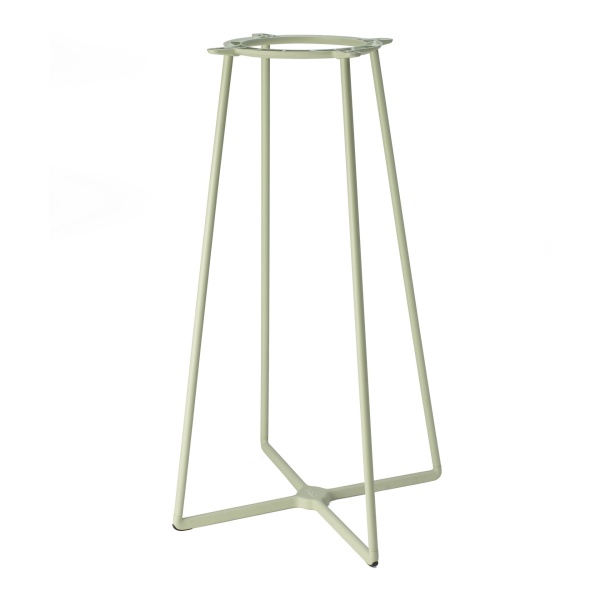
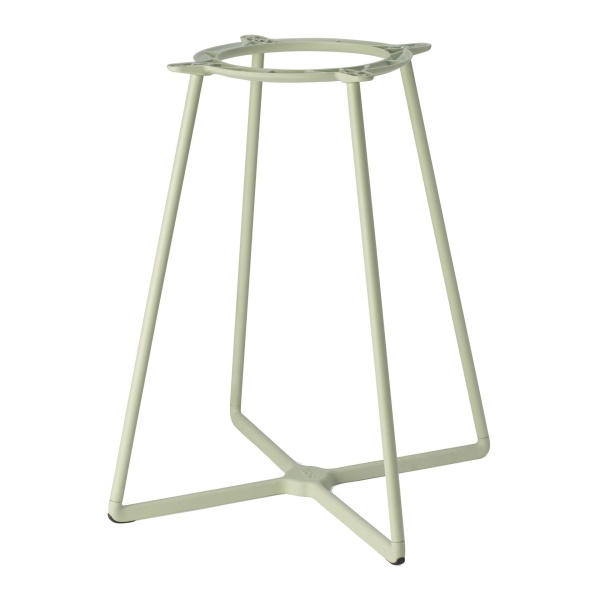
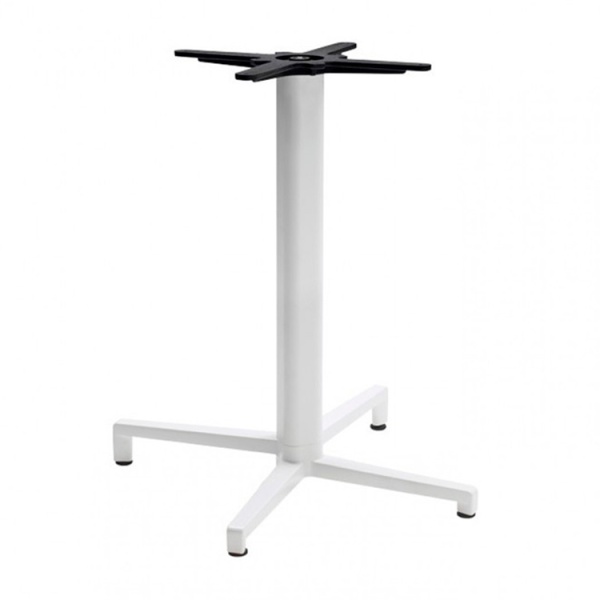
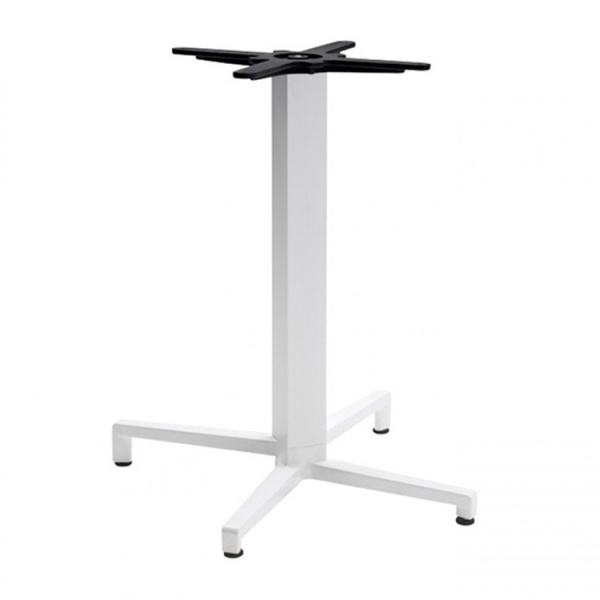
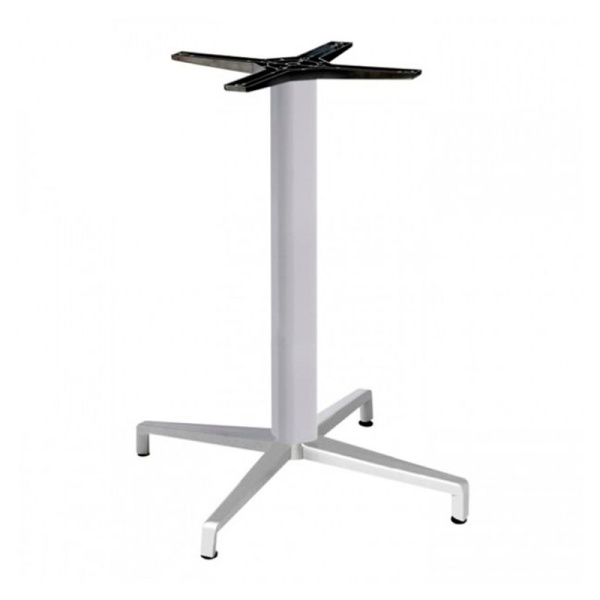
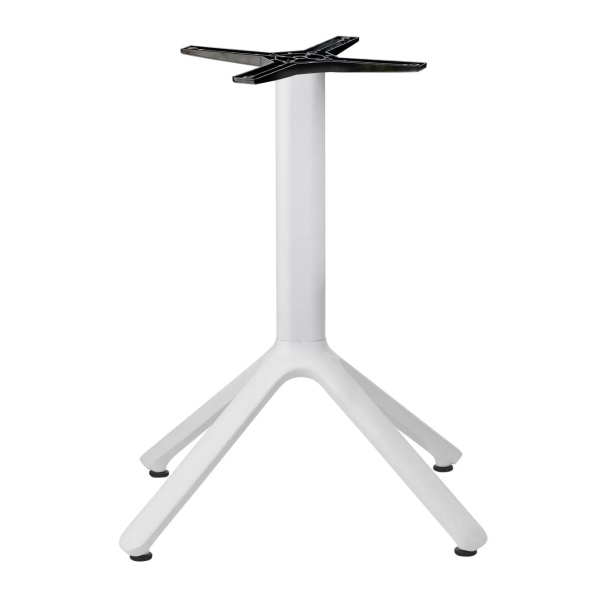
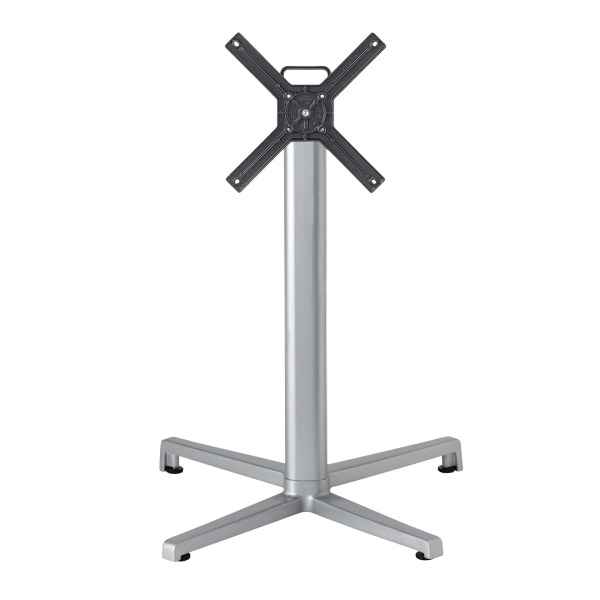
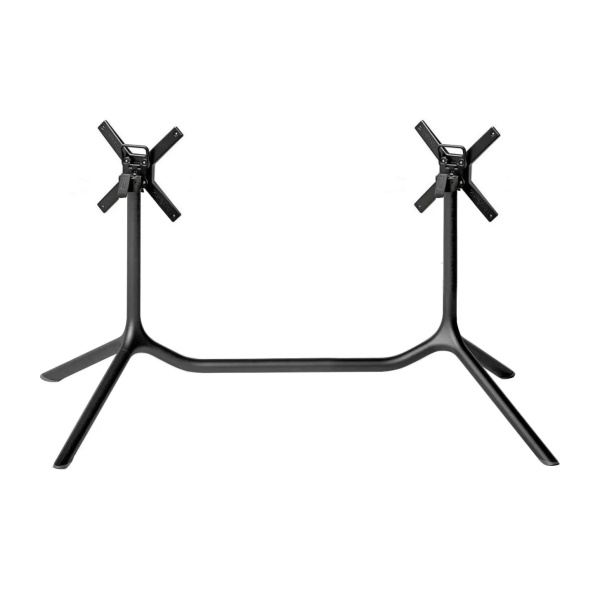
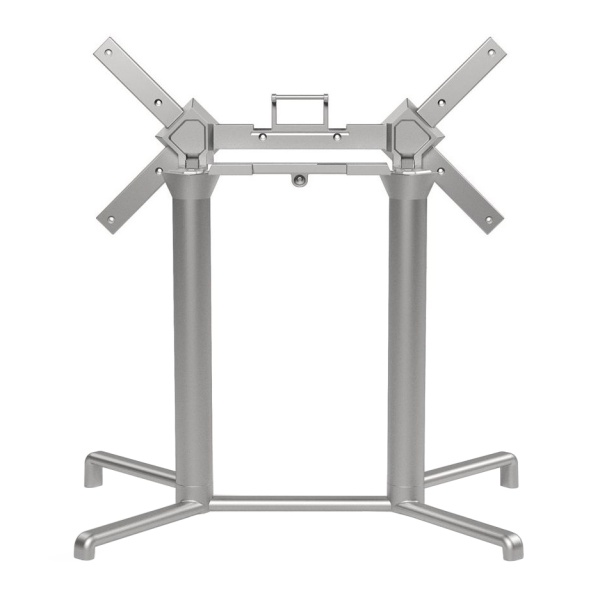
Table bases are professional steel, cast-iron, aluminium and metal supports for tables used in cafés, restaurants and bars. The catalogue includes dining-height models from 72 to 75 cm, bar-height models from 109 to 110 cm and low bases up to 57 cm, compatible with HPL, timber, engineered-stone and natural-stone tops. Products are available from stock or to order, with delivery across the UK.
Table bases form part of the tables and components range within our furniture for cafés, bars and restaurants. In hospitality projects, purchasing the base separately from the tabletop is standard practice: it allows the height, material and style to be selected independently and means that only a damaged or worn component needs to be replaced rather than the entire table.
Buying the table base and tabletop separately: benefits for restaurants
A complete table always combines a tabletop and base selected by the manufacturer. When a restaurant requires 40–60 tables, the standard combination may not suit the floor plan, operating requirements or project budget. Selecting the base and tabletop separately addresses three practical requirements.
First, it provides greater configuration flexibility. A Ø 70 cm round top for two guests and a 120 × 80 cm rectangular top for four may, in some cases, use bases from the same product range, provided that the load rating, top-plate dimensions and fixing system are suitable. This simplifies purchasing and reduces the number of replacement components that need to be held for future maintenance.
Second, it can provide better control over the budget. In many configurations, purchasing an HPL tabletop and a metal base separately may cost less than a complete table of comparable quality. For venues with more than 50 covers, the difference can be significant across the full project.
Third, it improves repairability. If a tabletop becomes scratched or a base loses stability after several seasons, only the affected part needs to be replaced. This reduces maintenance costs and helps retain a consistent appearance throughout the dining area without replacing all the furniture.
Practical rule: the table base and tabletop should be selected together according to the finished height, the dimensions of the upper mounting plate, the fixing method and the maximum permitted load. A cast-iron or reinforced-steel base may be suitable for heavy stone or solid-timber tops, whereas aluminium bases are generally intended for lighter materials. Exact compatibility must be checked for each product.
Table-base height: dining, bar and coffee tables
Height is the first parameter to check when selecting a table base. Three principal configurations are commonly used in hospitality, each corresponding to a different type of use.
Dining height: 72–75 cm — the standard for most café and restaurant tables. It is compatible with chairs with a typical seat height of approximately 45–47 cm. This range covers the majority of dining and working tables used in hospitality interiors.
Bar height: 109–110 cm — intended for high bar tables and counters. It is normally paired with bar chairs or stools with a seat height of 72–80 cm. This configuration is used in high-seating areas, beside bar counters and on terraces designed for quick or semi-standing service.
Coffee and lounge height: up to 57 cm — suitable for coffee tables, occasional tables and low tables in lounge areas. These bases are paired with sofas, upholstered benches and low lounge seating.
Materials: cast iron, steel and aluminium
Cast iron — a dense and heavy material frequently used for bases intended for fixed table layouts. Its weight provides stability and may make it suitable for heavy natural-stone, granite or solid-timber tops, provided that the base is correctly sized and the manufacturer’s load limit is observed. A suitable finish protects the surface from moisture and corrosion. The main disadvantage is weight, typically between 8 and 15 kg depending on the model, which makes tables more difficult for staff to move.
Powder-coated steel — a balanced option in terms of rigidity, strength and ease of handling. The powder-coated finish helps protect the metal from moisture, corrosion and wear associated with daily cleaning. Steel bases are compatible with many HPL, MDF, Werzalit, timber and lightweight engineered-stone tops, depending on the individual product. They are a common choice for cafés and restaurants where tables are moved or reconfigured regularly.
Aluminium — a lightweight, corrosion-resistant material particularly well suited to terraces. It is generally used with lightweight HPL, plastic, compact-laminate or thin timber tops. For heavy stone or solid-timber tops, the maximum load must be checked and a steel or cast-iron base may be more appropriate. Aluminium is suitable for areas where furniture mobility is a priority.
| Material | Compatible tabletops | Indicative base weight | Recommended use |
|---|
| Cast iron | Stone, granite and solid timber, depending on the model | 8–15 kg | Restaurant dining room, fixed tables |
| Powder-coated steel | HPL, MDF, Werzalit, timber and composite materials | 4–8 kg | Cafés, restaurants and regularly reconfigured spaces |
| Aluminium | HPL, plastic, compact laminate and lightweight timber | 2–4 kg | Terraces, outdoor areas and mobile tables |
Types of table base by construction
Single-column central base — a classic configuration for round and square tabletops measuring up to approximately Ø/□ 80 cm. A cross-shaped or disc base provides stability. With no legs at the corners, it leaves more space for guests’ legs. This is a common choice for compact tables in cafés and restaurants.
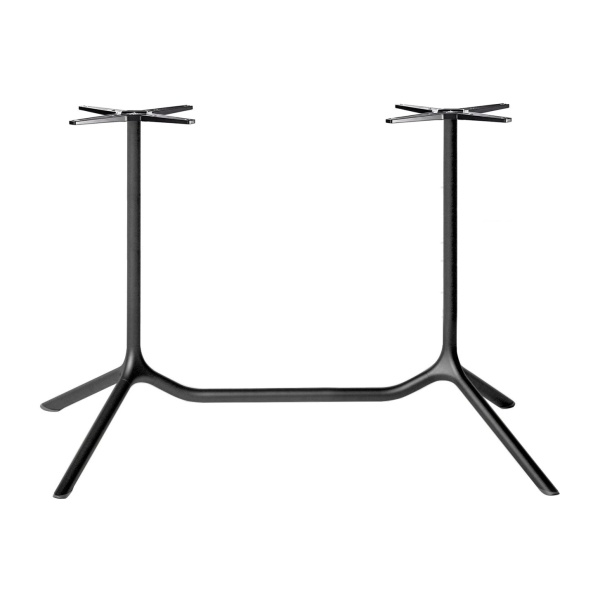
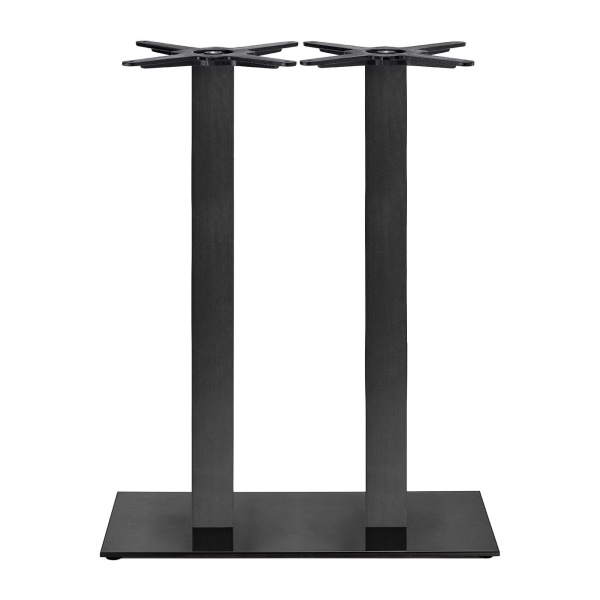
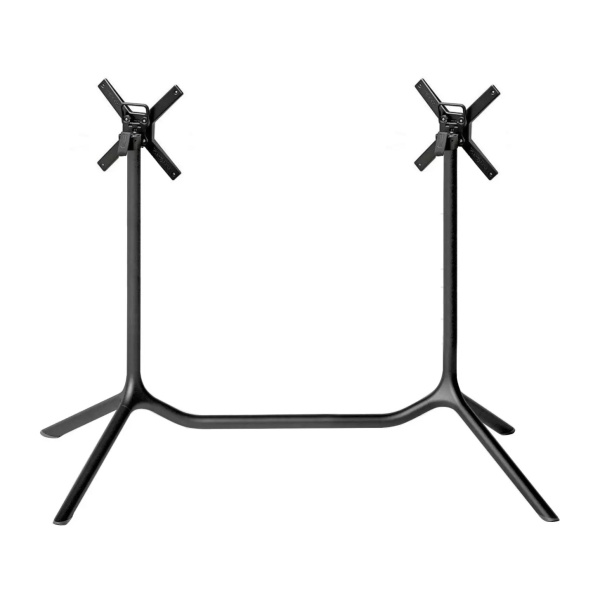
Twin-column base — designed for rectangular tops measuring 120 × 80 cm or more. Two columns distribute the load across a wider area without requiring four corner legs. This configuration is suitable for dining and banqueting tables seating four to six people.
Four-leg base — a stable option for large or relatively heavy tabletops. The legs are positioned at the corners of the structure. This configuration uses more space beneath the table but may provide suitable support for stone or solid-timber tops when the technical limits of the base are observed.
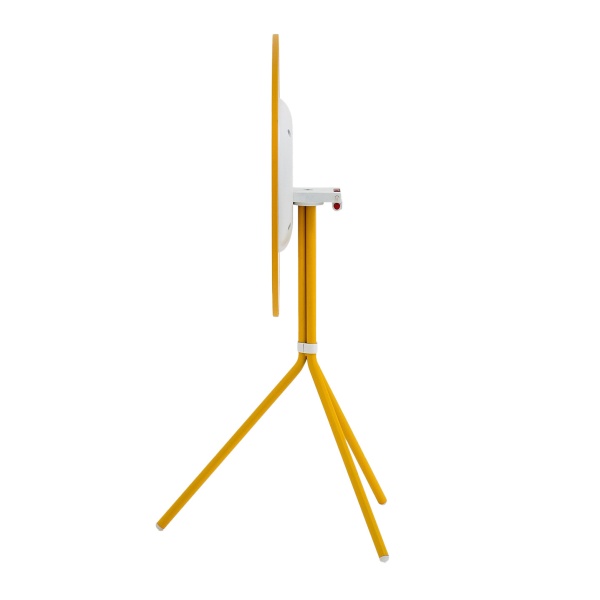
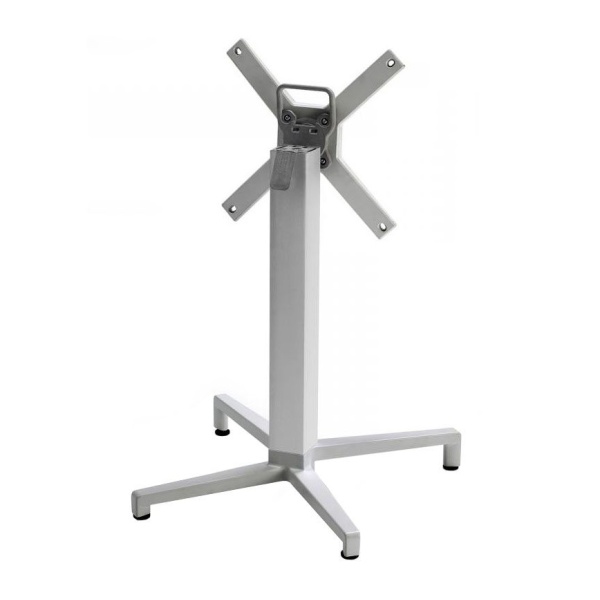
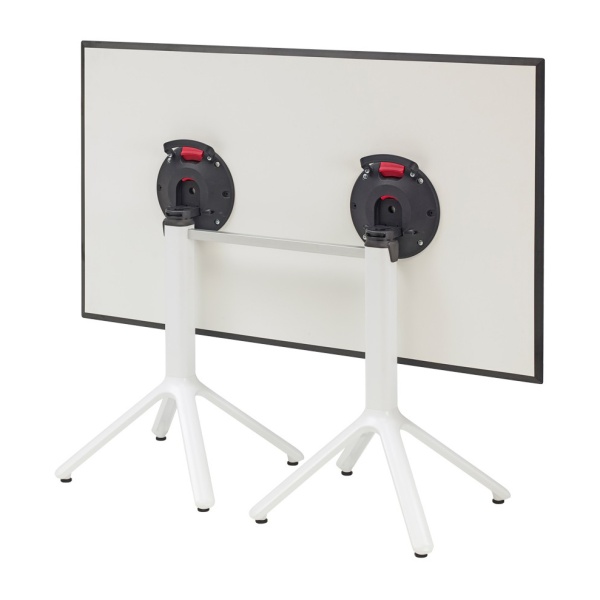
Flip-top base — allows the tabletop to be raised into a vertical position so that tables can be nested, lined up or stored more efficiently. It is particularly useful for cafés and restaurants with seasonal terraces, event spaces and catering companies where an area needs to be cleared quickly. For outdoor configurations, see also our outdoor table bases.
How many bases are required for one tabletop?
A single central base may be suitable for round or square tabletops measuring up to approximately Ø/□ 70–80 cm. A round top of Ø 90 cm or more, or a rectangular top from 100 cm in length, may require a twin-column base or two separate single-column bases. For rectangular tables measuring 160 × 80 cm or more, two support points positioned approximately 80–100 cm apart from centre to centre are commonly used to reduce deflection and movement under uneven loads.
As an initial check, the upper mounting plate should be sufficiently large in relation to the tabletop and the anticipated lateral forces. A figure of 30–40% may serve as an initial reference for some configurations, but the tabletop material and thickness, fixing positions and manufacturer’s instructions must also be considered.
Order professional table bases for cafés and restaurants, available from stock or to order with delivery across the UK. The height, material, base type and fixings are selected to suit the tabletop and intended use.