Where office soft seating is used
A contemporary workplace is no longer made up solely of desks and meeting rooms. Reception areas, waiting spaces, breakout zones, informal meeting areas and alternative places to work all require different types of seating.
In reception areas, soft seating contributes to the first physical impression of a business while providing comfortable accommodation for visitors. Clean proportions, appropriate capacity and a visual relationship with the wider interior are particularly important.
Waiting areas have slightly different priorities: furniture needs to use the available floor area efficiently, maintain clear circulation and provide an appropriate level of comfort for the expected waiting time.
Breakout and informal meeting areas can support a more relaxed posture, modular layouts and low tables. These settings give staff an alternative environment for a short conversation, collaborative discussion or break away from the main workstation.
Office sofas for reception, waiting and breakout areas
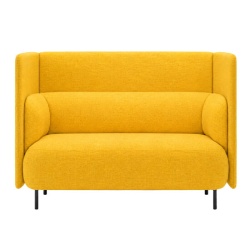
Office sofas are useful where several seats need to be organised within one coherent furniture element. Typical applications include receptions, waiting areas, executive offices, lobbies, breakout spaces and informal meeting zones.
Compact two-seat sofas can work particularly well in smaller receptions. Larger lobbies and open workplaces offer more scope for modular systems, which can be configured into long linear arrangements, corners or freestanding seating islands according to the architecture of the space.
When specifying a sofa, overall width is only one consideration. Seat capacity, depth, seat height, circulation space and the relationship with surrounding furniture are equally important. A larger sofa does not automatically provide more efficient use of floor space.
Lounge chairs as individual seating
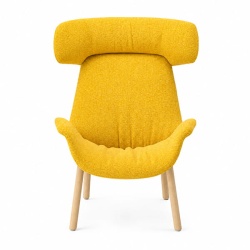
Office lounge chairs provide greater flexibility because each seat can be positioned independently. They work well in receptions, alongside sofas, in waiting areas, breakout spaces and small informal meeting settings.
Individual chairs can be arranged for two, three or more people around a table, reoriented as required and often create a visually lighter composition than one continuous sofa.
The seating posture should match the intended use. A deep, low lounge chair may be appropriate for relaxation but less suitable for a short business conversation. A more upright seat can support interaction and make sitting down and standing up easier.
Soft seating and task seating serve different purposes
Soft seating is not a substitute for an ergonomic workstation. Extended computer work requires an appropriate desk and office chairs designed for prolonged task-based use.
Sofas and lounge chairs address different needs: waiting, short meetings, breaks, informal conversation and temporary changes of working environment. Providing different seating types for different activities creates a more functional workplace than attempting to use one product category for every scenario.
How to choose office soft seating
The specification should begin with the activity rather than the colour or shape of the furniture. A small visitor reception, an internal breakout area and a large corporate lobby may require fundamentally different solutions.
| Criterion | What to consider |
|---|
| Purpose | Reception, waiting, breakout, informal meetings or shared workspace |
| Seating posture | More upright for short meetings or deeper and more relaxed for breaks and longer stays |
| Dimensions | Overall width, depth, height and the actual footprint including circulation space |
| Capacity | Expected number of simultaneous users and whether sofas should be combined with individual chairs |
| Upholstery | Frequency of use, cleaning requirements and the performance of the selected textile or covering |
| Construction | Structural stability, frame materials and suitability for commercial use |
| Modularity | Whether the seating arrangement may need to be configured or extended in the future |
| Design | Relationship with the architecture, brand identity and other furniture within the workplace |
Upholstery for commercial office environments
Upholstery in a workplace is more than a decorative finish. In receptions and shared areas it may be used by many different people throughout the day and regularly come into contact with clothing, bags and personal belongings.
The selected upholstery should therefore reflect the expected level of use. Abrasion resistance, composition, cleaning method, colour fastness and any other project-specific performance criteria should be checked for the exact material specified. Different upholstery options available for the same furniture model may have very different technical characteristics.
Colour and texture also influence day-to-day practicality. Very pale plain fabrics can require more frequent attention in busy visitor areas, while textured or mélange fabrics can be more forgiving of minor signs of everyday use.
Modular soft seating for flexible workplaces
Modular seating systems are particularly relevant to large offices, coworking environments, headquarters and multifunctional workplaces. Rather than treating sofas as separate objects, they allow seating to become part of the spatial planning of the interior.
Straight, corner and intermediate modules can be combined into different lengths, used to create freestanding seating islands or help define functional zones in open-plan environments. Some collections also include tables, pouffes, screens or other coordinating elements; the available configuration depends on the individual manufacturer and collection.
Where a workplace may expand, the future availability of the same collection, finish and upholstery can also be an important consideration.
Coordinating soft seating with the rest of the office
Soft seating should form part of the overall workplace plan rather than becoming an isolated decorative arrangement. Workstations, meeting rooms, circulation, storage, lighting and acoustics should all be considered together.
For complete workplace schemes, soft seating can be coordinated with staff furniture through scale, materials and overall design language. The furniture does not need to use identical colours or belong to one collection; the aim is for different functional zones to read as parts of the same interior.
In open-plan offices, upholstered seating groups can also provide a visual transition between individual workstations and shared spaces without introducing permanent architectural barriers.
Office soft seating for different commercial environments
The need for soft seating depends less on company size than on how the workplace is organised. A small office may require only one compact sofa and a lounge chair near the entrance, while a corporate headquarters may include several distinct areas for visitors, team interaction and employee breaks.
Professional soft seating is also used in business centres, coworking spaces, showrooms, clinics, salons and other commercial interiors where comfortable waiting or informal seating is required.
A broader selection of furniture for professional and commercial projects is available through HoReCa.Furniture, allowing different functional areas to be specified within one project.
Buy office soft seating for professional interiors
HoReCa.Furniture supplies office soft seating from European manufacturers for receptions, waiting areas, breakout spaces, informal meeting zones and other professional environments. The range includes sofas, lounge chairs and modular seating systems in different sizes, materials and upholstery options.
We can help specify products according to the purpose of the area, required capacity, available floor space, expected use, design direction and project budget. For complete workplace projects, sofas and lounge chairs can also be coordinated with other office furniture to create a coherent system across different functional zones.
Office soft seating specification: we can review the floor plan, intended use, seating capacity, dimensions, upholstery and design requirements. Availability of individual models, finishes, fabrics and lead times should be confirmed for the selected specification.


 Lounge chairs
View category
Lounge chairs
View category