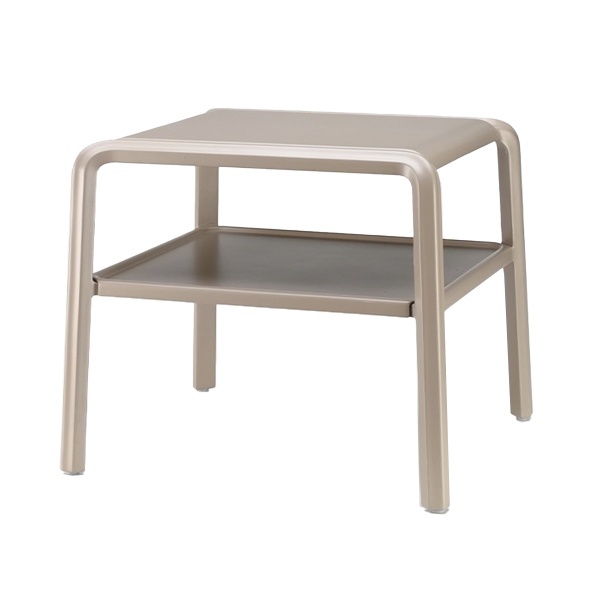
Why side tables are needed beside sun loungers
A sun lounger provides a place to rest but does not solve the problem of storing personal items or serving drinks. Without a separate surface, guests may leave phones, glasses, books and tableware on the floor, on a neighbouring lounger or directly beside the pool. This creates inconvenience, makes cleaning more difficult and can obstruct circulation routes.
A compact table beside the sun lounger completes the individual relaxation module. It separates the guest area from the passage, creates a clear service point and helps maintain order throughout the day.
In a commercial project, the table also supports staff efficiency. Waiting staff and pool attendants have a safe place for trays, drinks or towels without having to improvise. This is especially important in hotels and beach clubs offering continuous food-and-beverage service beside the water.
A side table should be treated as part of one relaxation module: a sun lounger or reclining lounge chair, a service surface, a parasol and sufficient circulation space. Products selected separately may conflict in height, proportions or operating scenario.
How professional side tables differ from domestic models
A domestic garden table is generally used occasionally. At a hotel, pool or beach, furniture is exposed daily to sunlight, moisture, wet towels, drinks, cosmetics and cleaning products. Tables are regularly moved, washed, stored and returned to the working area.
For this operating pattern, the materials should be explicitly specified by the manufacturer for outdoor use. The table should also have a stable construction, suitable feet or glides and a surface that can be cleaned without complex maintenance. When used beside the sea or pool, the suitability of the finish and fixings for salty air or chlorinated water should also be confirmed.
A professional model should also be practical for staff. Low weight makes handling easier, but the table must remain stable. Stackability or compact nesting reduces seasonal storage requirements, although this depends on the design of the individual collection.
Materials for beach and poolside areas
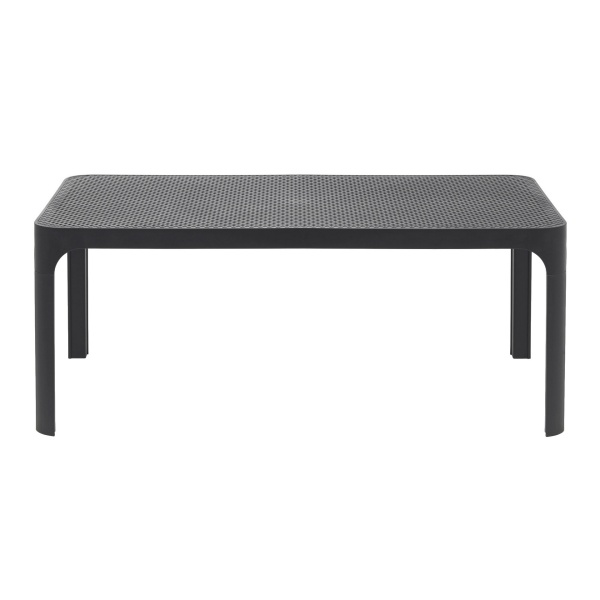
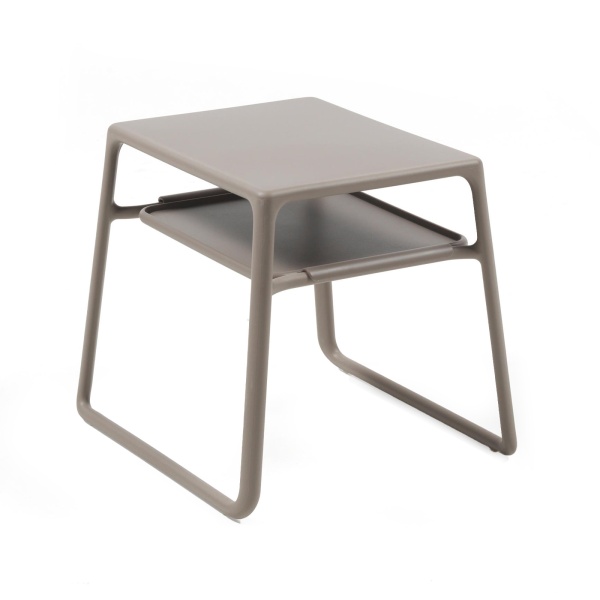
Technopolymer and polypropylene are among the most common materials for poolside tables. They do not absorb water, are easy to clean and allow manufacturers to create monobloc constructions with relatively few metal joints. For outdoor use, check UV stabilisation, the permitted load and the manufacturer’s care recommendations.
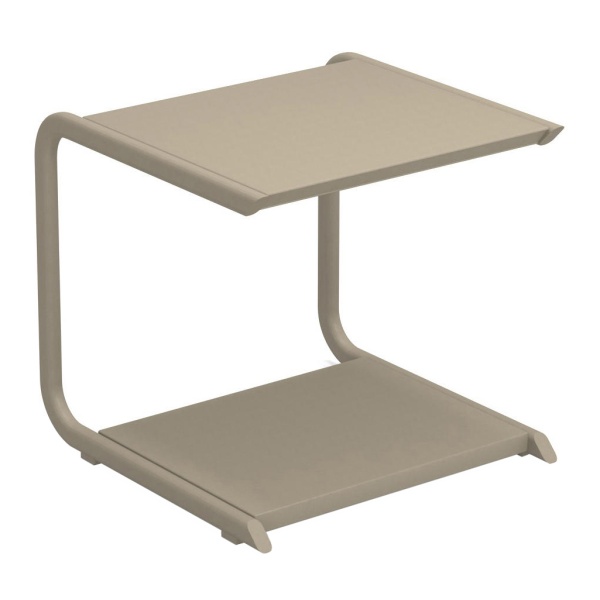
Aluminium with a protective finish is a lightweight solution for hotels, spa areas and beach clubs. Aluminium tables are easy to move, while a suitable outdoor finish helps protect the structure in humid environments. The stability of the individual model depends on the profiles, joints, fixings and surface treatment.
HPL and compact laminate may be used for table tops when both the material and the complete construction are explicitly specified by the manufacturer for outdoor use. The table-top edge, supporting structure, fixings and behaviour under prolonged moisture exposure should all be checked.
Natural timber is used in premium resort and spa projects where a warm natural texture is important. Teak, iroko and other timber species suitable for outdoor use can perform well in humid environments when maintained regularly. Maintenance frequency depends on the species, finish and level of exposure.
| Material | Practical advantages | What to check before ordering | Typical application |
|---|
| Technopolymer / polypropylene | Easy maintenance, low weight and moisture resistance | UV stabilisation, load rating, stackability and type of feet | Hotel pools and high-capacity beach or poolside areas |
| Aluminium | Low weight, easy handling and a contemporary appearance | Outdoor finish, fixings and structural stability | Hotels, spas, resorts and premium beach clubs |
| HPL / compact laminate | Flat service surface and straightforward cleaning | Outdoor suitability of the complete model, table-top edge and fixings | Poolside areas, terraces and hotel complexes |
| Outdoor timber | Natural texture and compatibility with premium concepts | Timber species, protective finish and regular maintenance schedule | Luxury resorts, spas and boutique hotels |
How to match a side table to a sun lounger or daybed
Height. The table top should be accessible from a reclining or semi-reclined position. If the table is too low, the guest has to bend down excessively; if it is too high, it may interfere with the armrest, backrest adjustment or circulation. The height should therefore be coordinated with the specific sun-lounger model.
Table-top size. For individual use, a compact surface is sufficient for a drink, phone and small personal belongings. Where active food-and-beverage service is planned, check whether the surface is large enough for tableware and whether the table obstructs the space between loungers.
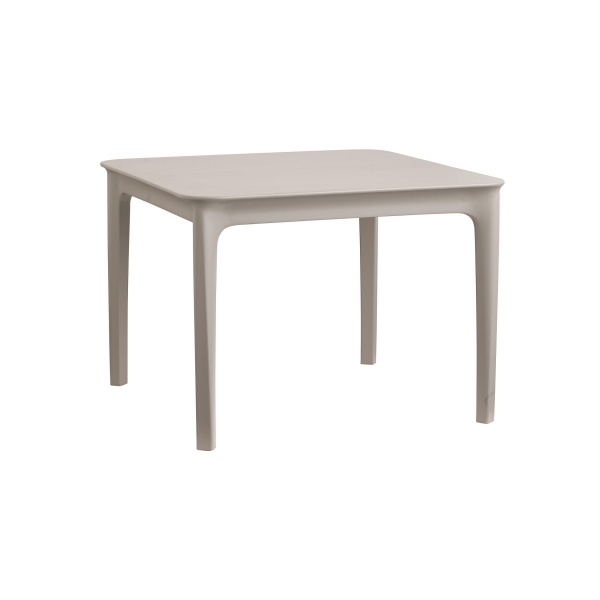
Shape. Round tables reduce the number of sharp corners in narrow circulation areas. Square and rectangular models are easier to align in rows and place between two sun loungers. The choice depends on the layout and visual language of the collection.
Stability. The base should be suitable for the surface. Protective glides are important on tiles, feet should not damage decking, and tables used on sand require a construction that remains balanced when the legs settle unevenly.
Compatibility with the collection. The most cohesive schemes use tables matched to the loungers in material, colour and proportion. Products from different collections can also work together when their height, visual style and operating conditions are compatible.
One table for one or two sun loungers
Most hotel and beach projects use one of two layouts: one personal table beside each sun lounger or one shared table between two loungers. The first arrangement offers greater privacy and convenience for each guest. The second reduces the number of furniture items and leaves more open space.
One table between two loungers is practical when both guests can reach the surface easily and the table does not obstruct staff circulation. Premium areas more often provide one table for each place or increase the distance between individual modules.
The final quantity depends on the positioning of the venue, circulation width, service format and seating density. Too many tables can overcrowd the space, while too few create inconvenience for guests.
Stacking, handling and seasonal storage
At large hotels and resort complexes, tables are moved daily during cleaning and when the layout is changed. Staff therefore benefit from low weight, convenient grip points and the absence of details that can be damaged easily during handling.
Stackable models require less storage space outside the season. Before ordering, check the maximum number of tables per stack, the presence of protective pads at contact points and the total height of the stacked group.
Some models are not stackable but can nest compactly or use a demountable construction. Such products should be assessed not only by appearance but also by the time staff need to assemble, move and return them to the working area.
What to check before buying side tables
- Operating scenario. Hotel pools, beaches, spas and beach clubs have different requirements for materials, weight and construction.
- Outdoor specification. The manufacturer should explicitly state that the model is suitable for outdoor use.
- Compatibility with the sun lounger. Check height, width, armrest position and access to the table top from a reclining position.
- Environmental resistance. For beach and poolside use, confirm how the materials perform when exposed to moisture, chlorine, salty air and direct sunlight.
- Structural stability. The table should not overturn easily after accidental contact but should remain practical for staff to move.
- Maintenance. The surface should fit the venue’s cleaning procedure and be compatible with cleaning products permitted by the manufacturer.
- Stacking and storage. Seasonal areas should consider the number of units per stack, surface protection and the amount of storage space required.
- Repeat supply. Hotels and multi-site projects should confirm whether the same model, colour and components can be reordered in later seasons.
Side tables as part of a complete beach or poolside area
Side tables work best as part of a complete outdoor module rather than as isolated furniture. The sun lounger determines the guest’s position, the table provides a service surface and the parasol creates controlled shade. All three elements should be compatible in dimensions and operating logic.
In lounge and spa spaces, tables may also be combined with low chairs, sofas and other products from the outdoor furniture category. The same table should not be used simultaneously with seating at significantly different heights if this makes it inconvenient for part of the guest area.
Side tables for sun loungers are available for professional outdoor projects in hotels, poolside areas, resorts and beach clubs. Selection is based on the sun-lounger model, surface type, materials, layout density, maintenance requirements and project budget.