Sun loungers for hotels and beach clubs: a contract furniture approach
A hotel, resort or beach club does not purchase sun loungers as a short-term solution, but as an investment for several operating seasons. Contract-grade sun loungers differ from residential models not only in materials, but also in construction logic: they are engineered for 8–12 hours of daily use, real guest traffic and staff who move, arrange and clean furniture every day.
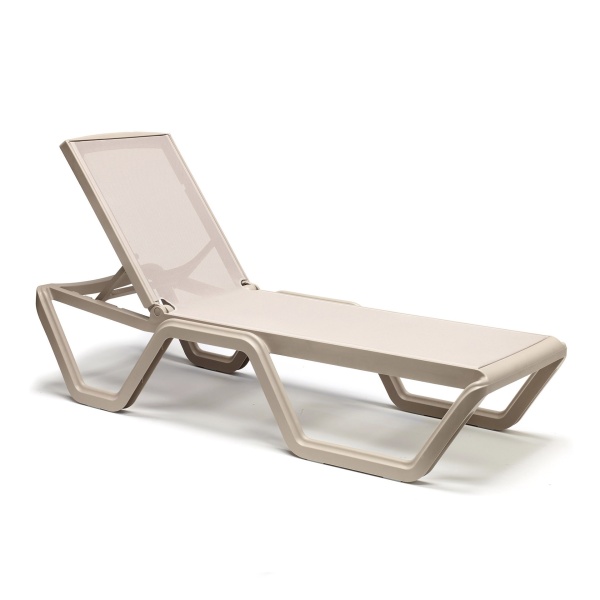
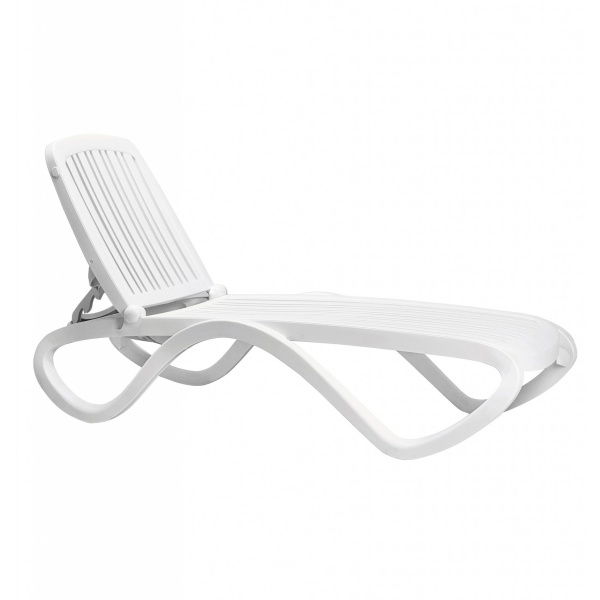
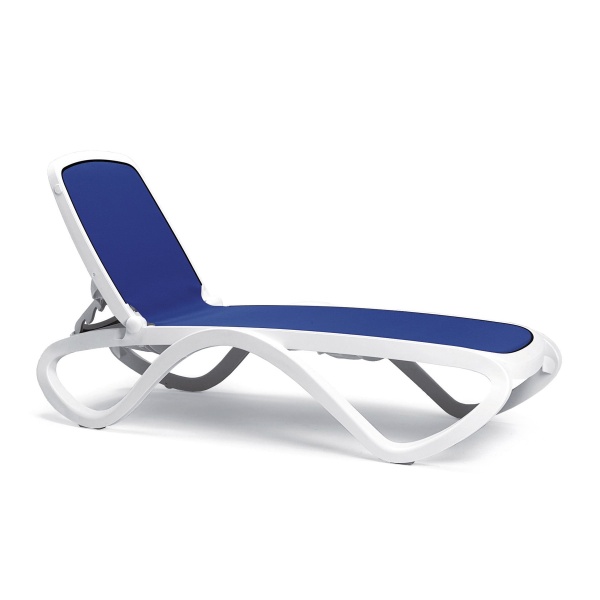
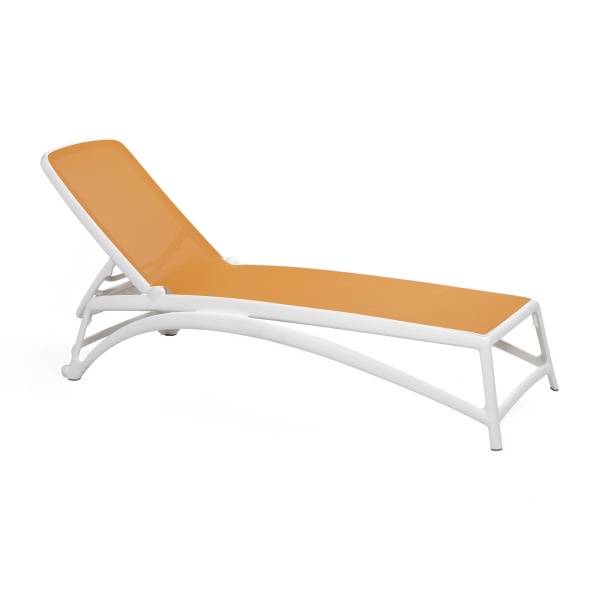
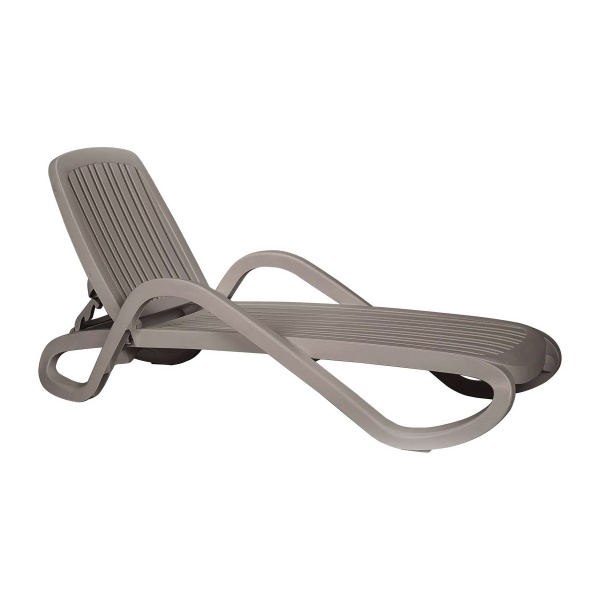
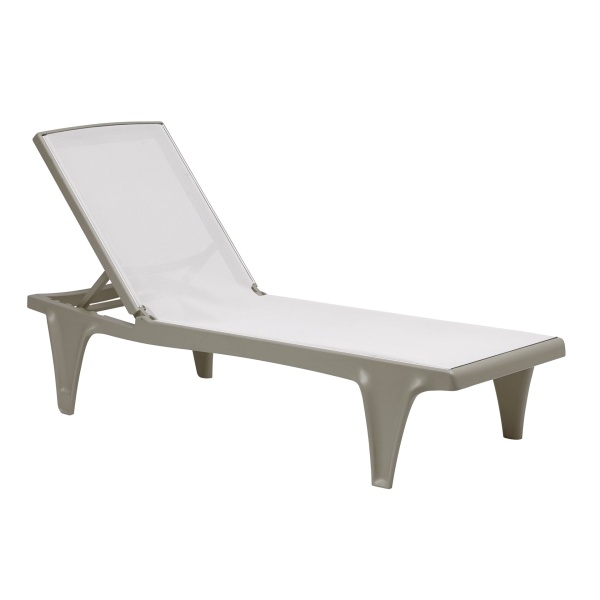
That is why for hotel poolside areas and beach clubs we primarily recommend Nardi and Scab Design models — both Italian manufacturers originally focused on the hospitality sector. Models from both brands stack up to 15–17 units, feature removable textilene or mesh fabrics, multiple fixed backrest positions and replacement repair kits to extend product lifespan — all critical for venues with intensive day-to-day commercial use.
For premium hospitality projects with higher design expectations, models with fibreglass or glass-reinforced frames combined with textilene surfaces are especially relevant. Their minimalist silhouettes and dimensions ranging from 172 to 204 cm integrate naturally into contemporary hotel aesthetics.
Materials that genuinely perform in beach and poolside environments
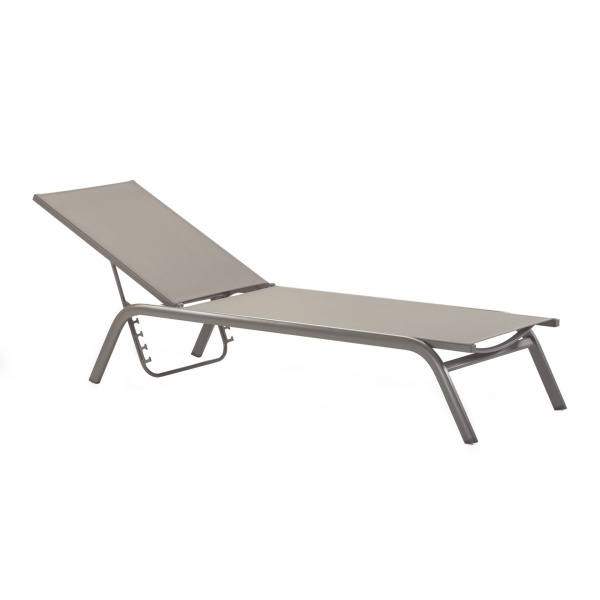
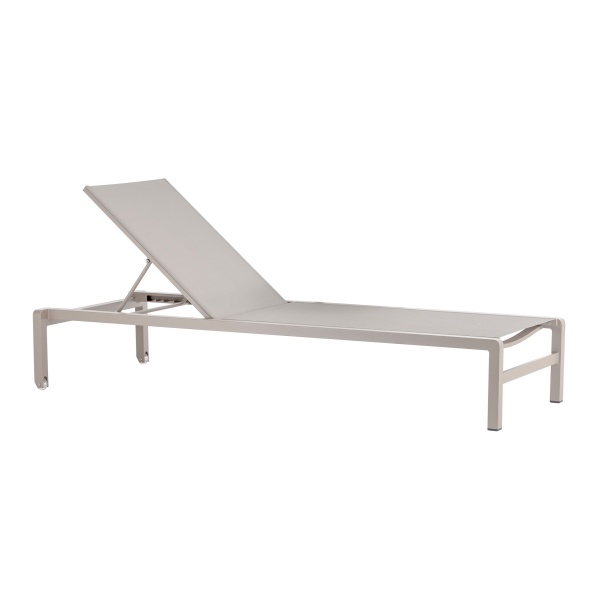
Aluminium is the industry standard for professional outdoor hospitality furniture. It is lightweight, corrosion-resistant, unaffected by sea salt or chlorine and suitable for years of commercial operation. Aluminium sun loungers are the preferred option for hotels, resorts and premium beach clubs: frame profiles from 1.8 mm withstand loads up to 150 kg, while C4/C5 powder coating systems preserve appearance even in coastal conditions.
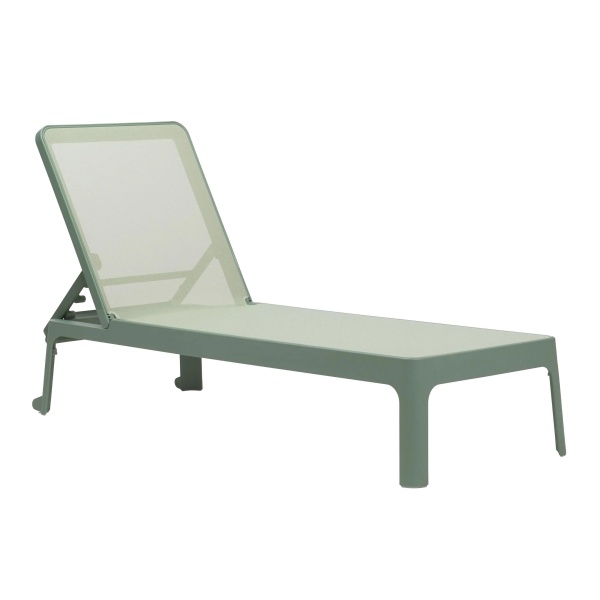
Technopolymer and glass fibre reinforced polypropylene represent the standard solution for large-scale hospitality environments. These materials are lightweight, resistant to corrosion and capable of withstanding chlorine, sea salt and direct UV exposure. Nardi manufactures loungers from UV-stabilised polypropylene with glass fibre reinforcement, while Scab Design uses advanced technopolymer compounds. Both materials are recyclable and environmentally responsible. This is precisely why plastic sun loungers remain the most widespread choice for large pool areas and high-capacity beach clubs.
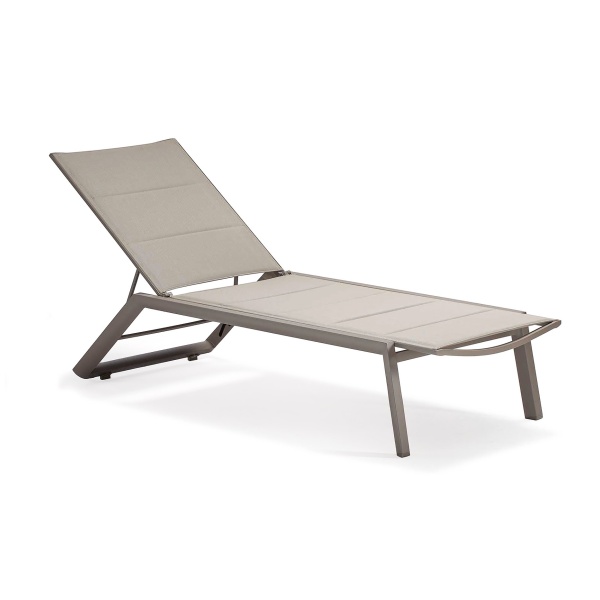
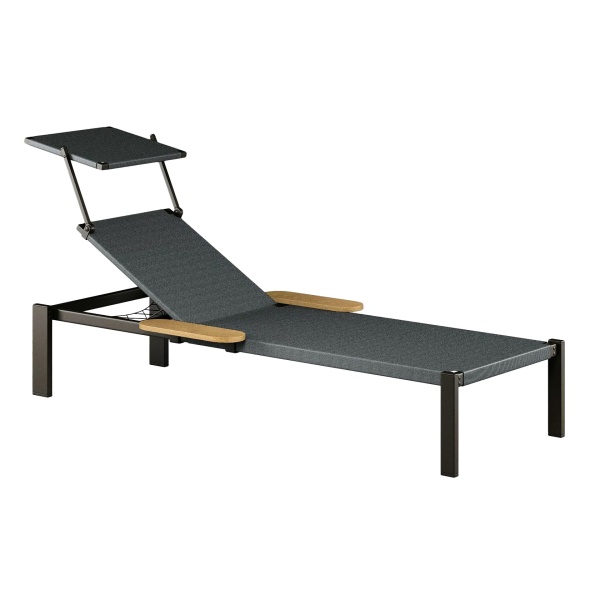
Textilene is one of the most practical materials for intensive daily use: it does not absorb moisture, dries quickly, cleans easily and eliminates the need for additional cushions. That is why textilene sun loungers perform especially well around pools — the fabric tolerates continuous contact with chlorinated water and direct UV without losing shape or colour. Nardi and Scab models feature removable textilene slings that can be replaced independently from the frame, significantly reducing maintenance costs for hotels and beach clubs.
Batyline is a premium solution for projects where durability, breathable comfort and colour stability under strong sunlight are essential. It is frequently specified for 4–5★ hotels and premium hospitality environments with elevated visual standards.
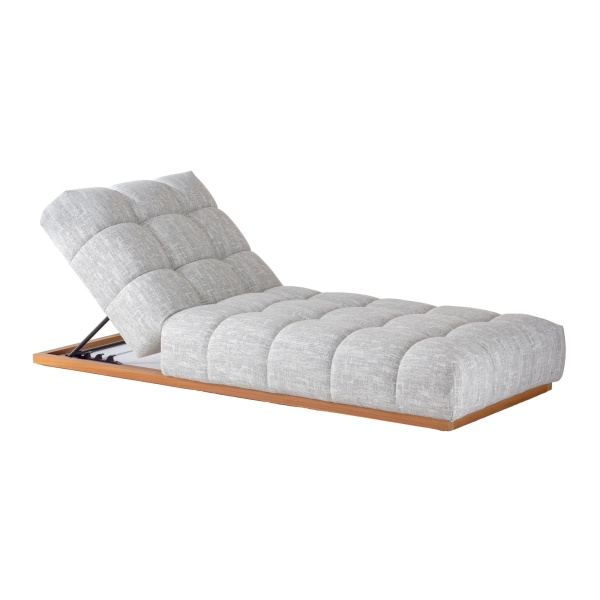
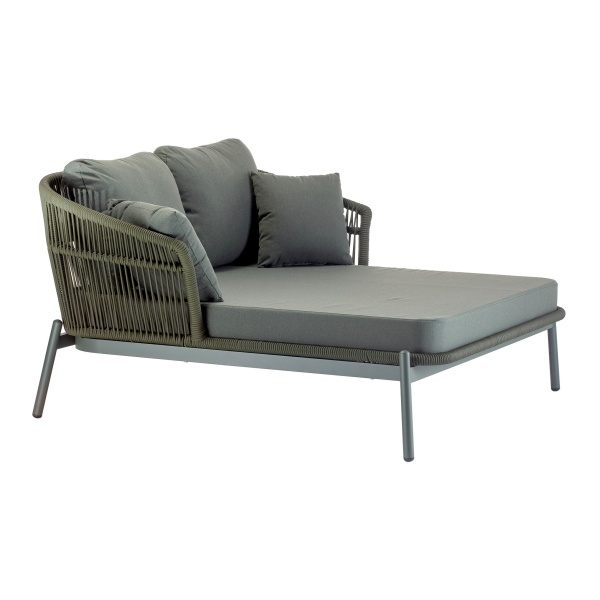
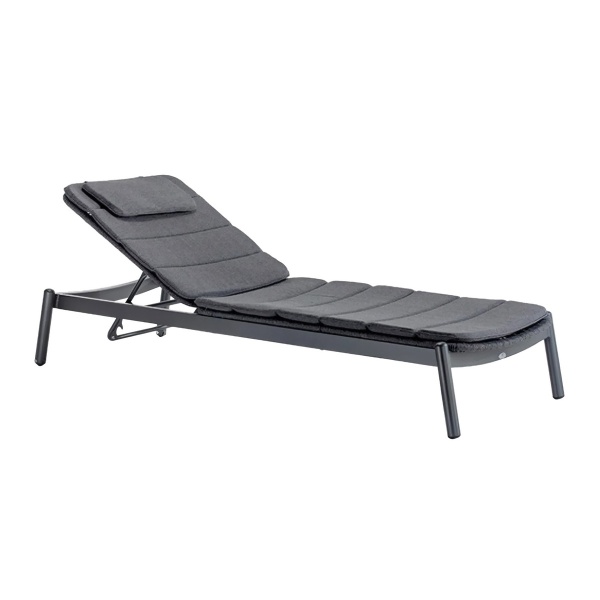
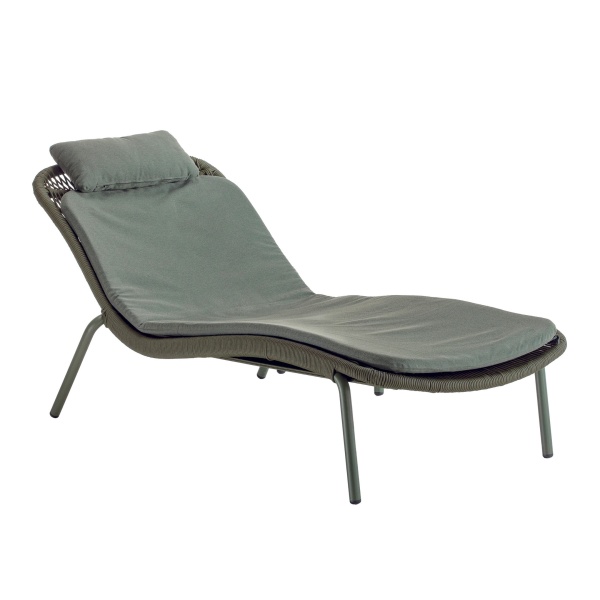
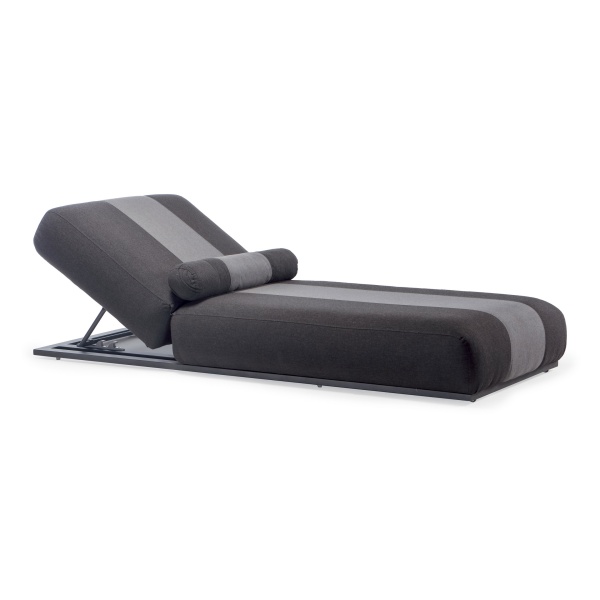
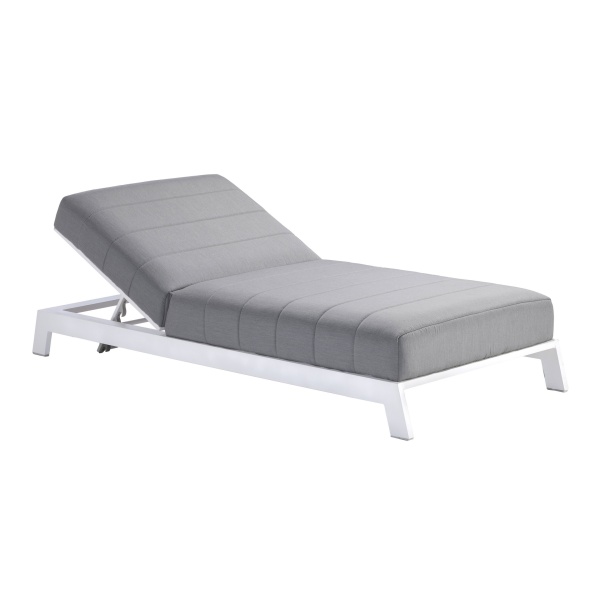
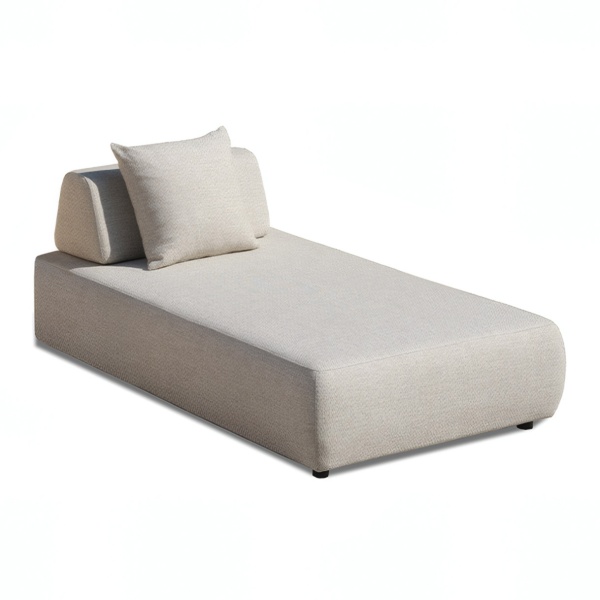
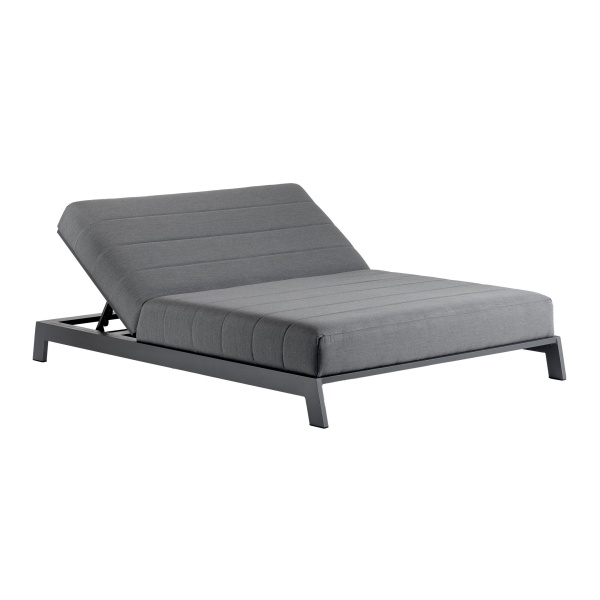
Sunbrella and Sunproof fabrics are typically used in softer lounge-oriented models where a higher level of comfort is required. Such solutions are increasingly common in spa environments and premium terrace areas where the lounger becomes part of the atmosphere rather than simply poolside furniture.
| Material | Expected lifespan | Resistance to salt / chlorine | Typical application |
|---|
| Anodised aluminium | 8–12 seasons | ✅ high | Beach, pool, spa, premium beach club |
| Textilene on aluminium | 5–8 seasons | ✅ high | Poolside, hotel, resort, terrace |
| Batyline on aluminium | 7–10 seasons | ✅ high | 4–5★ hotels, premium segment |
| Sunbrella / Sunproof | 5–7 seasons | ✅ high | Spa, lounge, soft outdoor solutions |
| Technopolymer | 5–7 seasons | ✅ high | Budget segment, large public beaches |
Construction features that matter in hospitality environments
Stackability is one of the most important operational features. Nardi Alfa and Omega stack up to 17 units high — allowing compact off-season storage, faster clearing of the area and reduced storage space requirements. Scab Design Vela is also stackable and does not require wheel removal before stacking.
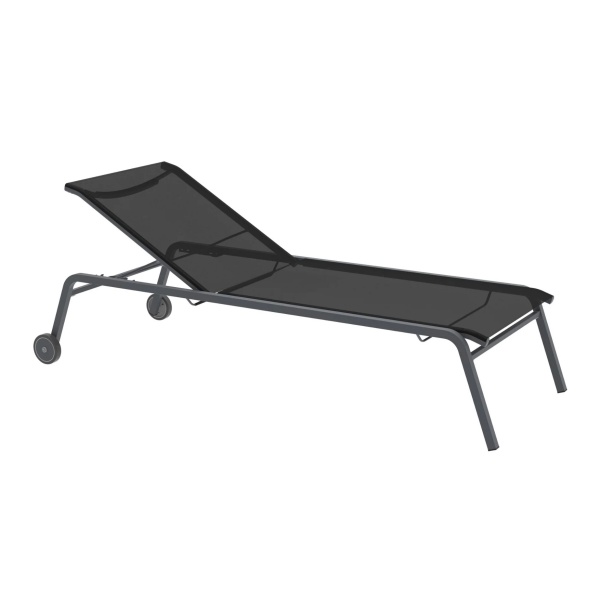
Wheels or runners are essential for the daily work of hospitality staff. On decking, paving or sand, a sunbed should move without lifting — quickly and without damaging the surface. Runners are especially important for beach locations, where sunbeds are dragged across sand rather than carried.
Adjustable backrests are the standard for spa and lounge-oriented hospitality layouts. Nardi Alfa and Omega feature 4 fixed reclining positions, while Scab Vela offers 5. For high-density beach environments, the long-term durability of the reclining mechanism is particularly important.
Replaceable fabric slings and repair kits are an advantage rarely considered during the purchasing stage, yet they significantly influence long-term operating costs over multiple seasons. Nardi and Scab loungers are available with original repair kits and replacement textilene fabrics, extending the lifespan of the lounger without full replacement.
Sun loungers for spa and lounge areas
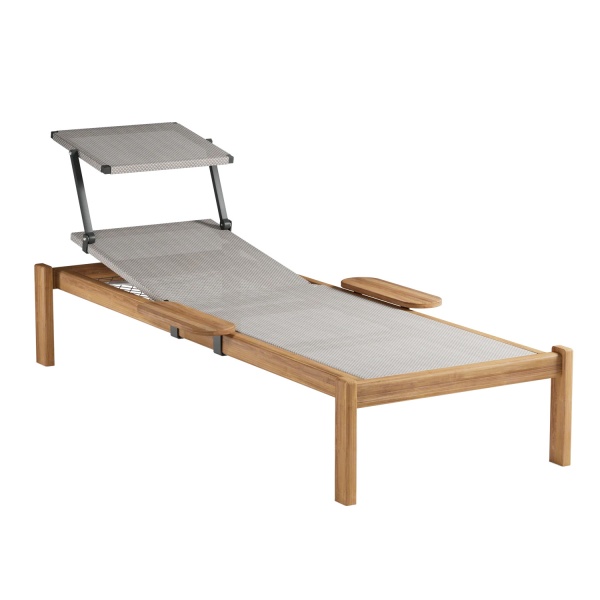
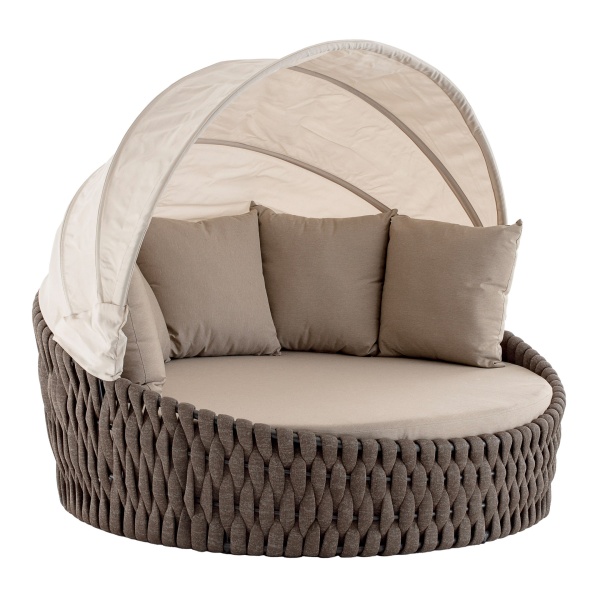
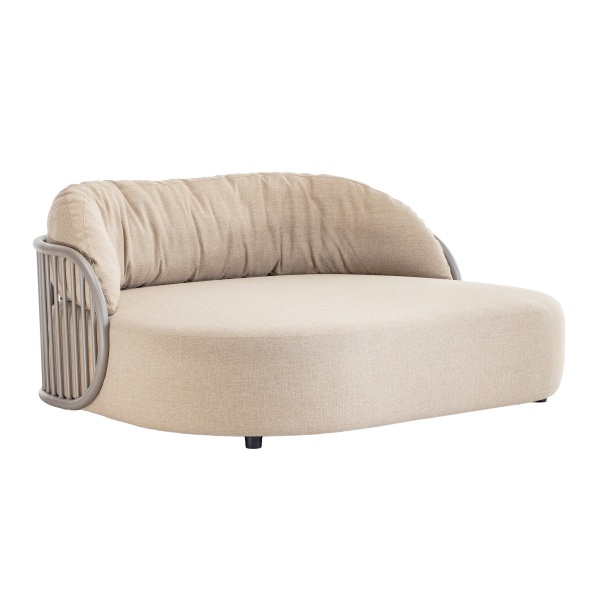
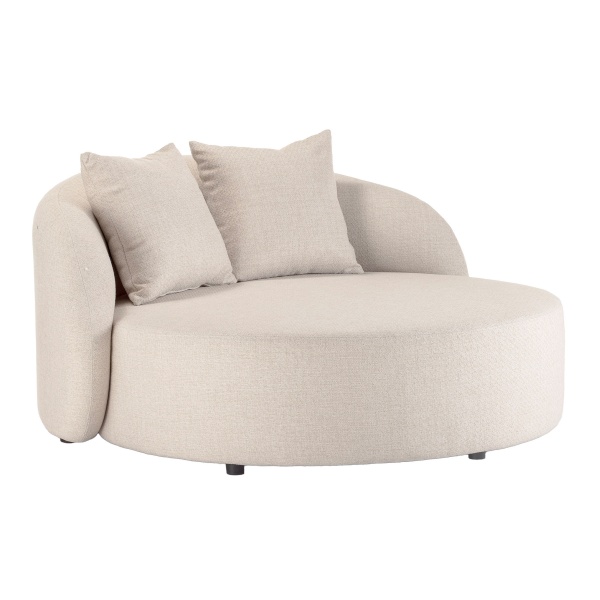
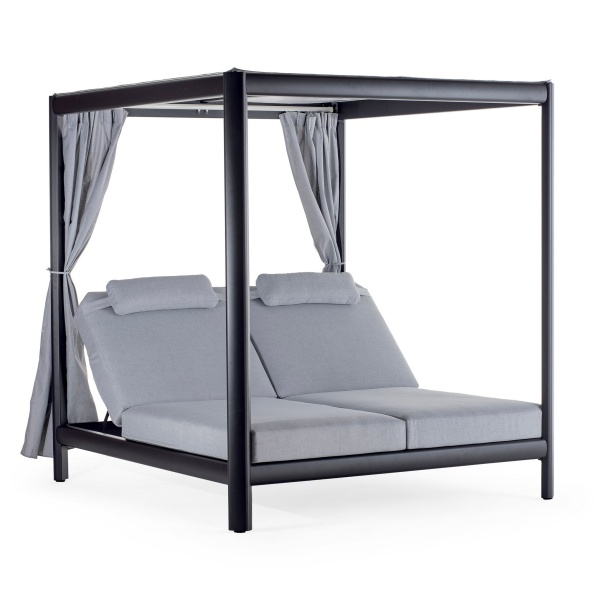
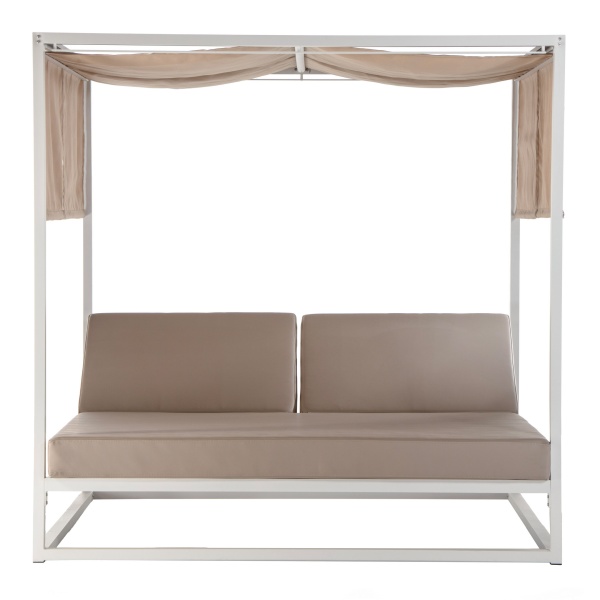
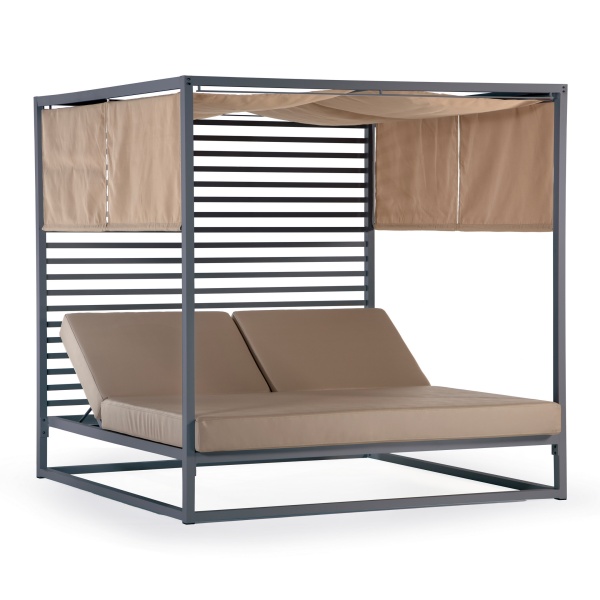
A spa area or hotel lounge operates under a different scenario, where a sun lounger is no longer simply beach furniture, but part of the overall atmosphere. Here, high-density layouts are less important than shape, colour, tactile material quality and the ability to combine loungers with armrests, side tables and shade canopies.
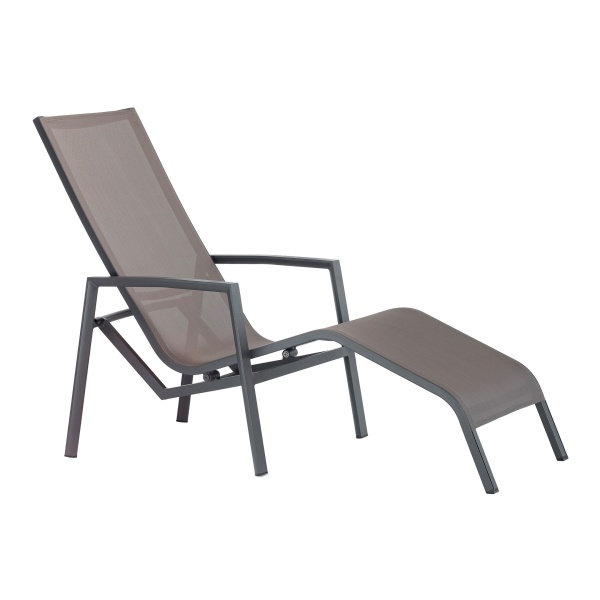
For spa and premium lounge areas, sun loungers with Sunbrella or Batyline fabrics are particularly suitable — these materials provide surface ventilation and maintain colour stability under intense sunlight. They are commonly combined with side tables for sun loungers, where guests place drinks or personal items. If the space requires a more upright, lounge-style seating position, lounge chairs can be considered as an alternative to traditional sunbeds.
How many sun loungers are required for a beach or poolside area?
For hotel pool areas, the standard guideline is 1.5–2 sun loungers per pool user capacity. If a swimming pool is designed for 20 guests at one time, a comfortable operational layout usually requires 30–40 loungers. Pathways between rows should provide at least 60 cm clearance, while spacing between loungers themselves typically ranges from 15–30 cm depending on the desired level of privacy.
In beach environments, calculations depend on the positioning of the venue. Premium destinations allow for more open space between modules, while mass-market concepts operate at higher density. However, excessive overcrowding almost always negatively affects the perception of service quality, even if it technically increases seating capacity.
Sun loungers as part of a complete outdoor system
Sun loungers perform most effectively when integrated into a wider outdoor furniture system rather than used independently. For a complete beach or spa module, they are combined with side tables for sun loungers, where guests can place drinks, books or mobile devices, as well as lounge chairs if the concept requires a more upright seating format.
In more versatile outdoor hospitality environments — for example near restaurants or lounge terraces — sun loungers are frequently paired with terrace parasols, creating controlled shade and allowing the space to adapt to changing sunlight conditions throughout the day.
For hospitality projects, a sun lounger or sunbed is not an isolated product, but part of a complete outdoor system. Maximum operational efficiency is achieved when loungers are combined with parasols, side tables, intelligent layout planning and materials specifically adapted to salt, chlorine and intensive daily commercial use.