Why plastic sun loungers became the standard for pool areas
The main reason is the combination of durability, mobility and minimal maintenance costs. Plastic sun loungers do not require complex upkeep, do not corrode, do not overheat as critically as metal and are easy to clean after intensive daily use.
For hotels and beach clubs, this means lower operational costs: staff can prepare the area faster, furniture is easier to stack, relocate and store off-season. That is why polypropylene and technopolymer models dominate large-scale pool environments.
Within hospitality, a plastic sun lounger is first and foremost an operational tool: quick cleaning, weather resistance and predictable long-term performance without complex maintenance.
Which plastics actually work in hospitality environments
Fibreglass-reinforced polypropylene is the primary material used in professional outdoor sun loungers. Fibreglass increases structural rigidity and allows the furniture to withstand continuous daily loads without deformation. These models are resistant to UV exposure, chlorine, sea salt and sudden temperature changes.
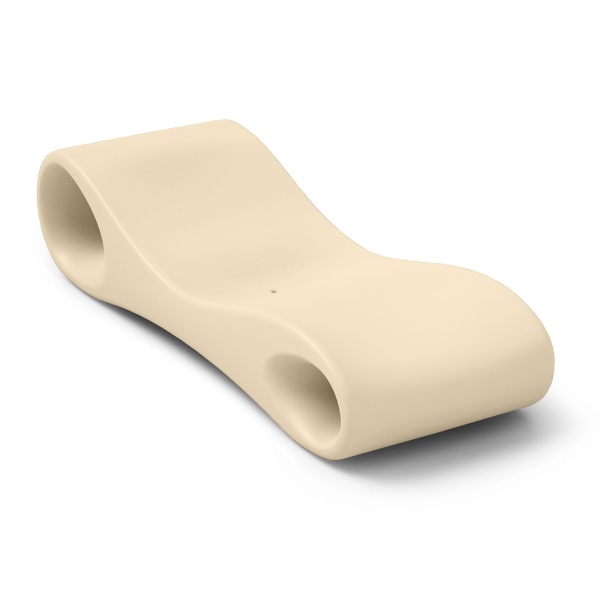
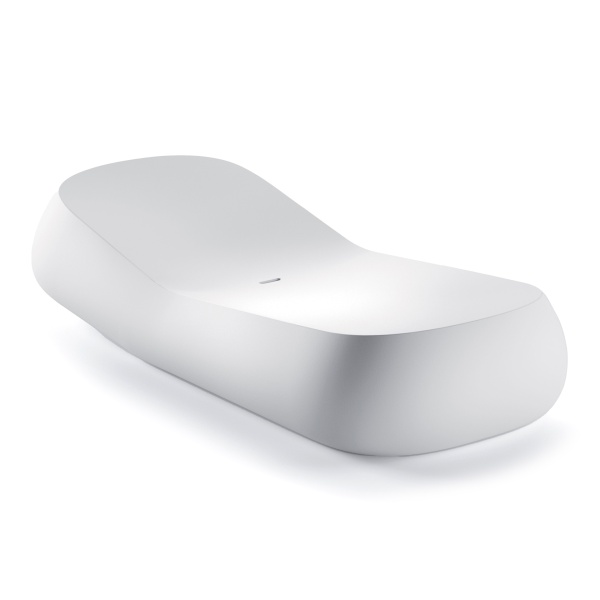
Technopolymer is typically used in more premium outdoor collections. It offers greater geometric stability, maintains its shape better under load and allows for more refined design silhouettes. That is why technopolymer loungers are often specified for designer hotel pool areas and contemporary beach clubs.
High-quality outdoor plastics do not fade after a single season and do not become brittle under direct sunlight. For the professional hospitality sector, UV additives and commercial-use certification are critical.
Plastic sun loungers for swimming pools and beaches
In pool environments, sun loungers are constantly exposed to chlorinated water, wet towels, sunscreen products and humid conditions. This is where plastic models demonstrate maximum practicality: they dry quickly, do not rust and require no seasonal repainting or specialised maintenance.
For beachfront locations, another key advantage is low weight. Plastic loungers are easy for staff to move even when the beach layout changes daily. In large resort complexes, this literally saves operational hours every week. Thanks to modern manufacturing technologies, outdoor plastics are now widely used not only in loungers but also in the segment of plastic café chairs, where durability, mobility and easy maintenance are equally important.
Combined with beach parasols, plastic sun loungers create fully integrated outdoor relaxation areas for swimming pools, spa zones and rooftop terraces.
Stackability and mobility: what actually matters for staff
In hospitality environments, guest comfort is important — but staff efficiency is equally critical. That is why professional plastic sun loungers are almost always stackable. This is especially important for seasonal beach clubs and hotels that regularly reconfigure or clear outdoor spaces.
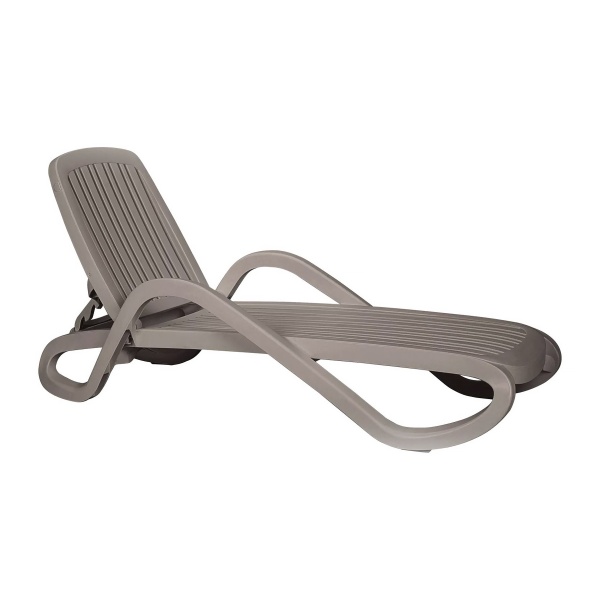
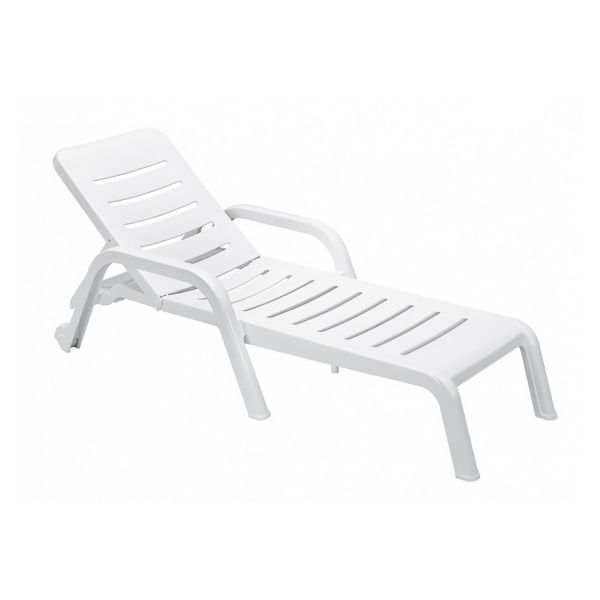
Wheels simplify movement across tiles and decking, while sled bases perform better on sand. For large beach operations, this becomes one of the most important structural features.
Textilene or solid plastic surface
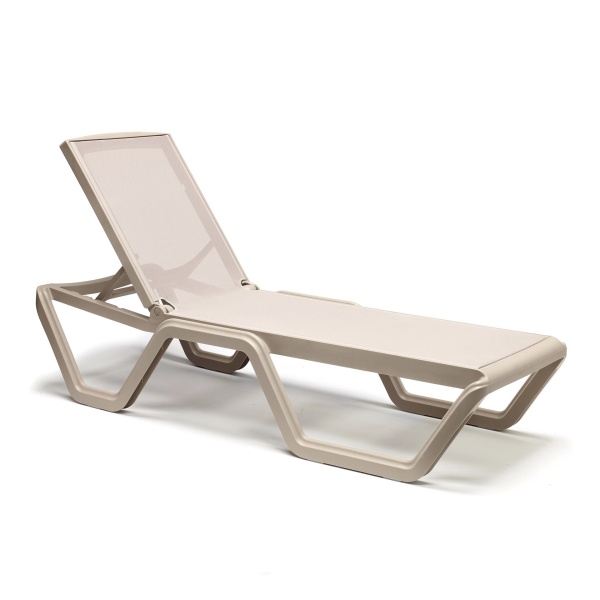
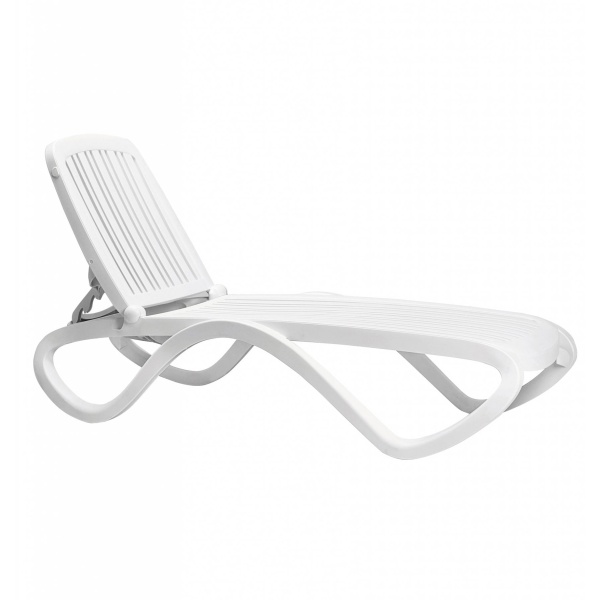
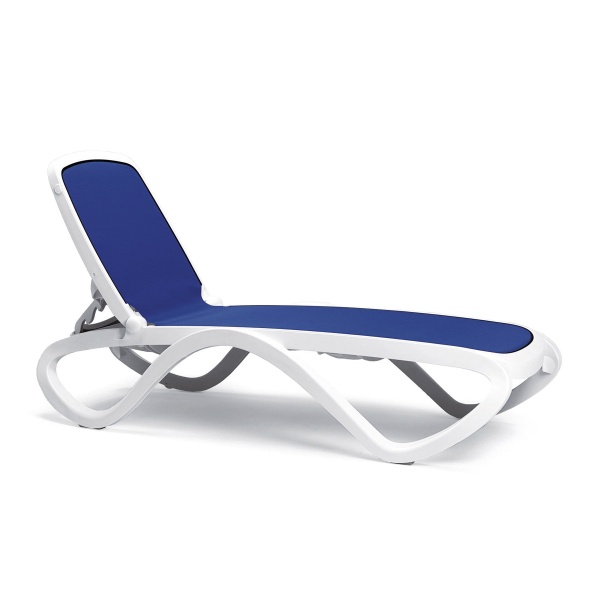
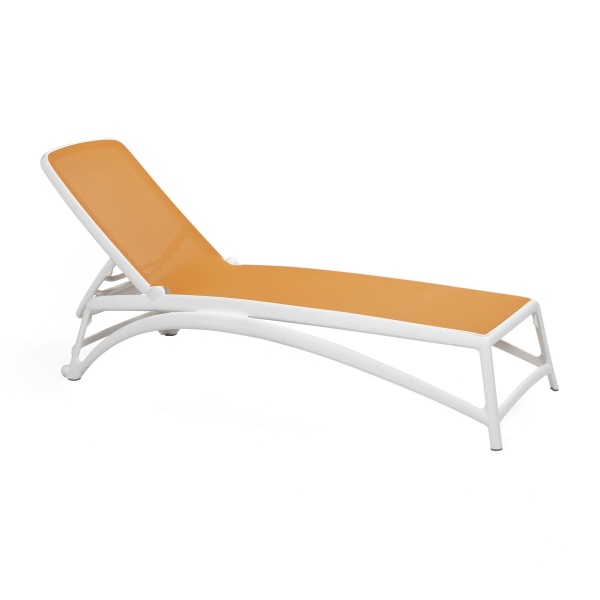
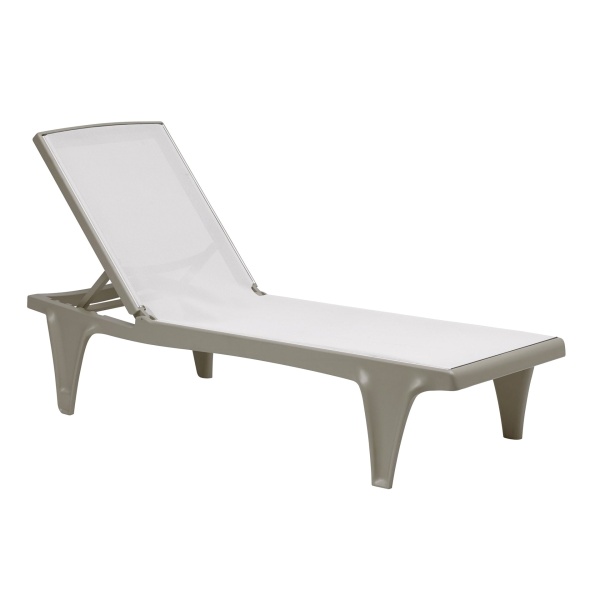
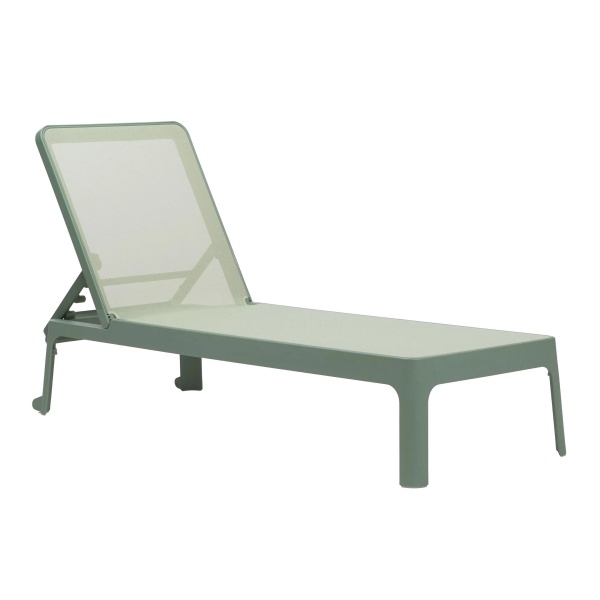
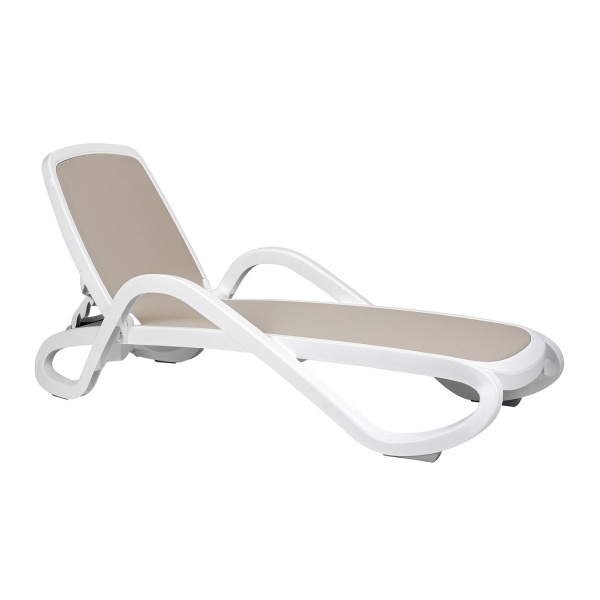
Modern plastic sun loungers are generally available in two formats: with a rigid plastic surface or with a Textilene sling.
Textilene sun loungers provide a higher level of comfort, better airflow in hot weather and eliminate the need for additional cushions. That is why they are especially popular in premium hotel pool areas and resort developments.
Classic plastic loungers remain more practical for high-capacity beaches, water parks and large pool complexes: they are cheaper to maintain, easier to clean and offer maximum durability under intensive daily use.
Plastic sun loungers for restaurants and lounge terraces
Today, plastic outdoor sun loungers are used not only around water. In restaurants with rooftop terraces, lounge areas and beach restaurant concepts, they create a more relaxed guest experience while giving the space a cleaner and more contemporary appearance.
They work particularly well in combination with outdoor terrace sofas, creating layered lounge compositions for outdoor hospitality spaces.
What to consider when choosing plastic sun loungers
UV protection. Without specialised additives, plastic quickly loses colour and becomes brittle.
Resistance to chlorine and salt. This is a basic requirement for pool areas and beach clubs.
Stackability. One of the key operational advantages for hospitality businesses.
Structural weight. Models that are too lightweight may become unstable in windy conditions and during intensive use.
Replaceable sling systems. For Textilene models, this significantly affects long-term service life and maintenance costs.
Plastic sun loungers for hospitality represent a balance between practicality, durability and operational efficiency. That is why they remain one of the core outdoor furniture solutions for beaches, swimming pools and resort projects with high daily guest traffic.