Why textilene has become the hospitality standard
Textilene is a specialised outdoor fabric based on synthetic fibres with a PVC coating, developed for intensive use in open-air environments. Unlike conventional textiles or soft cushions, it does not retain moisture, dries quickly after rain and provides surface ventilation even in hot weather.
For hotels and beach clubs, this is critical: the sun lounger is ready for use almost immediately after contact with water, does not require separate cushions and is significantly easier to maintain on a daily basis. This is why textilene sun loungers for pools have become an industry standard in modern hospitality projects.
Textilene sun loungers combine the comfort of a soft seating surface with the practicality of outdoor polymer furniture. For commercial use, this is one of the most efficient balances between guest comfort and maintenance costs.
Textilene sun loungers for pools and beach clubs
In pool areas and beach clubs, furniture operates under constant stress: water, chlorine, sunlight, cosmetics, salt and continuous guest traffic. This is why the construction of a sun lounger must be not only comfortable, but also operationally efficient.
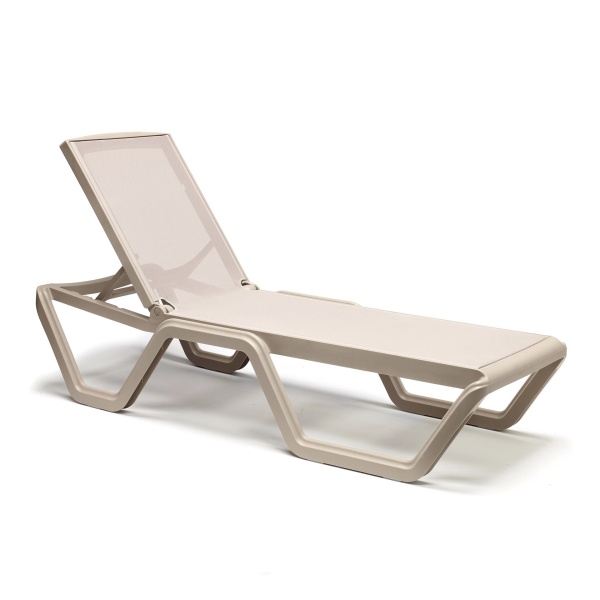
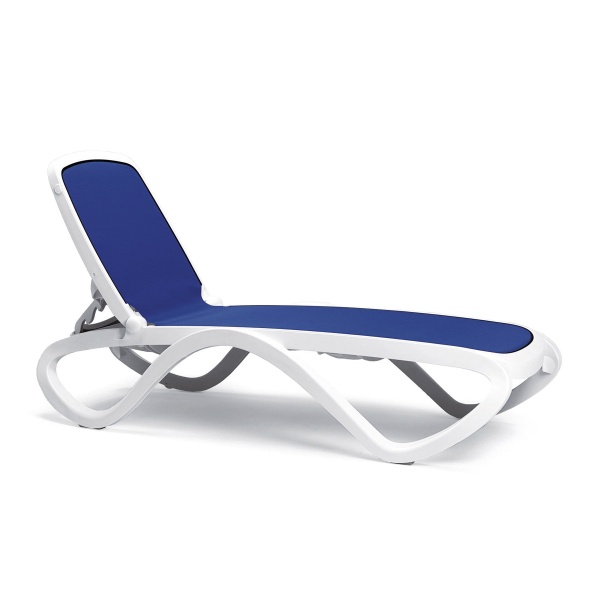
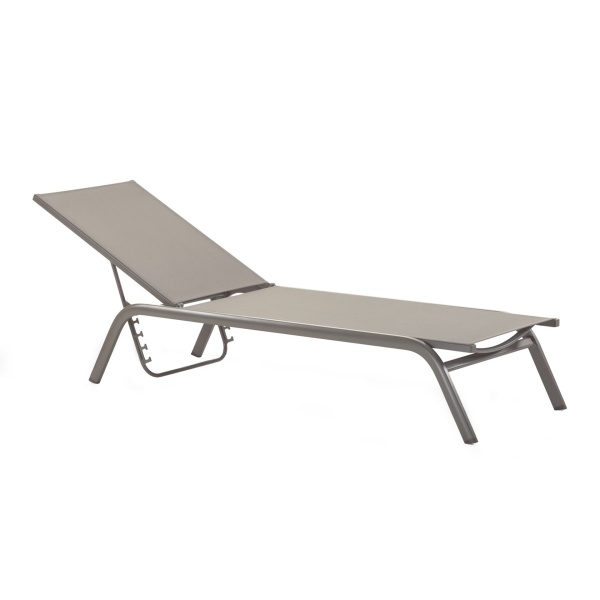
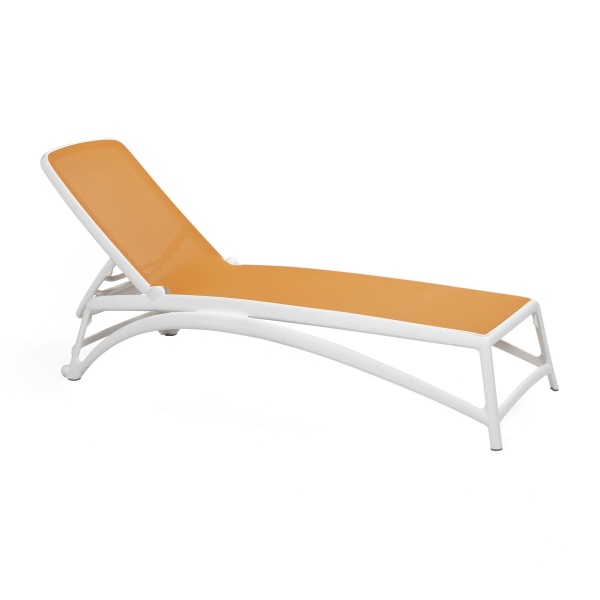
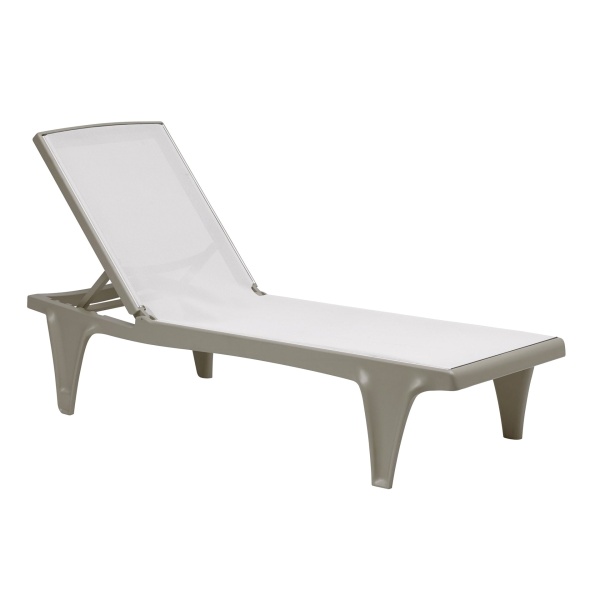
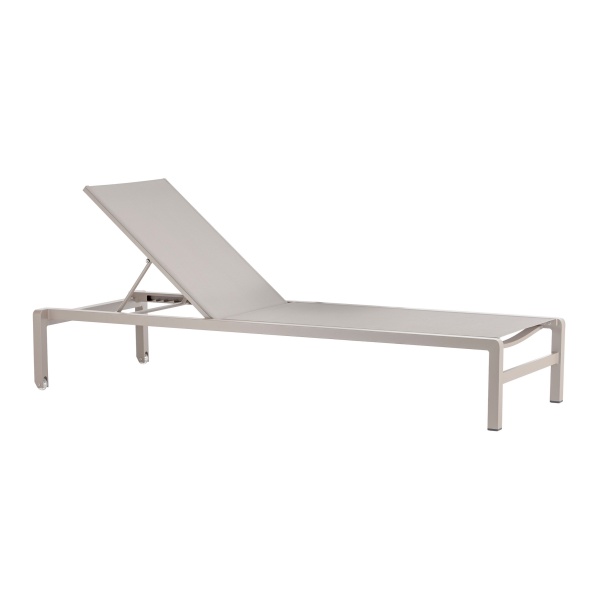
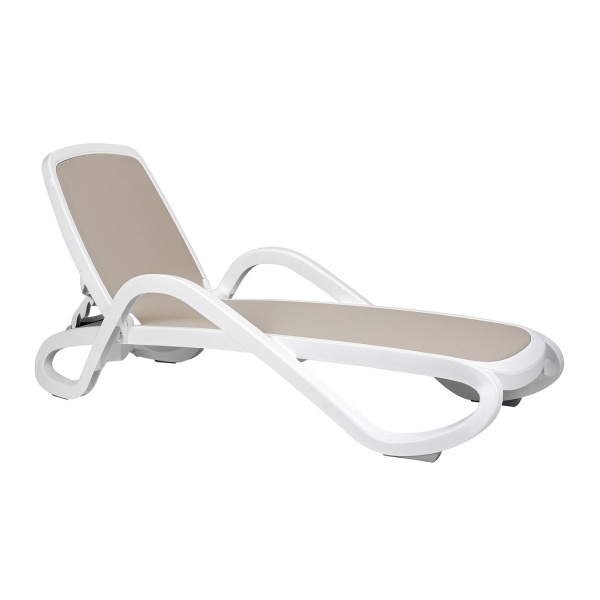
The most common solution is plastic sun loungers with a textilene surface. They are lightweight, rust-resistant, easy to stack and require minimal maintenance. For the premium segment, aluminium sun loungers are more frequently used, offering a more rigid structure, more premium geometry and greater stability during intensive use.
In resort and spa projects, wooden sun loungers with textilene are also popular — they appear visually warmer and integrate more naturally into outdoor surroundings, particularly within eco-resort or wellness concepts.
Advantages of textilene in everyday use
Fast drying. The material absorbs virtually no water and quickly returns to use after rain or poolside operation.
Comfort without cushions. The elastic surface adapts to the guest’s body and provides comfort even without additional soft elements.
UV resistance. High-quality outdoor textilene does not fade in direct sunlight and retains its colour over many seasons.
Easy cleaning. Textilene is easy to wash, does not accumulate sand and requires no specialised maintenance.
Lower operational costs. The absence of cushions means less washing, drying and seasonal storage.
Which frames work best with textilene
Polypropylene and technopolymer are the optimal choice for the mass hospitality segment. These loungers are lightweight, moisture-resistant and well suited to large beach and pool areas.
Aluminium is a solution for the premium outdoor segment. Aluminium frames are more rigid, more stable and visually more architectural. These models are often used in designer hotel pool areas and rooftop spaces.
Wood is the preferred material for resort and wellness concepts where warm tactile perception and natural aesthetics are important. Teak and other moisture-resistant hardwoods are most commonly used.
Textilene sun loungers for terraces and lounge areas
Textilene sun loungers are used not only beside water. In restaurants, rooftop bars and lounge terraces, they create a more relaxed leisure scenario and extend guest dwell time.
They are particularly effective when combined with outdoor sofas, forming complete lounge compositions for outdoor spaces. This format is widely used in beach restaurants, hotel terraces and premium cocktail lounge concepts.
What to consider when choosing
Textilene density. For hospitality projects, a dense outdoor fabric with resistance to stretching and UV exposure is essential.
Replaceable fabric. This significantly affects furniture lifespan and operational costs.
Stackability. Compact off-season storage is critical for hotels and beach facilities.
Wheels or runners. These simplify the daily movement of furniture by staff.
Resistance to chlorine and salt. This is a fundamental requirement for outdoor furniture in beach and pool areas.
Textilene sun loungers are one of the most efficient outdoor furniture formats for hospitality projects: guest comfort, fast servicing, minimal maintenance costs and a stable appearance throughout many seasons of intensive use.