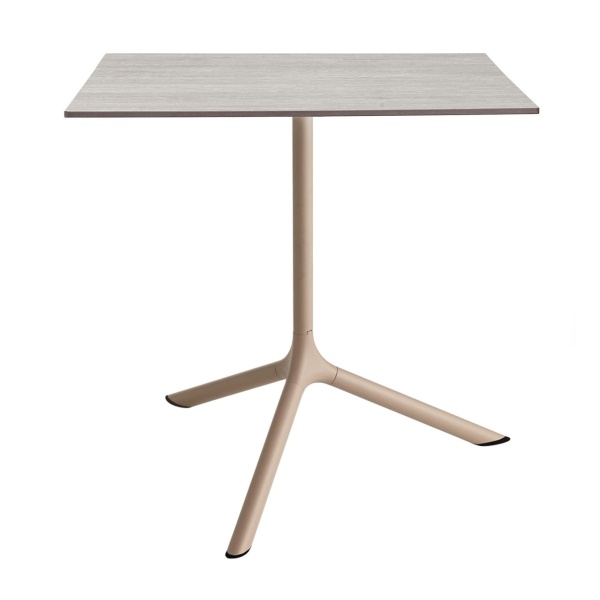
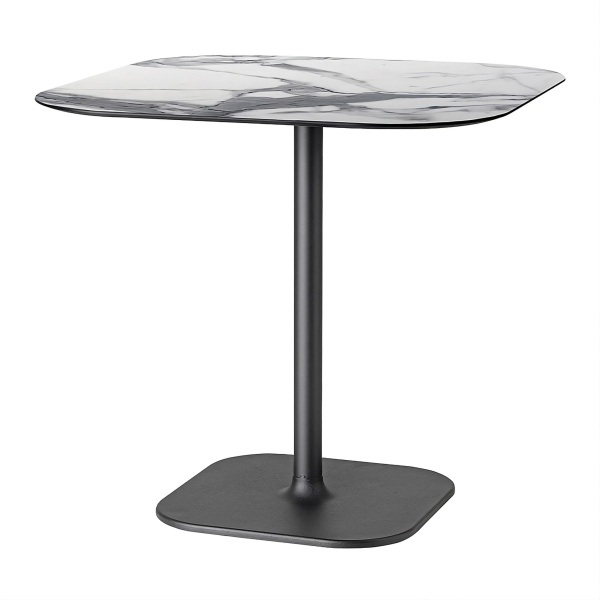
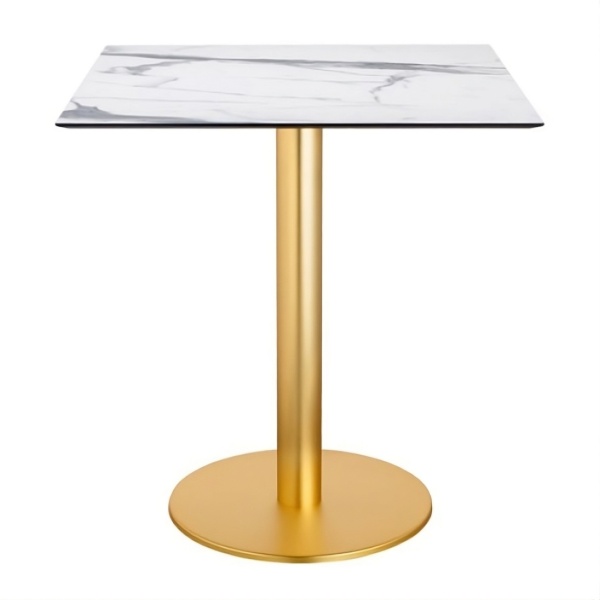
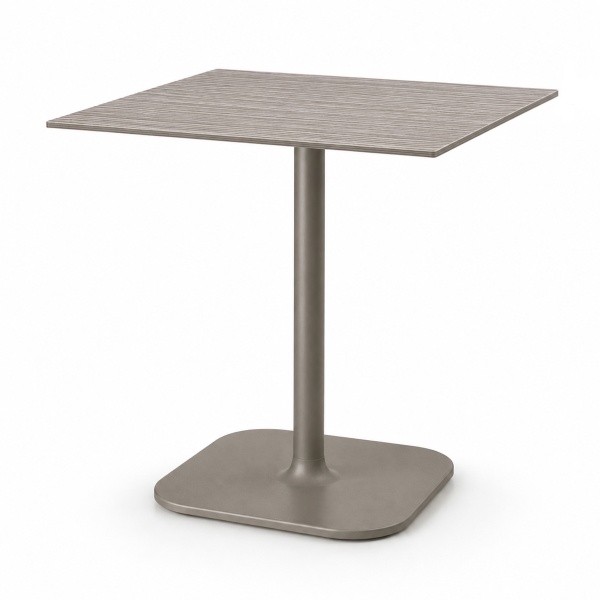
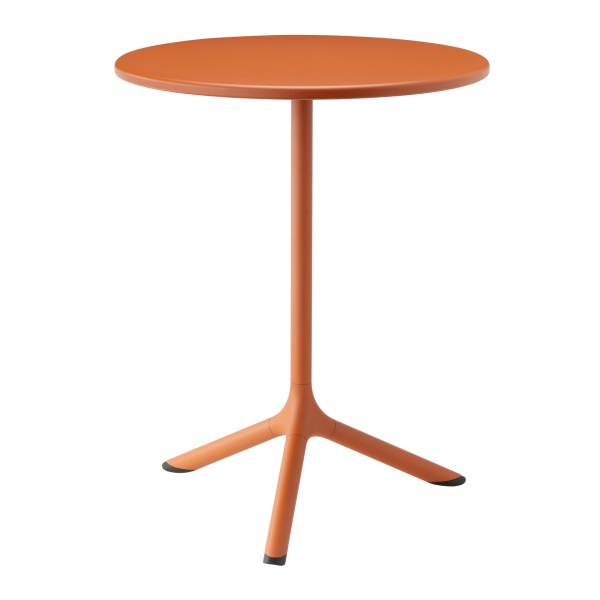
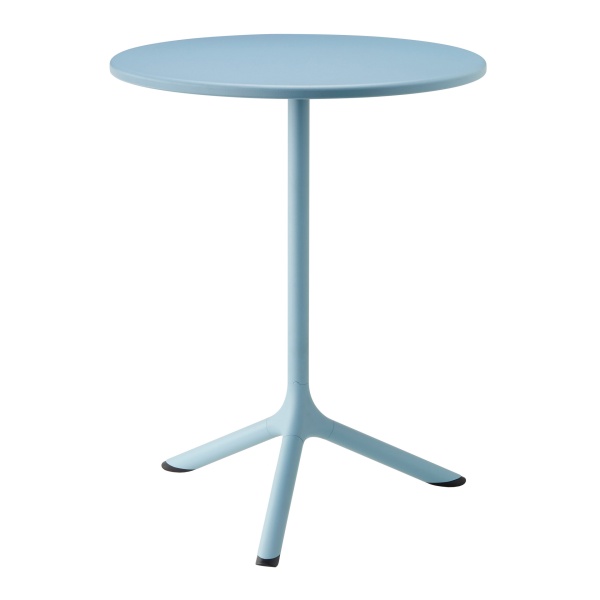
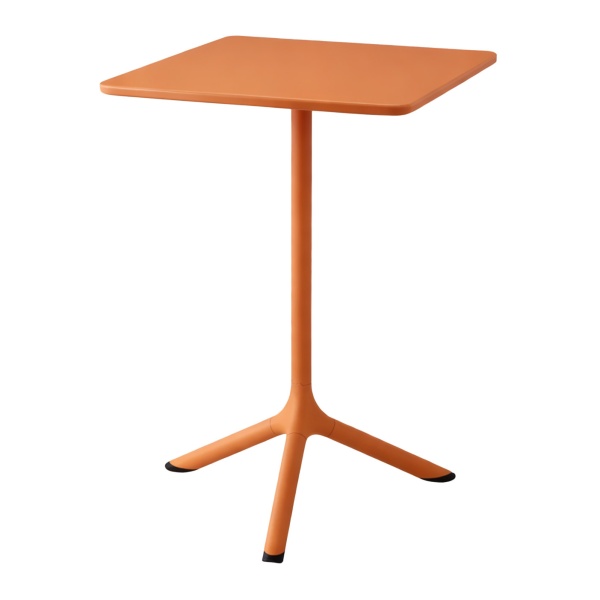
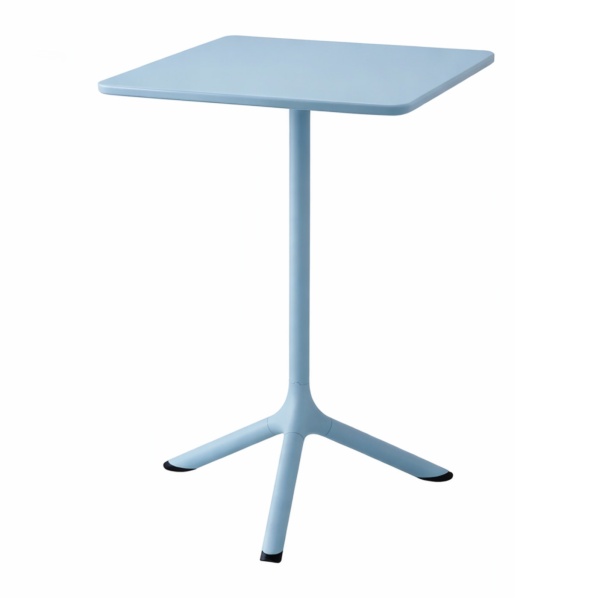
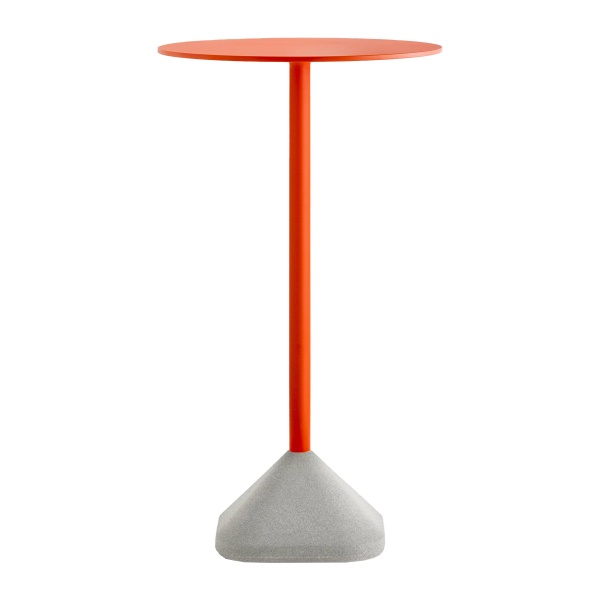
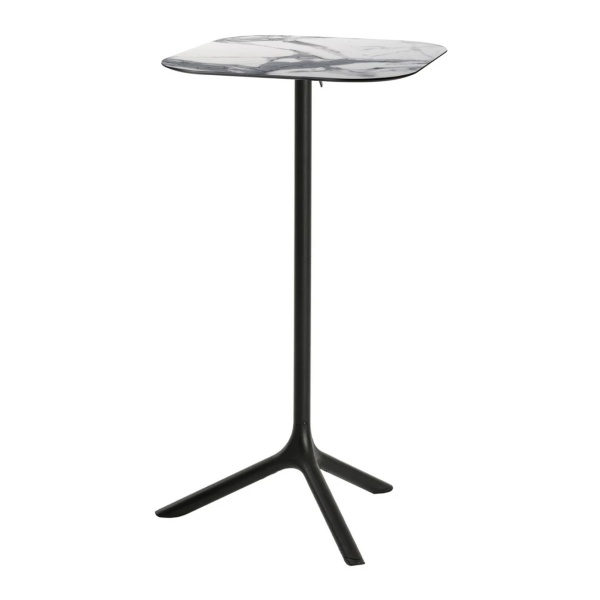
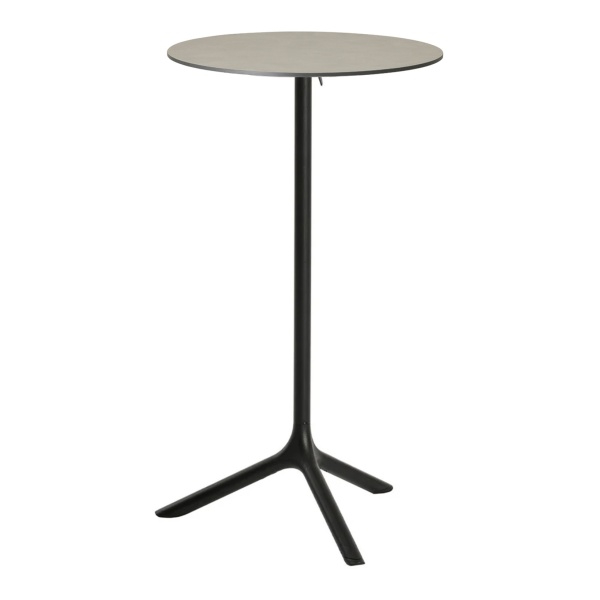
Outdoor tables for restaurant terraces are contract-grade tables for cafés, restaurants, pubs, hotels and other hospitality venues, designed for regular commercial use outdoors. When specifying terrace tables, size and tabletop shape are only part of the decision: resistance to moisture, sunlight and temperature changes, base stability and suitability for seating 2, 4 or 6 guests are equally important.
Outdoor tables form a core part of terrace furniture within a complete outdoor furniture scheme. In professional hospitality projects they should be treated as a separate product category rather than indoor dining tables simply moved outside, because exterior use places different demands on frames, table bases, tops, finishes and overall stability.
For a restaurant, café, pub or hotel, a terrace table is more than a surface for food and drinks. It influences seating density, ease of service, clearing times, guest comfort and the visual rhythm of the entire outdoor area. Choosing the right outdoor table therefore starts with how the terrace will actually operate rather than appearance alone.
Why an outdoor table is not simply an indoor café table moved outside
Furniture on an open terrace is exposed to a more demanding environment: sunlight, rain, moisture, dirt, temperature changes, frequent repositioning and constant daily use by guests and staff. Materials that perform perfectly well indoors can lose their finish, stability or structural integrity much more quickly outside.
For this reason, commercial outdoor tables should use materials intended for exterior conditions, a stable contract-grade base and a tabletop suitable for moisture, UV exposure and repeated cleaning. For hospitality operators, the objective is not only appearance but reliable performance over multiple seasons.
Key point: A commercial outdoor table is a dedicated exterior product, not simply an indoor café table. Moisture and UV resistance, a stable base, a durable tabletop and correct sizing for the intended seating layout are essential for restaurant and hotel terraces.
What customers look for when choosing outdoor tables
Commercial searches for this category are usually centred on purchasing intent and the intended application: outdoor restaurant tables, terrace tables, outdoor café tables, commercial outdoor tables, restaurant terrace tables and hospitality outdoor tables. Shape, capacity and layout requirements then become important modifiers: round, square or rectangular tables for 2, 4 or 6 guests.
These distinctions reflect the way hospitality operators actually specify furniture: first by the type of venue and outdoor area, then by dimensions, seating capacity, materials and configuration.
Which outdoor table formats are most useful for hospitality venues
Three basic formats cover most restaurant, café and hotel terrace projects.
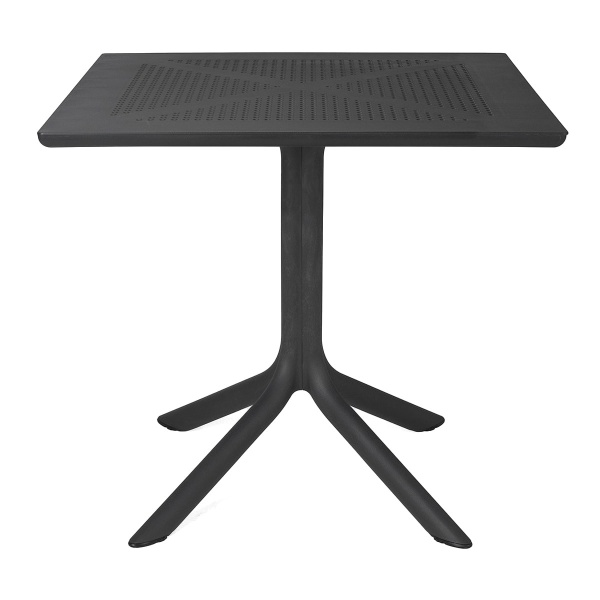
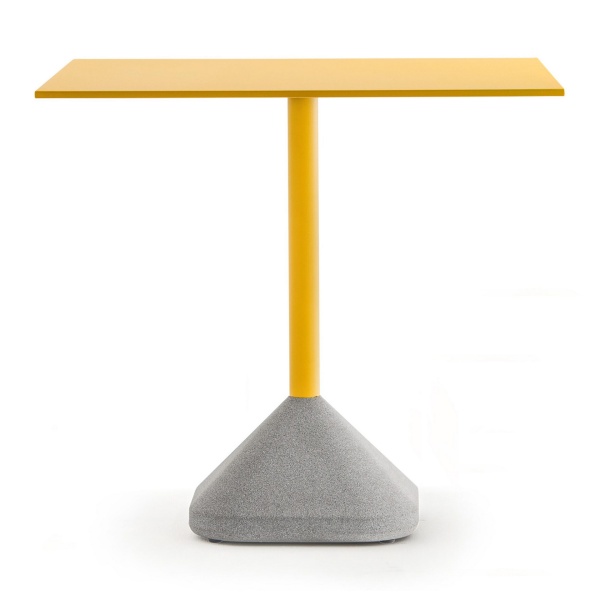
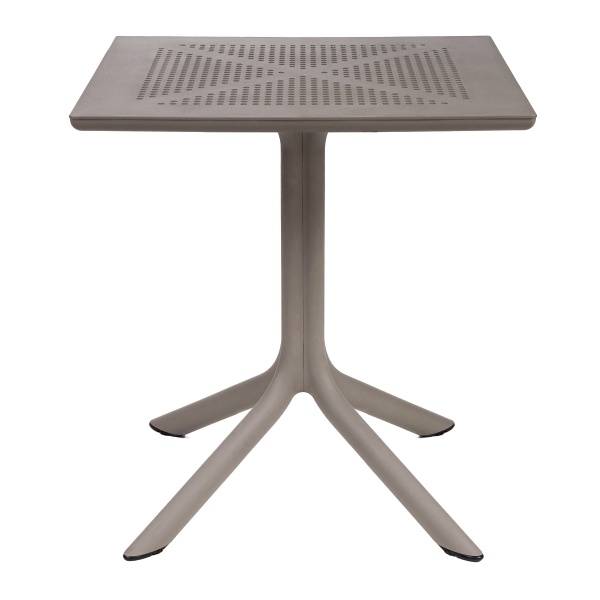
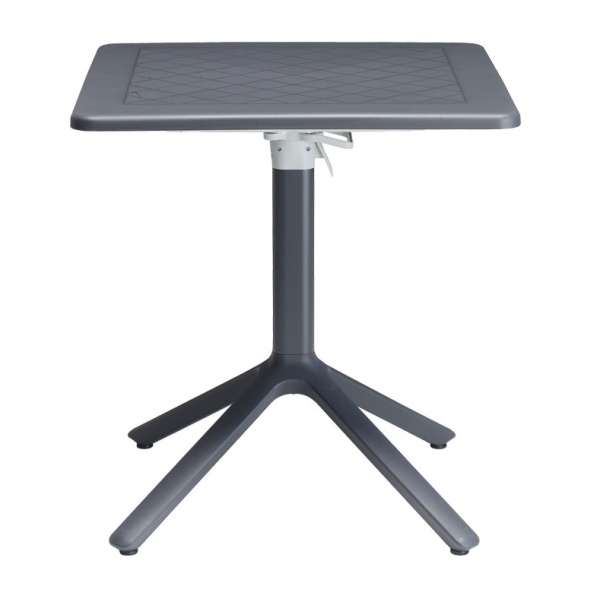
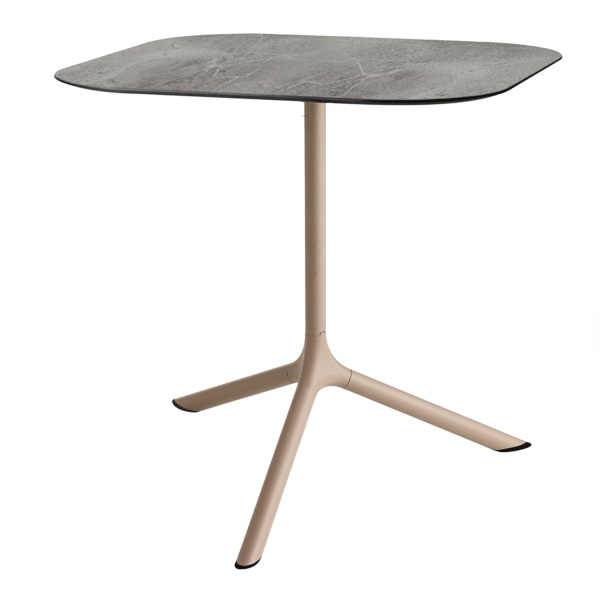
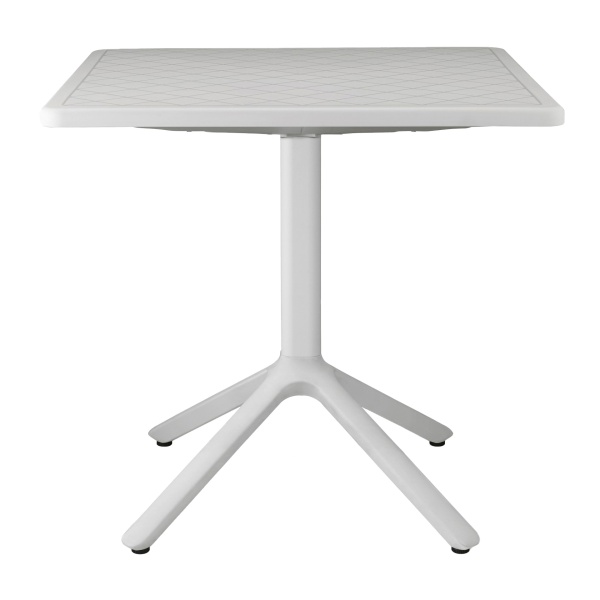
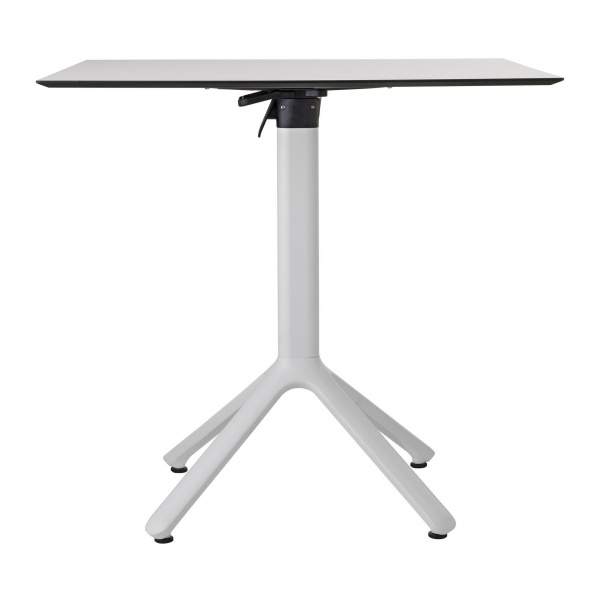
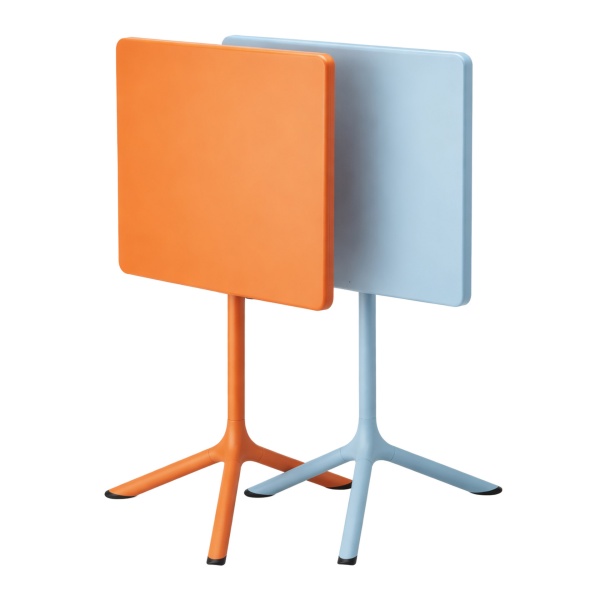
- Square outdoor tables — a versatile option for cafés, pubs and bistros, particularly for 2–4 guests;
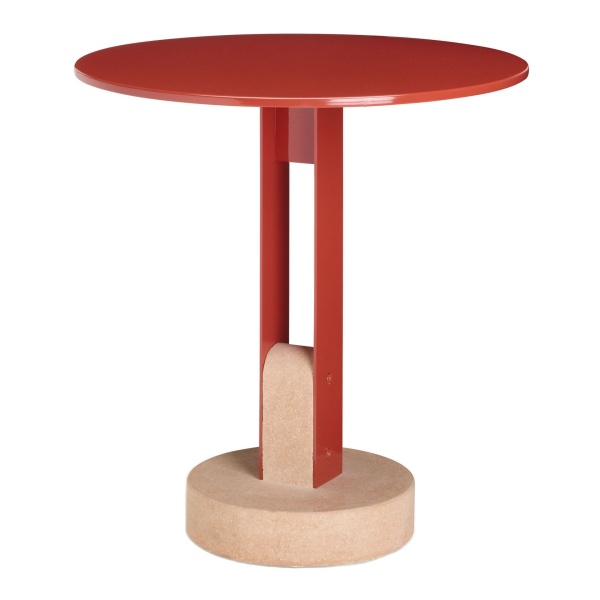
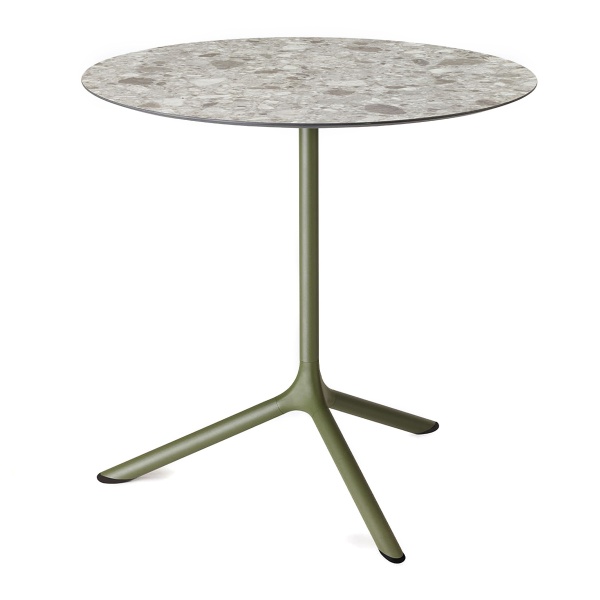
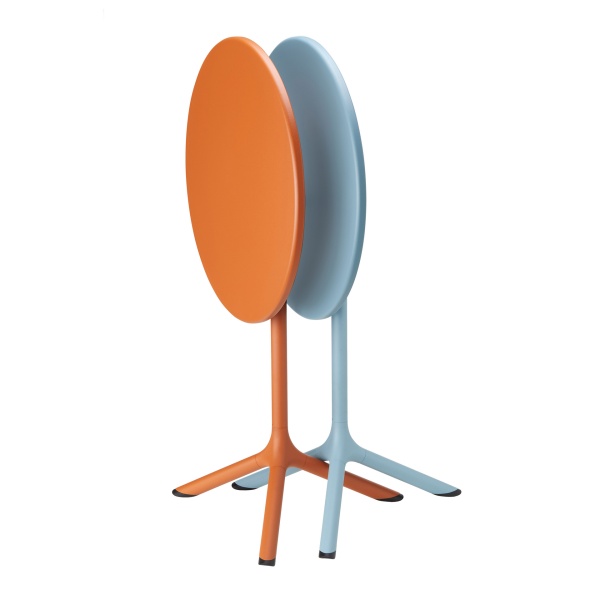
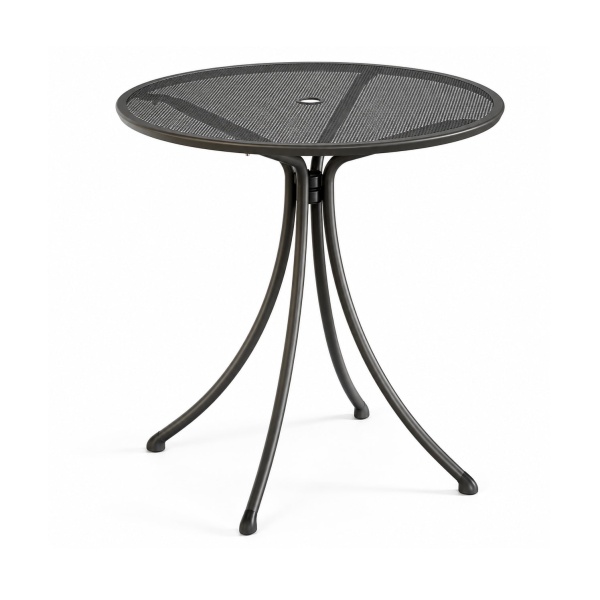
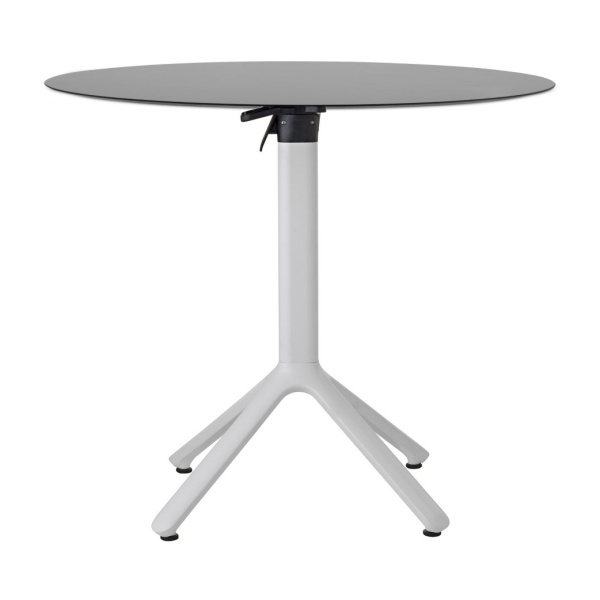
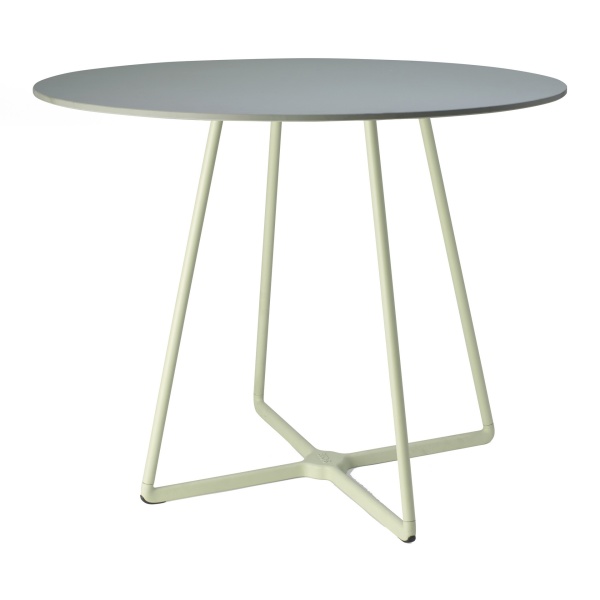
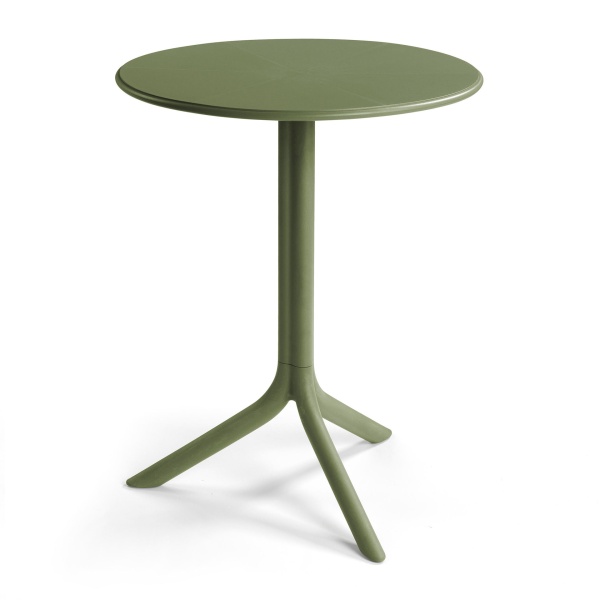
- Round outdoor tables — particularly effective on compact terraces where easier circulation and a softer layout are important;
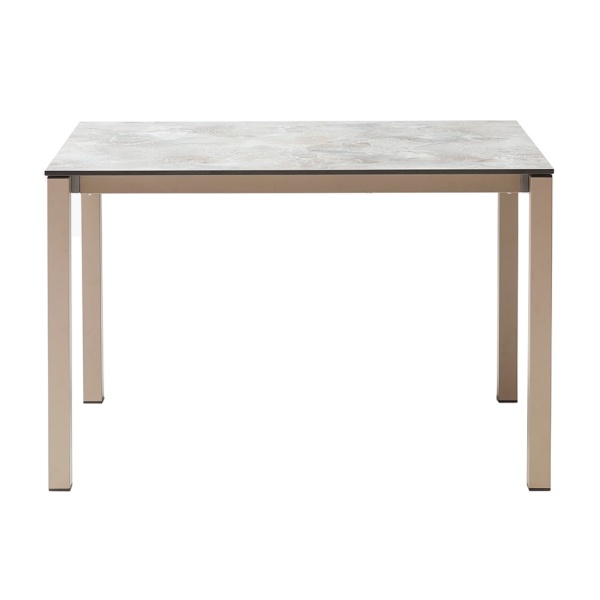
- Rectangular outdoor tables — suitable for restaurants, families, larger groups and layouts where several tables may need to be combined.
Tables are also commonly selected by seating capacity — typically for 2, 4 or 6 guests. This directly affects terrace planning, table turnover and the amount of revenue-generating seating that can be accommodated without compromising circulation.
Choosing the right table shape for a terrace
A round table works well where smoother circulation around furniture is required. It can be particularly useful for coffee shops, compact terraces and smaller hospitality spaces with changing guest flow.
A square table is one of the most flexible formats for professional hospitality use. It works independently, can be aligned with neighbouring tables and makes it easier to maintain a regular seating grid.
A rectangular table is better suited to higher-capacity dining, longer runs along a façade or restaurant layouts designed around full meals rather than short visits.
Key point: Round and square tables are usually the most flexible choice for compact cafés and adaptable terrace layouts. Rectangular tables are better suited to restaurant terraces, family dining and larger seating configurations.
Materials that perform well on restaurant terraces
Aluminium is one of the most practical materials for outdoor table bases. It is relatively lightweight, corrosion-resistant and well suited to furniture that staff need to reposition regularly.
Technopolymer is a practical option for high-traffic cafés, casual dining venues and other outdoor areas where furniture needs frequent cleaning and easy day-to-day handling.
HPL table tops are widely used for outdoor hospitality tables because suitable exterior-grade products offer good resistance to moisture, sunlight and repeated cleaning. The precise performance always depends on the construction and specification of the individual top.
Natural timber provides warmth and a more premium appearance but generally requires more maintenance and should only be used outdoors where the manufacturer specifies the material and finish for exterior conditions.
If the project requires a customised table rather than a complete factory-built model, the base and top can be specified separately using outdoor table bases and outdoor table tops.
| Material / component | Main benefit | Best suited to |
|---|
| Aluminium base | Stability, low weight and corrosion resistance | Cafés, restaurants and hotel terraces |
| Technopolymer | Easy maintenance and practical performance in high-traffic areas | Cafés, casual dining and busy outdoor spaces |
| HPL tabletop | Resistance to moisture, UV exposure and frequent cleaning | Professional hospitality terraces |
| Natural timber | Warm texture and premium appearance | Restaurants, hotels and lounge terraces |
What matters in commercial use
- Base stability — the table should remain stable on paving, decking and other typical terrace surfaces;
- Tabletop durability — the surface should be appropriate for moisture, sunlight, staining and repeated cleaning;
- Suitable weight — heavy enough to remain stable but practical enough for staff to reposition;
- Compatibility with seating — dimensions should correspond to the chairs and the actual number of guests;
- Repeat availability — particularly important for contract projects where additional tables may be required later.
Choosing outdoor tables for different hospitality venues
For coffee shops, cafés and bistros, compact square or round tables are usually the most practical choice. They allow efficient use of smaller terraces and make layouts easier to adjust as demand changes throughout the day.
For restaurant terraces, larger square and rectangular tables are often more appropriate, providing more dining space per guest and creating a more substantial restaurant setting.
For hotels and resorts, the table should form part of a coordinated outdoor furniture scheme. It needs to work with outdoor terrace chairs and, where shading is required, professional terrace parasols.
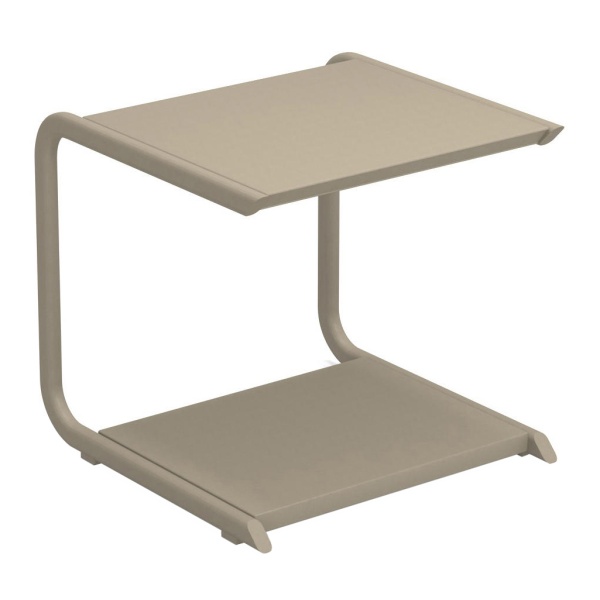
For poolside and lounge areas, the specification changes. Lower occasional tables and lounge tables are usually more appropriate alongside sun loungers and relaxed seating than standard dining-height tables.
What to combine with outdoor tables
Outdoor tables work best as part of a complete terrace furniture scheme. In practice, this means specifying the table together with outdoor chairs, the appropriate base and tabletop and, where necessary, a suitable shading solution.
This approach creates a more coherent commercial environment: the terrace looks intentional, staff can operate it efficiently and guests experience it as a permanent part of the venue rather than temporary seasonal furniture.
Buy commercial outdoor tables for cafés, restaurants, pubs and hotels in the UK — selected models available from stock and others supplied to order. We can help specify the size, material, table base and tabletop for your terrace layout, seating requirements and interior concept.