Where flip-top tables work better than fixed tables
A flip-top construction does not make sense everywhere — but in several scenarios it is hard to beat:
- Seasonal terraces with daily furniture storage — staff fold and unfold terrace tables every day. With 20–30 tables, the difference between fixed and flip-top construction can mean 40–60 minutes of staff time daily.
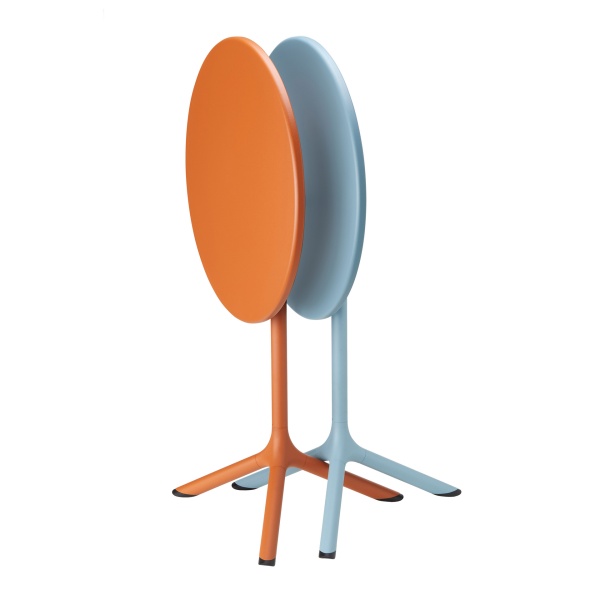
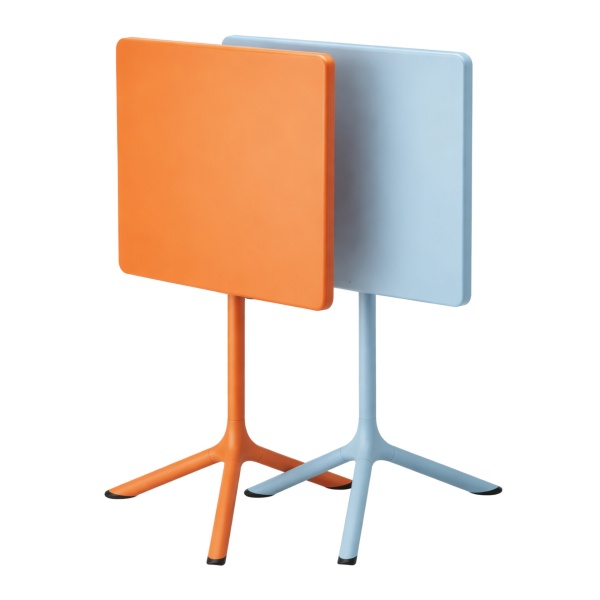
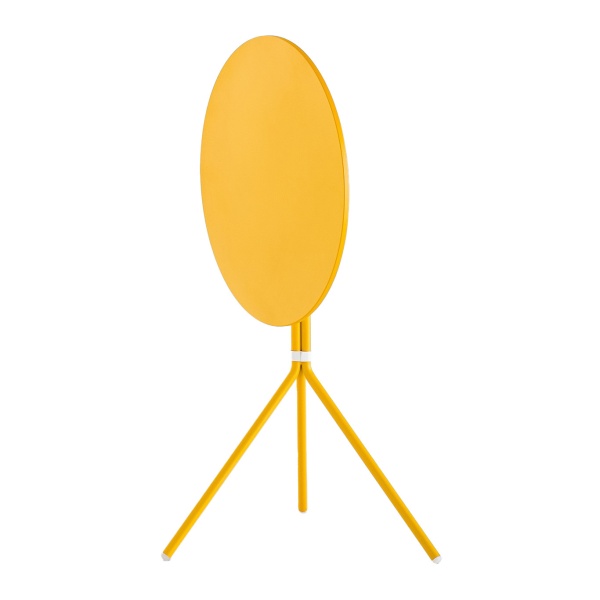
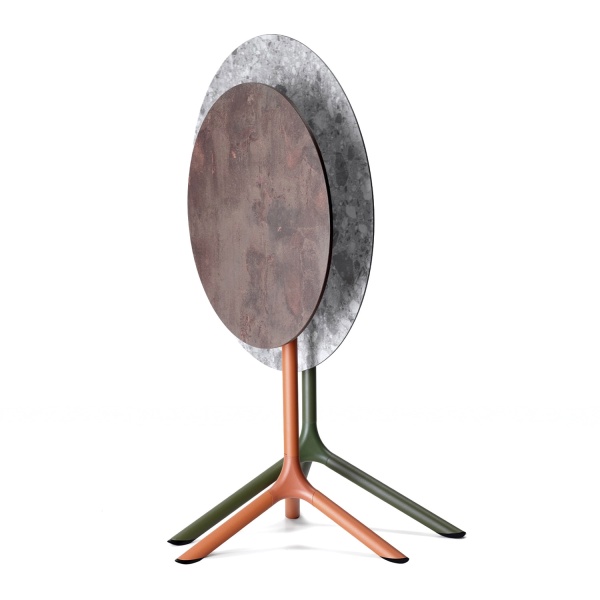
- Venues with limited storage space — folded tables are stored vertically along a wall or in a narrow corridor. Ten folded tables take up around 1–1.5 m².
- Open-air terraces without cover — furniture cannot always be left outside overnight in rain or frost. A flip-top mechanism allows the whole seating area to be cleared in 10–15 minutes.
- Restaurants with transformable layouts — combined with pedestal tables, flip-top models allow seating capacity to be scaled quickly for banquets or events.
- Resort and hotel terraces with seasonal operation — furniture is set up at the start of the season and stored at the end without complex dismantling.
Construction and mechanism: what determines durability in daily use
The flip mechanism is the most heavily loaded part of the structure. In contract models, it is designed for 10,000–15,000 folding cycles without loss of locking performance — equivalent to 15–20 years of daily use with one fold per day. Budget models with plastic locks usually withstand 500–2,000 cycles and often start to loosen after the first season.
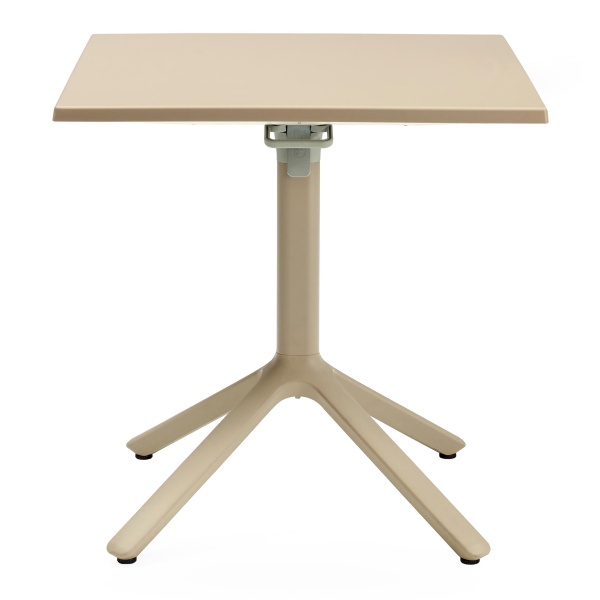
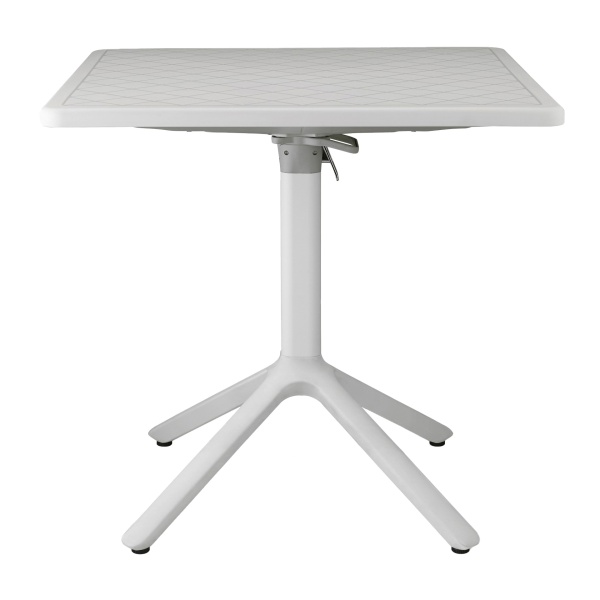
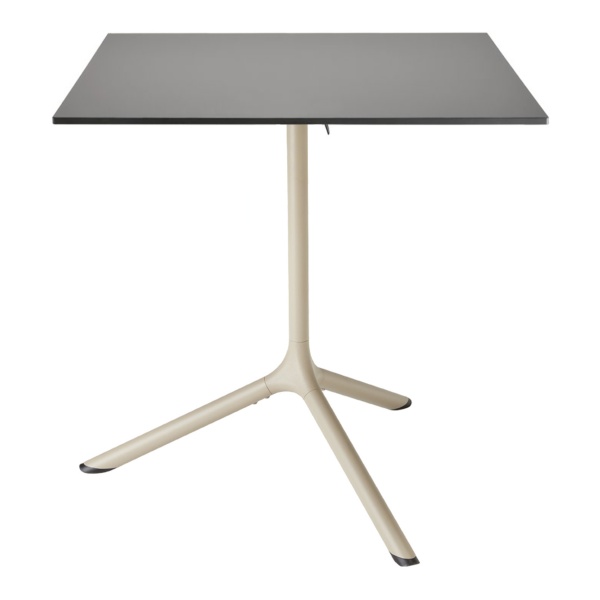
Key mechanism parameters for hospitality: a steel or aluminium lock, firm fixation in working position without play, and one-handed folding — staff should be able to fold the table without a second person. The base should support 80–120 kg of load on the tabletop without deformation or wobbling.
Contract models by S-CAB and Nardi use metal mechanisms with anti-corrosion coating and meet EN 581 requirements for outdoor furniture — confirming their declared performance in open-air environments.
Frame and tabletop materials: choosing for real operating conditions
For open-air terraces, the frame material determines not only weight, but also how the mechanism behaves after seasonal storage. Humidity, temperature changes and exposure to marine or urban air directly affect the durability of moving parts.
Powder-coated aluminium is the optimal choice for most open-air areas. Table weight is typically 8–14 kg depending on tabletop size, allowing one person to fold and move it. C3 protection is suitable for urban terraces, while C4/C5 is preferable for coastal locations. The mechanism does not rust after winter storage and does not require lubrication.
Powder-coated steel is heavier at around 12–20 kg, but provides a more rigid construction. It is used in venues with higher mechanical loads or where maximum stability in working position is essential. It requires a high-quality coating of at least 60–80 μm on welded joints — otherwise corrosion may appear at folding points after 1–2 seasons.
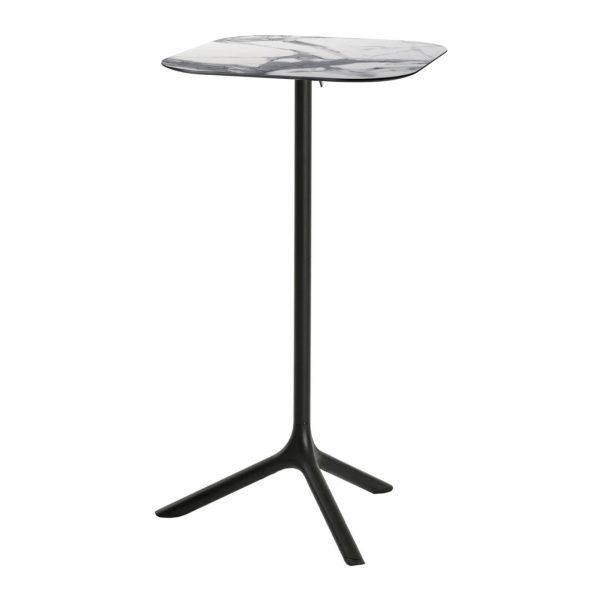
For tabletops on open-air terraces, the standard solution is an HPL tabletop: EN 438 wear-resistance class, from 150,000 Taber revolutions, resistance to moisture, UV exposure and temperature changes from −20 to +60°C. Compact laminate is an alternative for minimalist concepts: a solid homogeneous structure with no visible edging, usually 12–20 mm thick.
Tabletop shape: seating density and storage logistics
With a flip-top construction, the shape of the table affects not only seating, but also compactness during storage.
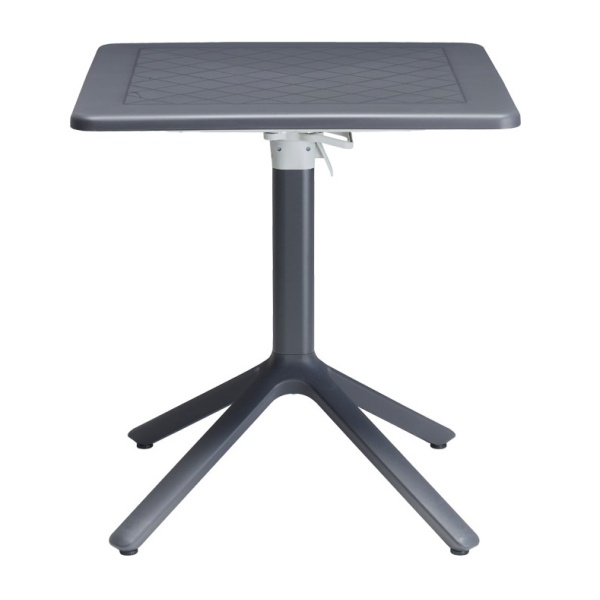
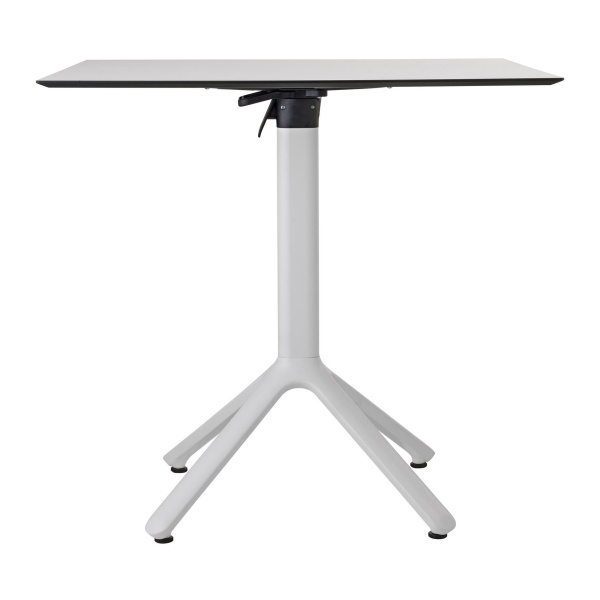
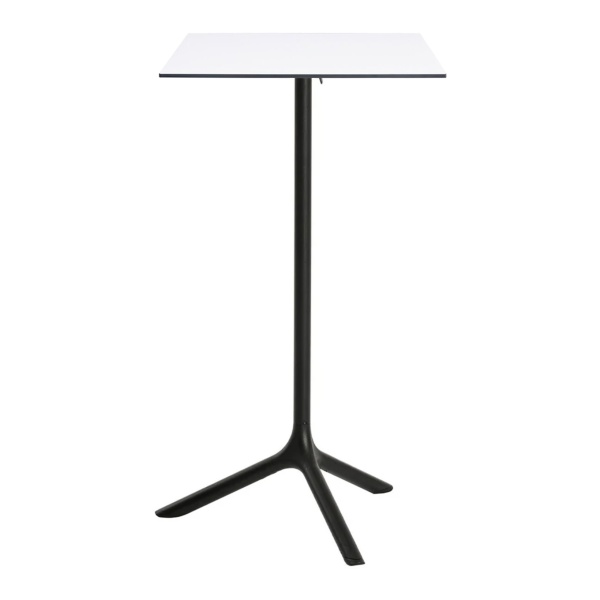
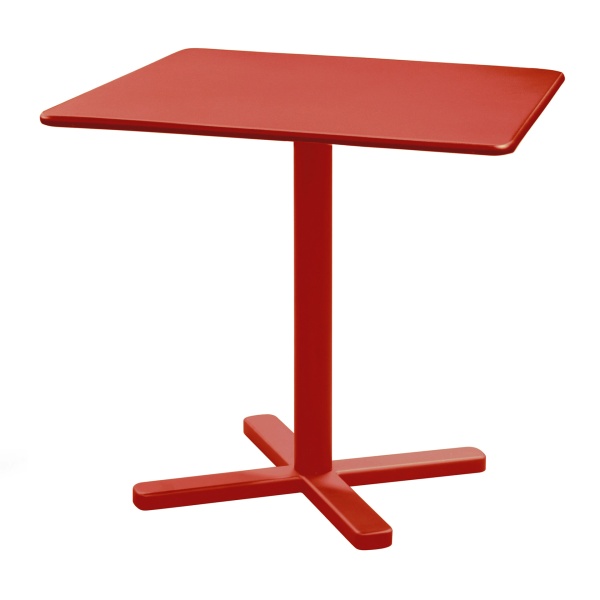
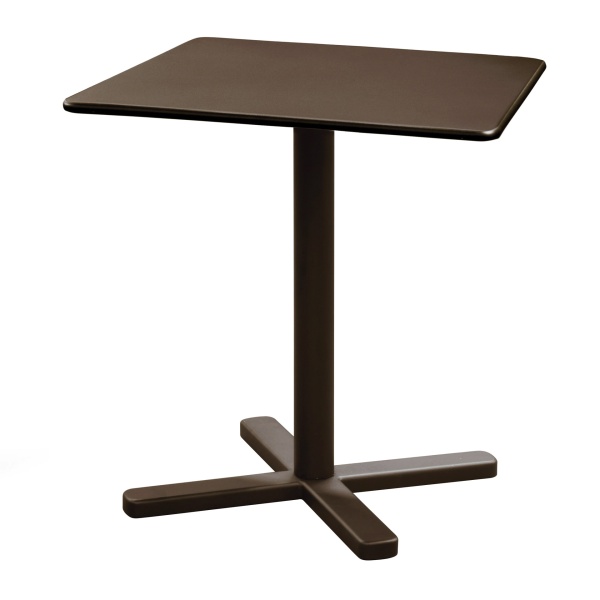
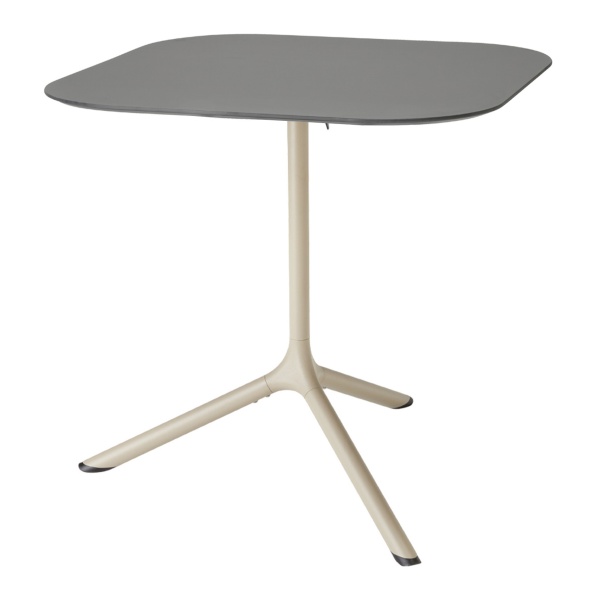
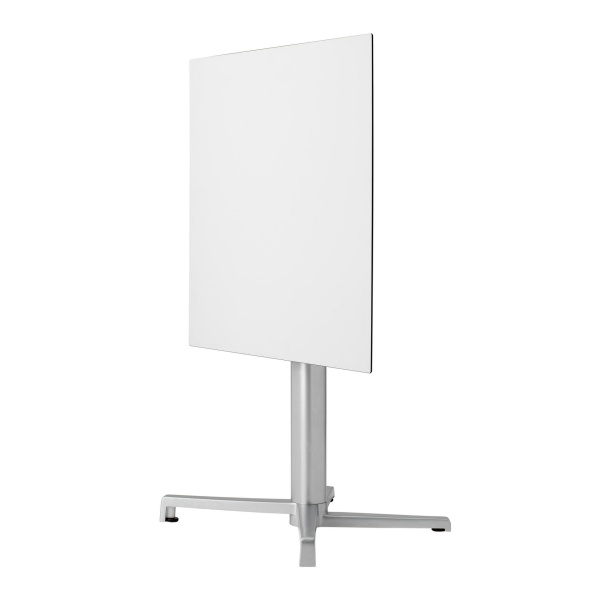
Square tables 60×60 and 70×70 cm are the most common format for flip-top models. When folded, they take up minimal space along a wall. They allow dense linear layouts on terraces with 60–70 cm circulation between rows.
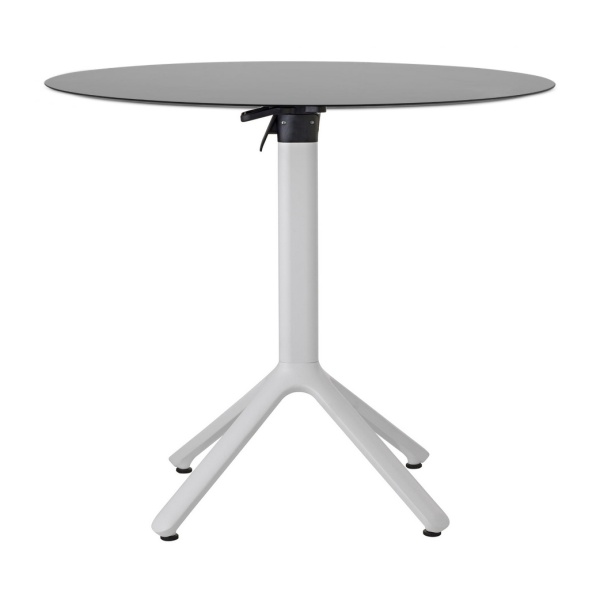
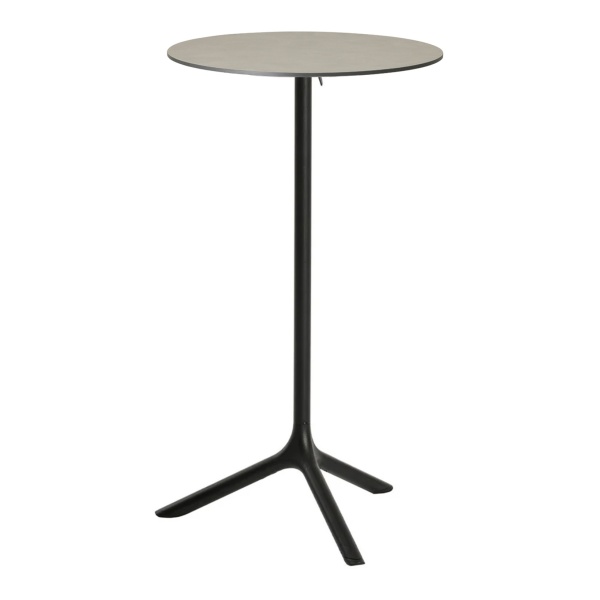
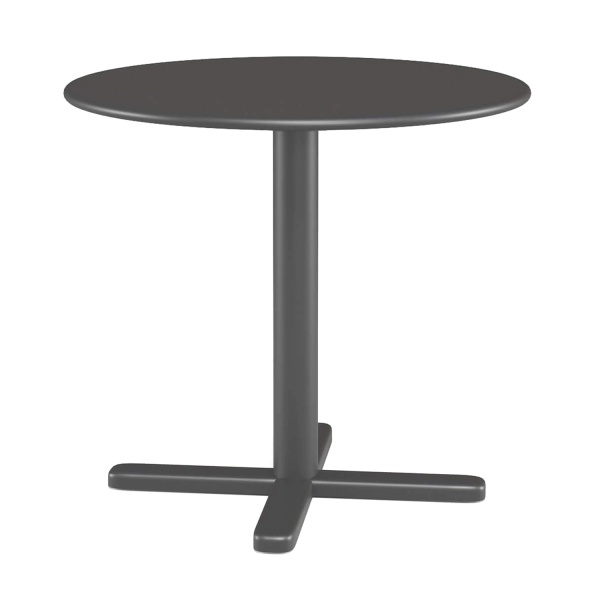
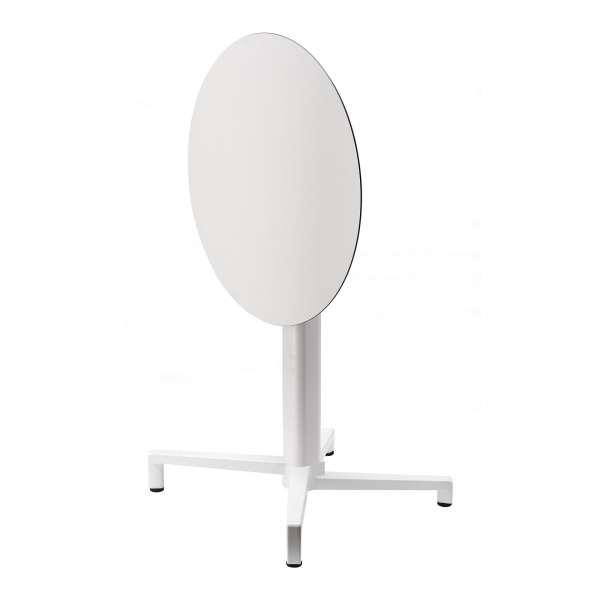
Round tables with a diameter of 60–70 cm work better in lounge and café formats with a softer spatial arrangement. They take up slightly more space in storage due to their diameter, but feel visually lighter and fit more naturally into looser layouts.
Operational economics: how much a flip-top construction can really save
With a set of 20 tables and daily folding after closing, the difference between fixed and flip-top construction is around 40 minutes of staff time per day. Over a season of 120 working days, this equals 80 hours, or around 10 working shifts. In labour-cost terms, this is a direct saving of 15,000–25,000 UAH per season, depending on the rate.
In addition, flip-top tables do not require a separate storage room — 20 folded tables can be stored vertically along a 4–5 m wall. This removes the need to rent or arrange additional storage for seasonal furniture.
For complete terrace furnishing, it is convenient to select tables together with other elements in the category terrace furniture so that finishes and style remain consistent across the whole area.
A flip-top table is an operational solution, not a compromise. With the right mechanism and materials, it does not lose to a fixed table in stability and can pay for itself in the first season through staff-time savings.