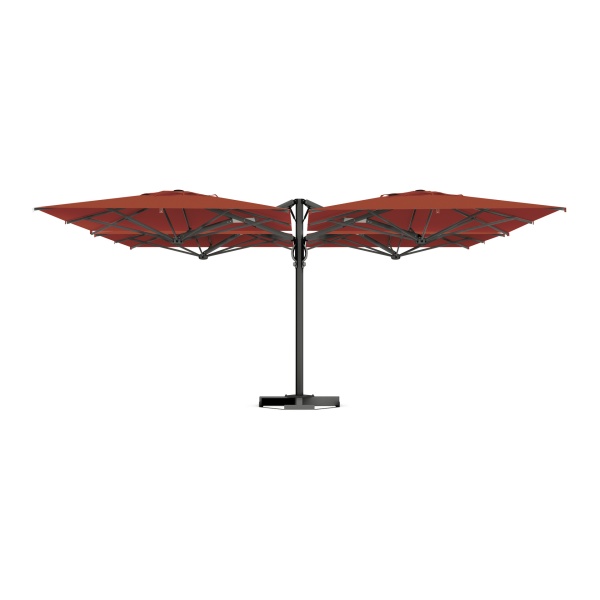
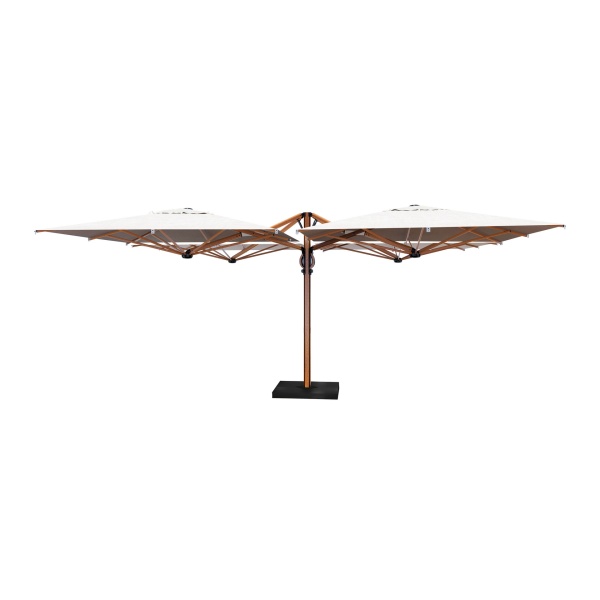
How a cantilever parasol works
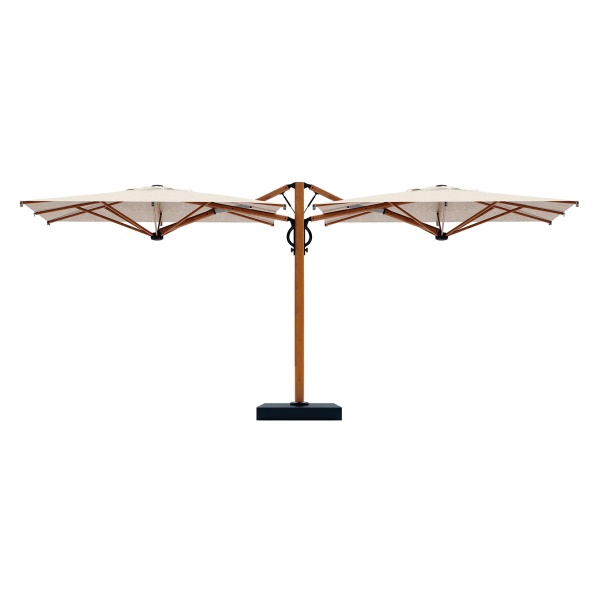
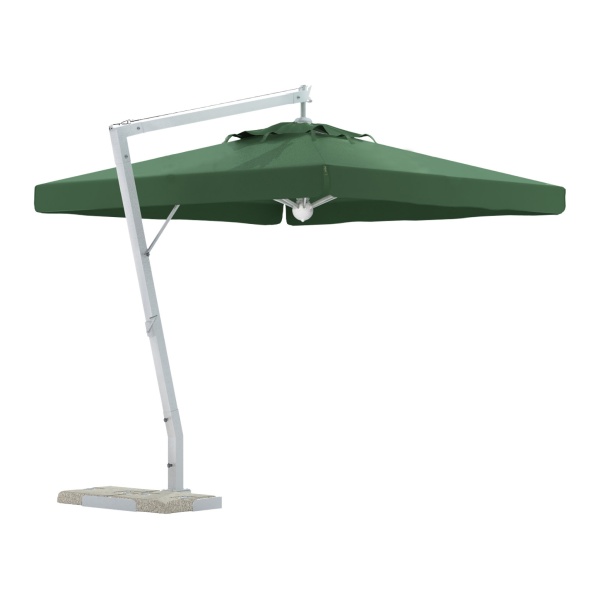
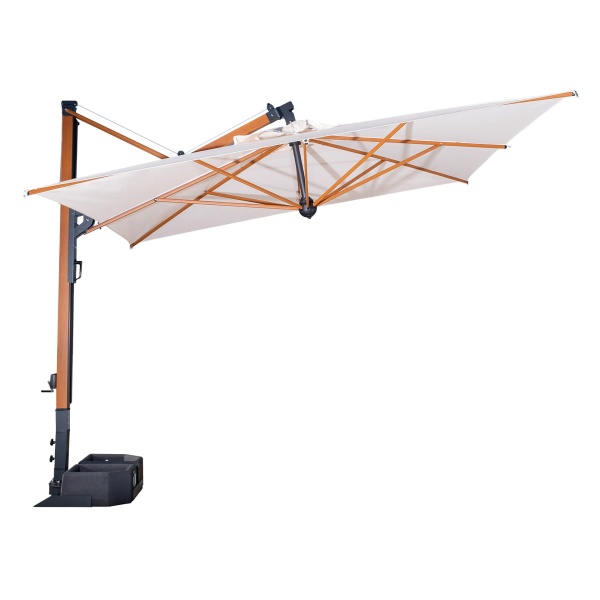
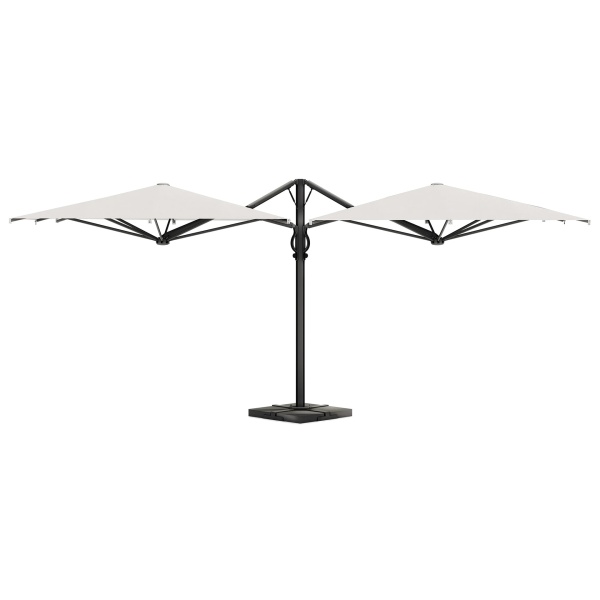
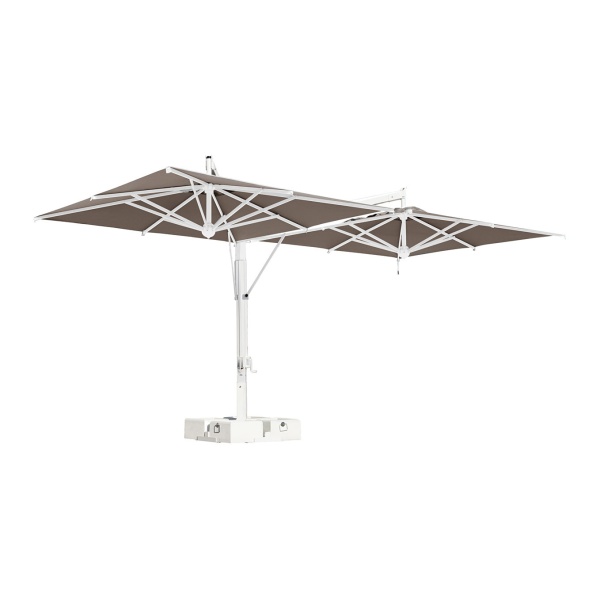
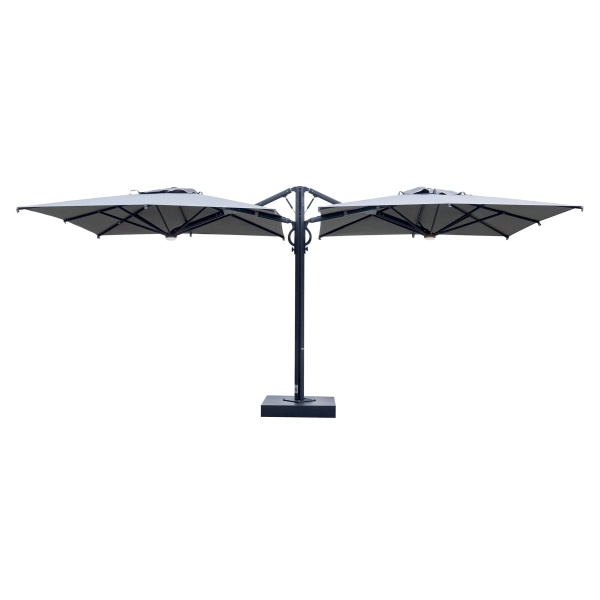
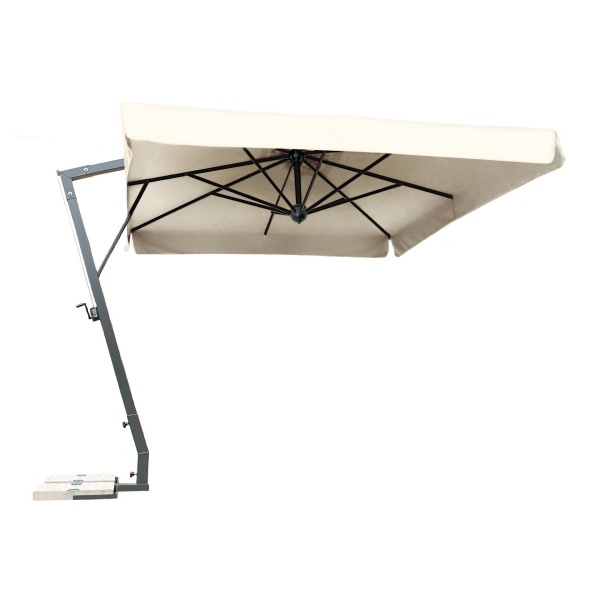
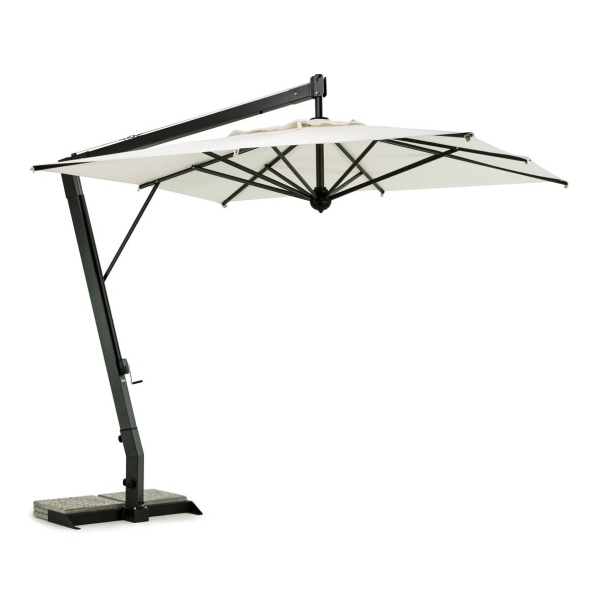
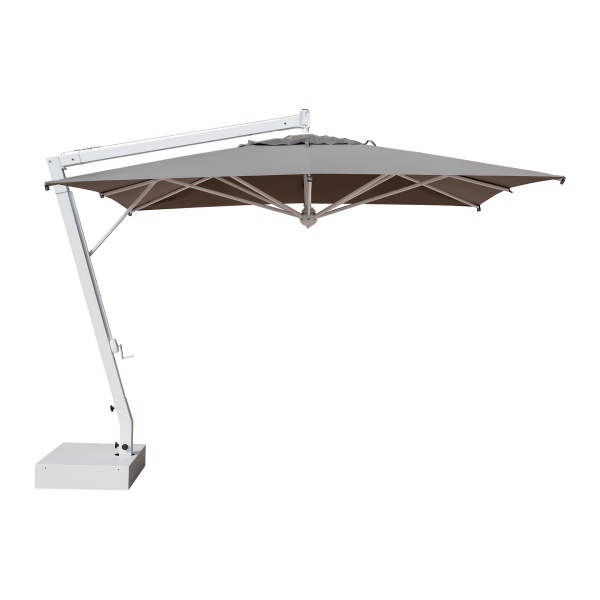
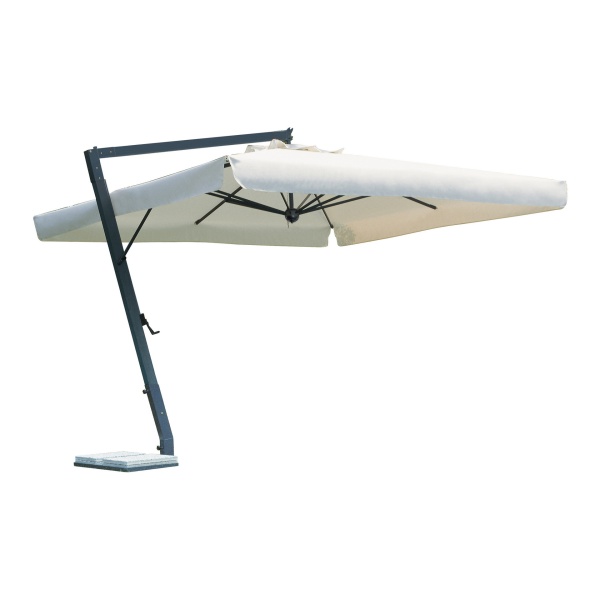
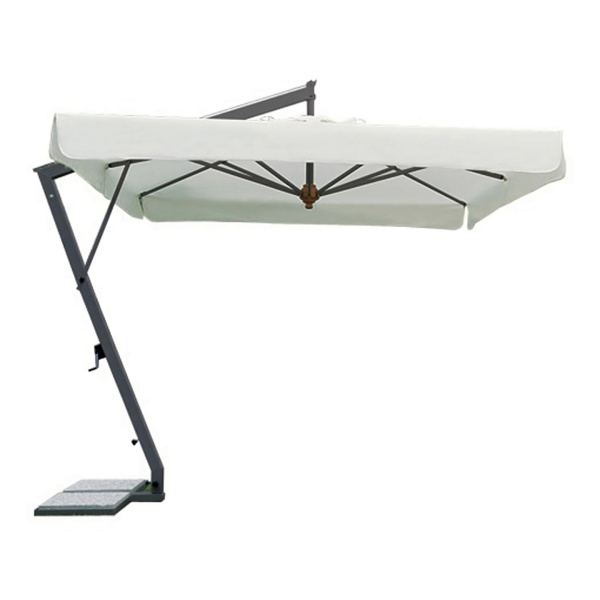
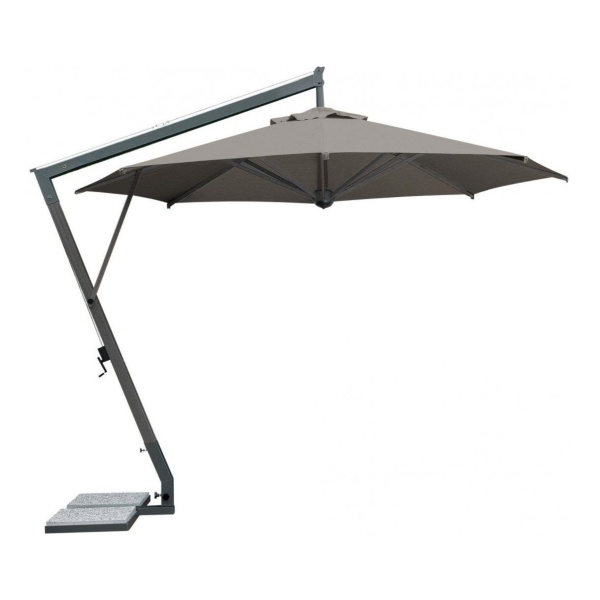
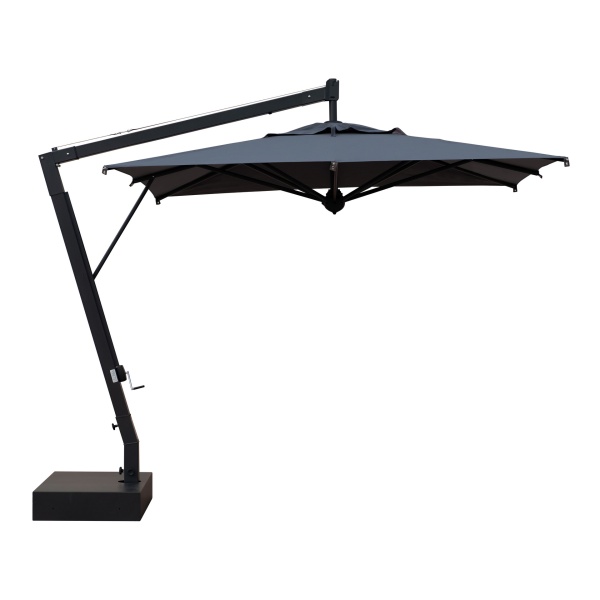
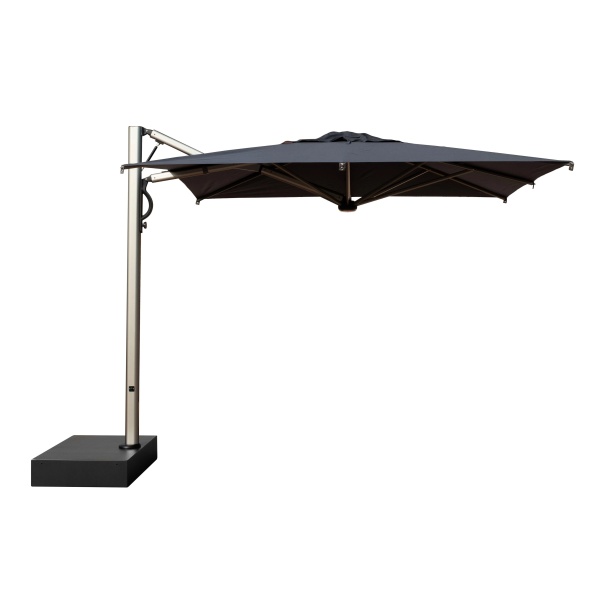
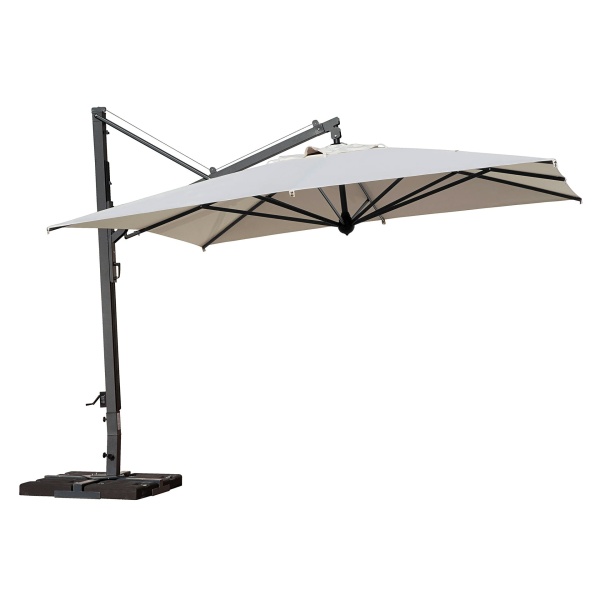
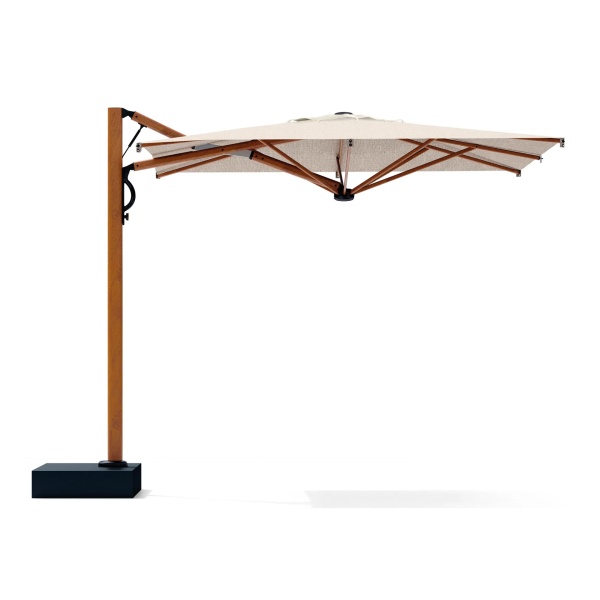
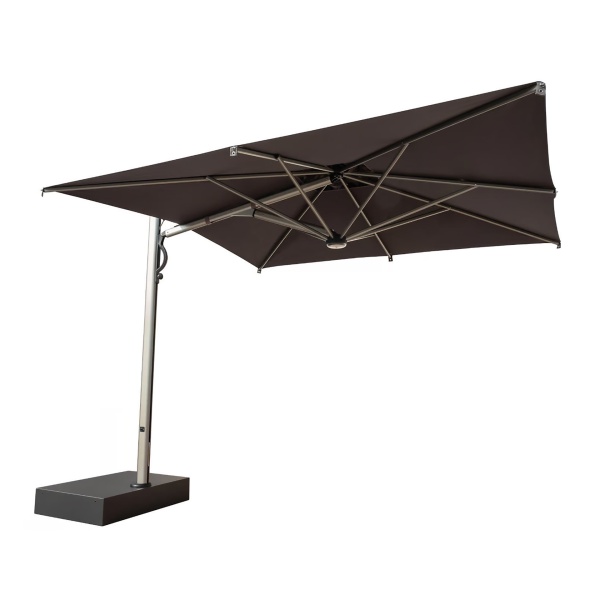
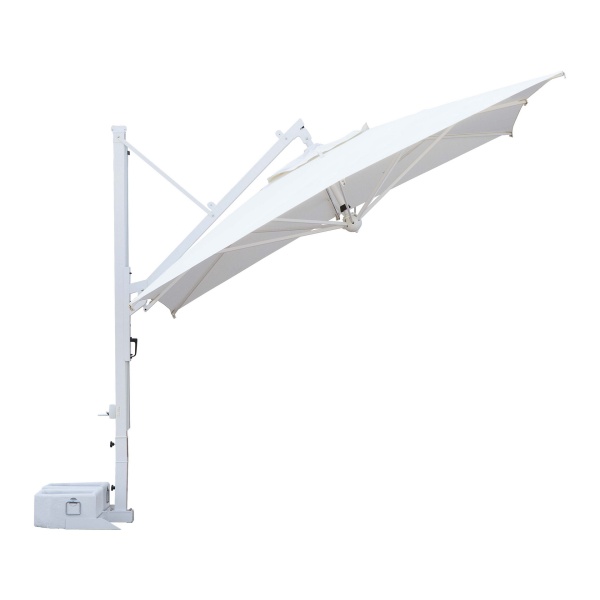
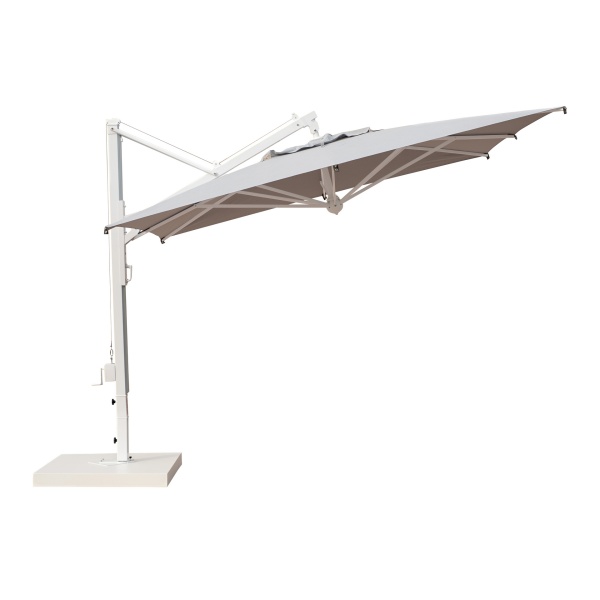
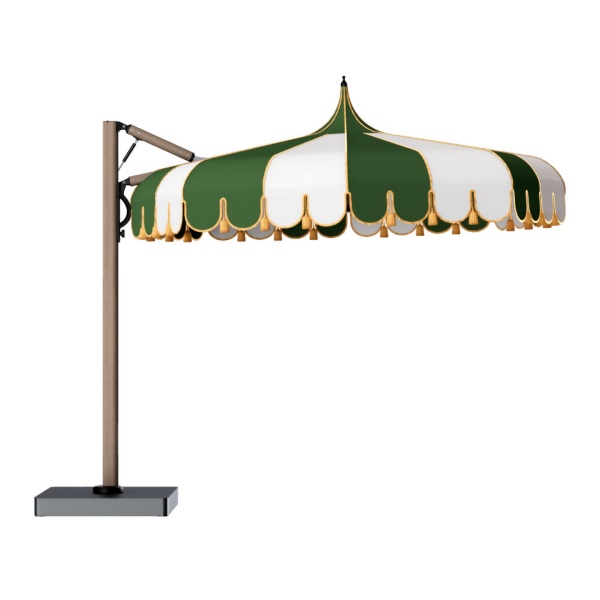
The defining feature of a cantilever parasol is that its supporting mast is positioned to the side of the canopy. Unlike centre-pole parasols, the support does not occupy the central part of the shaded area.
This provides greater freedom when arranging restaurant tables, lounge settings and other seating groups. Space must still be allowed for the cantilever structure itself, the base or permanent fixing and the movement of any adjustable components.
When to choose a cantilever parasol
- Restaurant terraces — where a central pole would interfere with a table or seating arrangement.
- Cafés and bars — for shading furniture without placing a support in the centre of the setting.
- Hotels and resorts — for terraces, patios, lounge areas and poolside spaces.
- Large outdoor areas — where support positions need to be coordinated with the furniture plan and circulation routes.
- Designed outdoor spaces — where the shading system forms part of the overall terrace architecture.
Cantilever or centre-pole parasol
The choice between cantilever and centre-pole designs depends primarily on the site layout. A centre pole can be a practical solution where its position does not interfere with the table or furniture arrangement. A cantilever design is particularly useful where the shaded area needs to remain as free from supports as possible.
These systems should not be compared by canopy size alone. Terrace geometry, furniture layout, required shade coverage, support position, base dimensions and fixing method all need to be considered.
Rotation, tilt and shade adjustment
Depending on their construction, cantilever parasols may incorporate different opening systems and methods of adjusting the canopy position. Certain models offer rotation, tilt or other forms of adjustment to reposition shade during the day.
The availability and range of these functions should be checked for the individual model. The clearance required to open, close and adjust the structure should also be considered.
For projects where a different opening principle and vertical movement of the structure are important, telescopic parasols are another option to consider.
Canopy size and shape
Cantilever parasols are available with square, rectangular and other canopy configurations. Size should be selected in relation to the actual area that needs to be shaded rather than considered independently from the terrace layout.
For a restaurant project, it is useful to begin with the table and seating plan, establish the required shaded area and then select the appropriate parasol size and configuration. This makes it possible to assess not only canopy coverage but also the position of the support and base in relation to furniture and circulation routes.
Bases and fixing for cantilever parasols
Because the support is offset from the canopy, particular attention should be paid to the base or permanent fixing specified for a cantilever parasol. The required base weight should not be determined from canopy size alone, and a single universal value should not be applied to every model.
Requirements depend on the geometry of the structure, canopy size and shape, installation method and the manufacturer's technical specifications. Some models use movable or ballasted bases, while others may be designed for permanent fixing.
Suitable parasol bases should be selected according to compatibility with the specific model and the manufacturer's recommendations.
The base or fixing system forms part of the parasol specification. Its type and parameters should be determined from the technical documentation for the individual model rather than from general rules.
Materials and operating conditions
When selecting a cantilever parasol, consider the frame material, canopy fabric specification, available colours and finishes, opening mechanism, maintenance requirements and operating conditions.
Materials and performance characteristics vary between manufacturers and models. UV resistance, water-repellent properties, fabric composition, frame specification and permitted weather conditions should therefore be assessed from the specification of the individual product.
It is particularly important to check the manufacturer's instructions for use in windy or adverse weather. A heavy base alone does not mean that a parasol can remain open in all weather conditions.
How to specify a cantilever parasol for a terrace
| Criterion | What to consider |
|---|
| Shade coverage | Dimensions and geometry of the area that needs to be shaded |
| Furniture | Position of tables, chairs and seating groups |
| Support | Its position in relation to furniture, circulation routes and terrace boundaries |
| Canopy | Size, shape, fabric and available finish options |
| Mechanism | Opening method and any available rotation or tilt functions |
| Base | Compatible base or permanent fixing in accordance with manufacturer requirements |
| Operation | Permitted weather conditions, maintenance and operating instructions |
Cantilever parasols as part of a terrace project
In a professional project, the shading system should be planned alongside the outdoor furniture. Parasol positioning affects seating-zone configuration, circulation and the use of the available floor area.
Coordination with the terrace furniture is particularly important: establish the position of tables and seating groups first, then assess which parasol configuration provides the required shade without the support or base conflicting with furniture or circulation routes.
Cantilever parasols for hospitality projects
HoReCa.Furniture supplies cantilever parasols for restaurants, cafés, hotels and other commercial outdoor spaces. Specification should take into account not only the preferred size but also the site plan, required shade coverage, furniture positions, installation method and technical characteristics of the individual model.
For project specification: send us the terrace plan or dimensions, furniture layout and required shaded area. This allows suitable configurations to be compared against the technical parameters of specific models.