UkrainianEnglishRUSFrenchSpanish

Restaurant NAI

Cascais / Portugal
View all photos
Project details
NameRestaurant NAI
TypeRestaurant
CityCascais
Year2026
Photo
Project description
Cascais is not simply a Portuguese seaside resort. It is a place where old fishing quarters sit alongside the villas of European old money, and where the Atlantic sets the pace of daily life. It was here, within the new Bloom Marinha development, that NAI opened its doors — a restaurant with a Ukrainian soul and a distinctly Mediterranean temperament.

Cascais is not simply a Portuguese seaside resort. It is a place where old fishing quarters sit alongside the villas of European old money, and where the Atlantic sets the pace of daily life. It was here, within the new Bloom Marinha development, that NAI opened its doors — a restaurant with a Ukrainian soul and a distinctly Mediterranean temperament.

The exterior announces itself with warm honey-toned timber cladding, black canvas awnings, and dense plantings in weathered corten steel planters. Nothing superfluous — composed and considered. The intention is clear before you even step inside: this is a project built to last.

Inside — Layers and Warmth

The interior of NAI is built on a reinterpretation of Ukrainian vernacular aesthetics — not ethnographic, not folksy, but rooted and deeply felt.

The defining gesture is a heavily textured, whitewashed wall with a pronounced sculptural relief. This is a direct reference to the mazanka — the traditional Ukrainian rural dwelling whose walls were constructed from a timber frame packed with clay and straw, then plastered and whitewashed. In NAI's hands, this archetype is translated into a thoroughly contemporary design language: not a village, but the memory of one — refined, urbane, and entirely legible.

Natural colours and materials run throughout, alongside décor drawn from the landscape. Round woven wall sconces with a radial, almost sunburst structure — and matching rattan pendant shades above the banquette seating — recall the traditional Ukrainian craft of straw-working. Dried botanicals on every table — grasses, honesty, cotton — are not a passing trend but a long-standing motif of the Ukrainian domestic interior, where preserved plants have always held a place in the home.

The colour palette spans from warm cream to fired clay: oak, linen, brass, amber glassware. Terracotta tilework on one wall plays against the white sculptural plaster on another — the same interplay of contrasting textures found in the traditional Ukrainian khata. Natural materials, refined finishes, and considered warmth combine to produce an atmosphere that feels neither rustic nor clinical, but genuinely hospitable.

The steel staircase — black powder-coated frame, glass balustrade — is the one deliberately contemporary gesture in the space. It does not compete with the overall mood; it gives it proportion.

Furniture as Part of the Concept

Contract restaurant furniture was specified zone by zone — and the result reads accordingly.

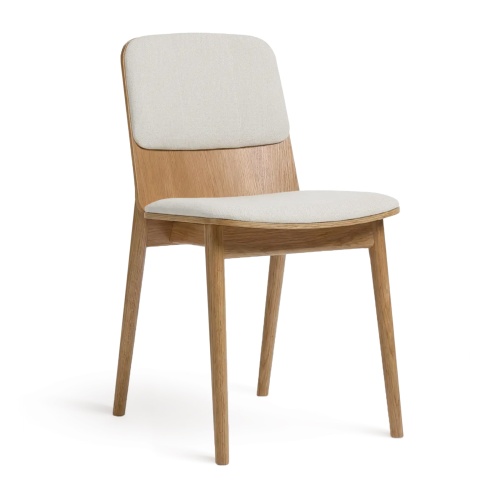
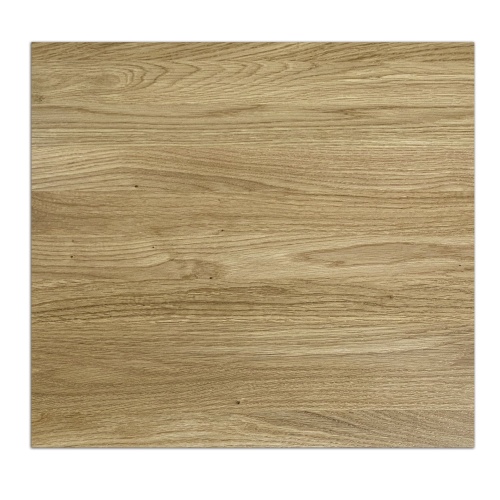
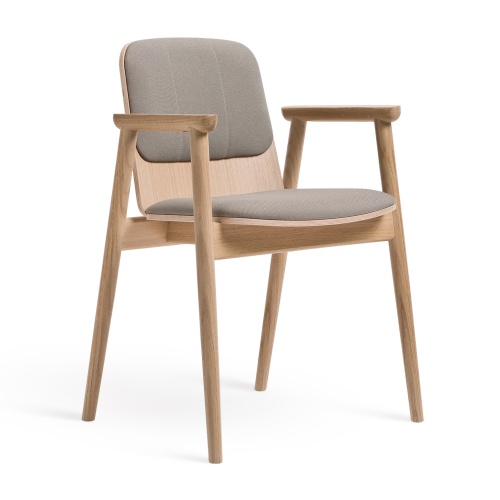
For the main dining areas, the designers specified wooden dining chairs from the PROP collection by Polish manufacturer Paged — supplied in two versions: the all-wood A-4395 and the carver B-4395 with armrests. The clean construction — a gently curved solid beech back panel, upholstered seat in terracotta fabric — reads as contemporary without feeling cold. Beech tabletops in a light lacquer finish echo the oak flooring and pull the room into a coherent warm palette. The comfort of the seating matches the philosophy of the space: no one is being hurried.

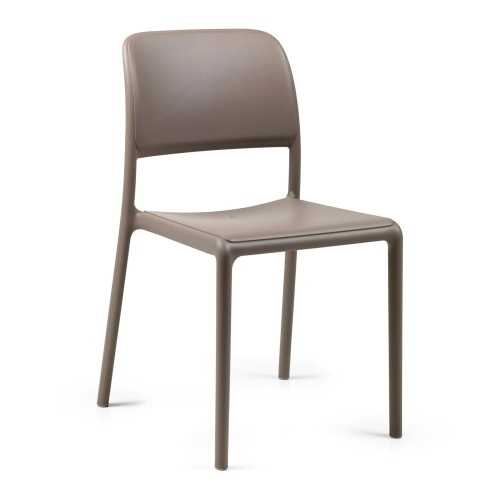
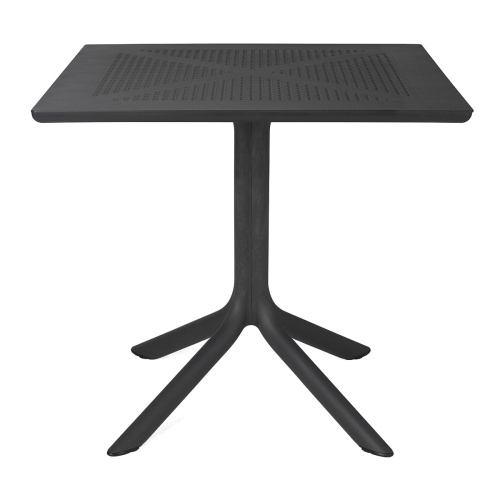
The terrace called for an altogether different approach. For the outdoor setting, the designers turned to terrace furniture from Italian manufacturer Nardi — outdoor tables from the Clip range paired with terrace chairs Riva, in a quiet warm grey. Perforated tabletops, stackable frames, full UV and weather resistance — furniture that performs without drawing attention to itself, and lets the planting and the street view do their work.

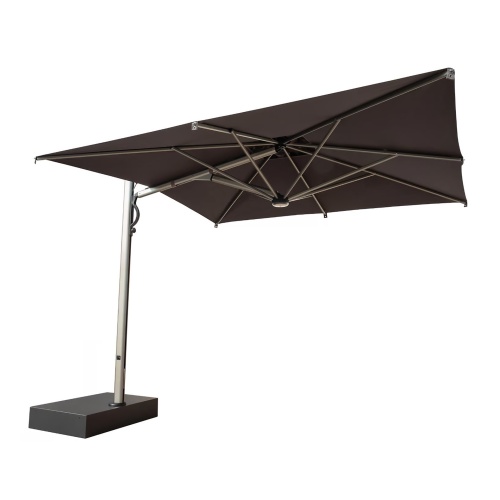
The terrace is completed by commercial parasols from the Astro range by Scolaro — 3×4 m canopies in black with the NAI Restaurant logo embroidered on the valance. At this scale, a parasol stops being an accessory and becomes architecture: the terrace acquires a ceiling, a boundary, and a character of its own.

Location: Aldeamento Bloom Marinha, Cascais, Portugal
Brand: NAI Restaurant
Interior furniture: Paged PROP A-4395 / B-4395
Terrace furniture: Nardi Clip + Riva
Parasols: Scolaro Astro 3×4 m
Read full
More...
Description

Cascais is not simply a Portuguese seaside resort. It is a place where old fishing quarters sit alongside the villas of European old money, and where the Atlantic sets the pace of daily life. It was here, within the new Bloom Marinha development, that NAI opened its doors — a restaurant with a Ukrainian soul and a distinctly Mediterranean temperament.

The exterior announces itself with warm honey-toned timber cladding, black canvas awnings, and dense plantings in weathered corten steel planters. Nothing superfluous — composed and considered. The intention is clear before you even step inside: this is a project built to last.

Inside — Layers and Warmth

The interior of NAI is built on a reinterpretation of Ukrainian vernacular aesthetics — not ethnographic, not folksy, but rooted and deeply felt.

The defining gesture is a heavily textured, whitewashed wall with a pronounced sculptural relief. This is a direct reference to the mazanka — the traditional Ukrainian rural dwelling whose walls were constructed from a timber frame packed with clay and straw, then plastered and whitewashed. In NAI's hands, this archetype is translated into a thoroughly contemporary design language: not a village, but the memory of one — refined, urbane, and entirely legible.

Natural colours and materials run throughout, alongside décor drawn from the landscape. Round woven wall sconces with a radial, almost sunburst structure — and matching rattan pendant shades above the banquette seating — recall the traditional Ukrainian craft of straw-working. Dried botanicals on every table — grasses, honesty, cotton — are not a passing trend but a long-standing motif of the Ukrainian domestic interior, where preserved plants have always held a place in the home.

The colour palette spans from warm cream to fired clay: oak, linen, brass, amber glassware. Terracotta tilework on one wall plays against the white sculptural plaster on another — the same interplay of contrasting textures found in the traditional Ukrainian khata. Natural materials, refined finishes, and considered warmth combine to produce an atmosphere that feels neither rustic nor clinical, but genuinely hospitable.

The steel staircase — black powder-coated frame, glass balustrade — is the one deliberately contemporary gesture in the space. It does not compete with the overall mood; it gives it proportion.

Furniture as Part of the Concept

Contract restaurant furniture was specified zone by zone — and the result reads accordingly.

For the main dining areas, the designers specified wooden dining chairs from the PROP collection by Polish manufacturer Paged — supplied in two versions: the all-wood A-4395 and the carver B-4395 with armrests. The clean construction — a gently curved solid beech back panel, upholstered seat in terracotta fabric — reads as contemporary without feeling cold. Beech tabletops in a light lacquer finish echo the oak flooring and pull the room into a coherent warm palette. The comfort of the seating matches the philosophy of the space: no one is being hurried.

The terrace called for an altogether different approach. For the outdoor setting, the designers turned to terrace furniture from Italian manufacturer Nardi — outdoor tables from the Clip range paired with terrace chairs Riva, in a quiet warm grey. Perforated tabletops, stackable frames, full UV and weather resistance — furniture that performs without drawing attention to itself, and lets the planting and the street view do their work.

The terrace is completed by commercial parasols from the Astro range by Scolaro — 3×4 m canopies in black with the NAI Restaurant logo embroidered on the valance. At this scale, a parasol stops being an accessory and becomes architecture: the terrace acquires a ceiling, a boundary, and a character of its own.

Location: Aldeamento Bloom Marinha, Cascais, Portugal
Brand: NAI Restaurant
Interior furniture: Paged PROP A-4395 / B-4395
Terrace furniture: Nardi Clip + Riva
Parasols: Scolaro Astro 3×4 m
Photo
View all photos

Subscribe to our newsletter

Get the latest brand and product news in your e-mail